• Blog
  • Blog Index
  • Video Work
  • About
Menu

Thomas Bardenett

Urban Planning - Writer - Filmmaker
  • Blog
  • Blog Index
  • Video Work
  • About

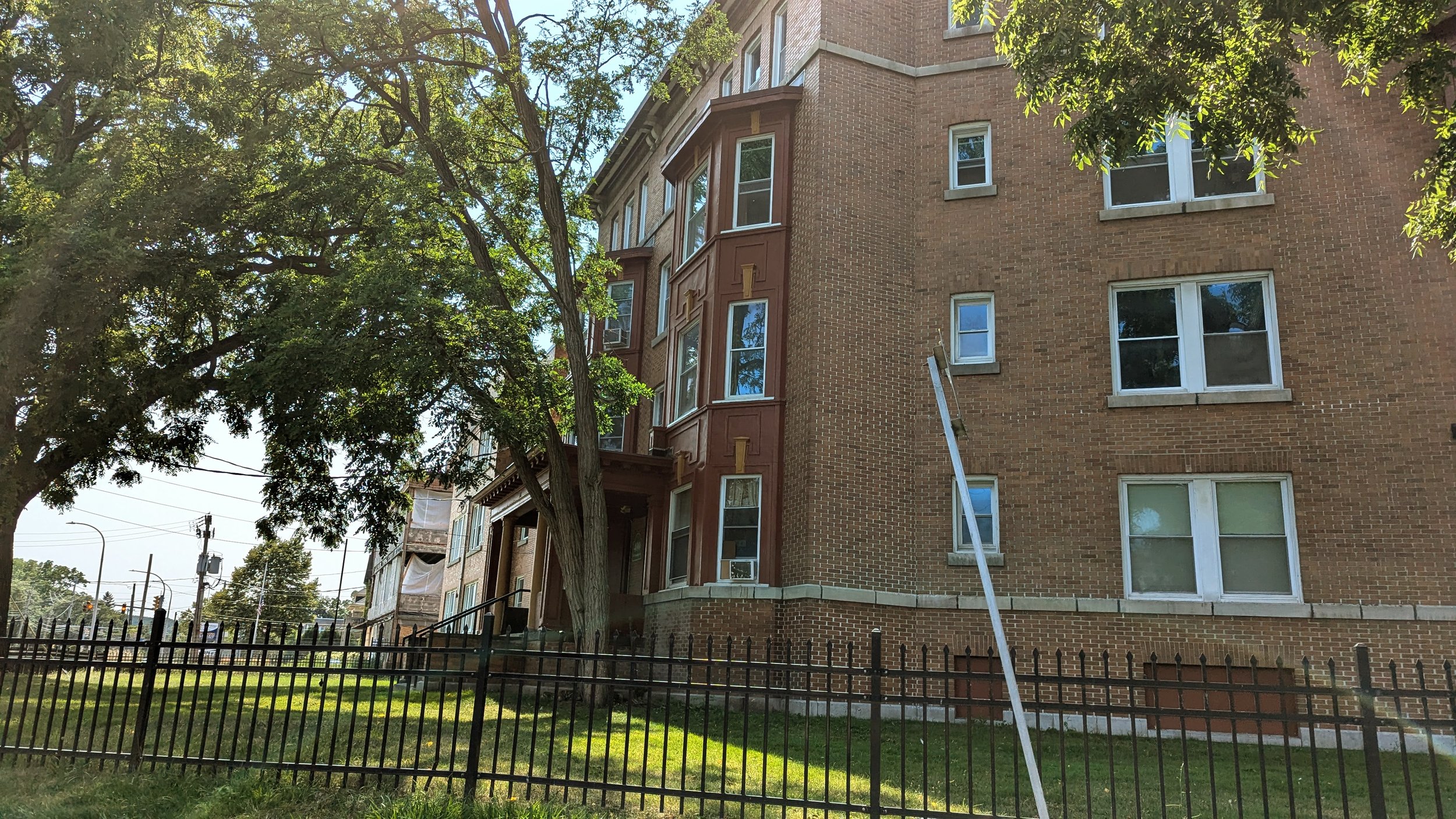
Smaller apartment buildings can easily fit into neighborhoods with single family and multi-family homes.

Renters Matter, Too

July 31, 2024

Housing continues to be a hot topic, both locally and nationally. The cost of housing, both to rent and to own, continues to rise, putting pressure on individuals and families. Organizations, activists, and planners have all been working to expand housing in hopes that abundance may help regulate price increases. At the same time, just as many organizations, activists, and other community leaders have focused on blocking development they deem out of character with their communities. As a result, after many years of being ignored, the discussion about housing is finally front and center, and the public comments are not always pretty.

After every local news story about a housing development or housing study, one thing becomes clear in the comments on social media: a vocal disdain for renters and rental properties.

View fullsize image (1) (1)-EDIT.jpg
View fullsize image (1) (2)-EDIT.jpg
View fullsize image (1) (3)-EDIT.jpg
View fullsize image (1) (4)-EDIT.jpg
View fullsize image (2) (1)-EDIT.jpg
View fullsize image (4)-EDIT.jpg
View fullsize image (6)-EDIT.jpg

While just a small sample, the above Facebook comments are not uncommon. Rental properties are seen as a burden on a community and renters bring quality of life problems for homeowners and have no investment in their neighborhoods. As a renter myself, this obviously does not reflect how I view renters and I believe the perpetuation of these views negatively impacts our communities. So let us respond to some of these concerns and offer up a defense of renters as our neighbors.

One of the primary arguments individuals make against adding rental housing, or more dense housing in general, is that it does not fit with the character of their neighborhood. In their new book, Escaping the Housing Trap, Charles L Marohn Jr and Daniel Herriges argue against this view:

“Shouldn’t a community have the right to say ‘no’ to unwanted change? Buried in the premise of the question is that refusing change is an option. But that’s not the case. Change is inevitable. A community that has lost all affordable, starter housing already has changed, irreversibly. It is only the buildings that have not. Cities must be living, evolving, complex things…Preservation is taxidermy.”

While the authors are specifically focused on addressing the lack of affordable housing, defined as affordable for varying levels of income not just low-income housing, the emphasis on allowing change in all neighborhoods is key. Families have moved to suburban areas seeking homogeneity and stability. As a result, they fight to prevent the community they have moved into from changing. But this is not sustainable. Others deserve the opportunity to move into areas that offer access to services they desire and need, such as school districts, medical care, and job opportunities. Refusing rental housing blocks many individuals and families who were not lucky enough to buy property decades ago at lower prices and ride the wave of rising home values from moving into areas of opportunity.

But we will come back to the need for more housing. Let us instead focus on the arguments against renters themselves.

A lot of rental housing in Syracuse and smaller cities include two-family homes and single family homes.

Often you will see people describe individuals who rent as less invested in their respective communities. The view here is that because they have not purchased their homes, they are less tied to their communities and more likely to leave after only a short period of time.

While this argument may sound reasonable on its face, it forgets the many renters who spend decades in the same apartment or home. It forgets the many reasons someone may choose to rent long term instead of buying. It forgets that renters are also tax payers, and pay into the same property taxes (through their rents) that homeowners do.

So why do people choose to rent?

Renting offers individuals flexibility. Recent articles in the New York Times discuss when people should consider buying versus renting and it often comes down to long term plans. Unless you plan to live in a neighborhood for 10+ years, buying a home ends up being a worse financial decision. This is a result of down payments, broker’s fees, interest rates, and repairs.

Repairs and home maintenance are underappreciated costs. For many individuals who do not have general repair skills (myself included) the cost of hiring qualified professionals to take care of plumbing, electrical, and other maintenance issues can run high. Renters, provided they have responsive and organized landlords, usually have these maintenance fees baked into their rents and can expect prompt corrections to issues as they arise. Yes, plenty of landlords do not live up to these expectations. In fact, some landlords in Syracuse are suing the City to prevent code enforcement officers from inspecting their units without warrants. These inspections are aimed at reducing lead exposure and other hazards. These landlords must be held accountable as they are responsible for the safety of all of their tenants. Allowing one- and two-family homes to avoid this level of inspection is irresponsible at best, and criminal at worst.

Common Space offers smaller apartment units with large, shared spaces geared towards creating more communal living in urban centers.

Many renters also choose to rent due to the lack of diversity in housing stock. In most American cities, including Syracuse, you either have the option to rent an apartment or buy a detached single-family home. While this has been billed as the “American Dream” for several decades, it no longer fits the needs of many American households. While our country has grown, family sizes have shrunk, even while our homes have grown larger. In 2020, I wrote about the need to redefine what the “standard American home” means, arguing that most homes do not need 2,000+ square feet of space to accommodate 2 or 3 people. Townhouses, rowhouses, smaller multi-family buildings can provide needed and more appropriately sized space for these smaller households that are may desire lower levels of upkeep. These denser housing types also create opportunities to provide transit and active transportation facilities that larger lots and houses make difficult. Unfortunately, many townhouses within the Syracuse area today are not built in an urban context, but instead in suburban subdivisions which continue to separate people from their day-to-day needs. Providing a homeownership option that fits their needs in a truly urban setting may convince many renters to buy, but currently their only option to live in these types of neighborhoods is to rent.

While not traditional townhouses, the Catholic Diocese of Syracuse mimics traditional townhome and brownstone construction seen in larger cities and in Syracuse, historically.

And yet, many view anything smaller than these large, detached homes as squeezing people into tin cans or barracks. They view urban settings, including apartment buildings and townhouses as inhumane. Yet zoning that restricts the development of denser housing more often leads to overcrowding as the number of housing units does not keep pace with the number of households. As a result, extended families crowd into single homes and people must live with more roommates than they would desire otherwise. The below graphic from California YIMBY illustrates these differences clearly. 

The final argument against renters I will discuss in this post, is one I have addressed in numerous other posts - the lack of parking. People will argue that denser housing, usually apartments that do not provide off-street parking, will cause neighborhood streets to become clogged with cars. While there may be slight increases in on-street parking usage in the short term, as we promote density, more residents will find themselves closer to their day-to-day needs, perhaps even within walking distance, and opting to own fewer vehicles. If concerns arise over the overuse of on-street parking, residential parking permit programs with caps on the number of vehicles can help limit the number of vehicles on the street. But it is important to note that renters and owners are just as likely to park on the street in many neighborhoods.

We must remember that we all have different needs and desires when it comes to housing. Many people will desire home ownership, but many others find renting fits their needs better. In the end, we are all part of the same community and should welcome having more neighbors, especially if they are looking to invest in their neighborhoods, be it through money or time. Renters matter in our communities so let us open our arms to more of them.

Many of Syracuse’s historic buildings have been converted into apartments and mixed-use developments over the past 20 years.
In Housing, Syracuse
Comment

The Valley of the Sun - A Land of (Sub)Urban Extremes

March 21, 2024

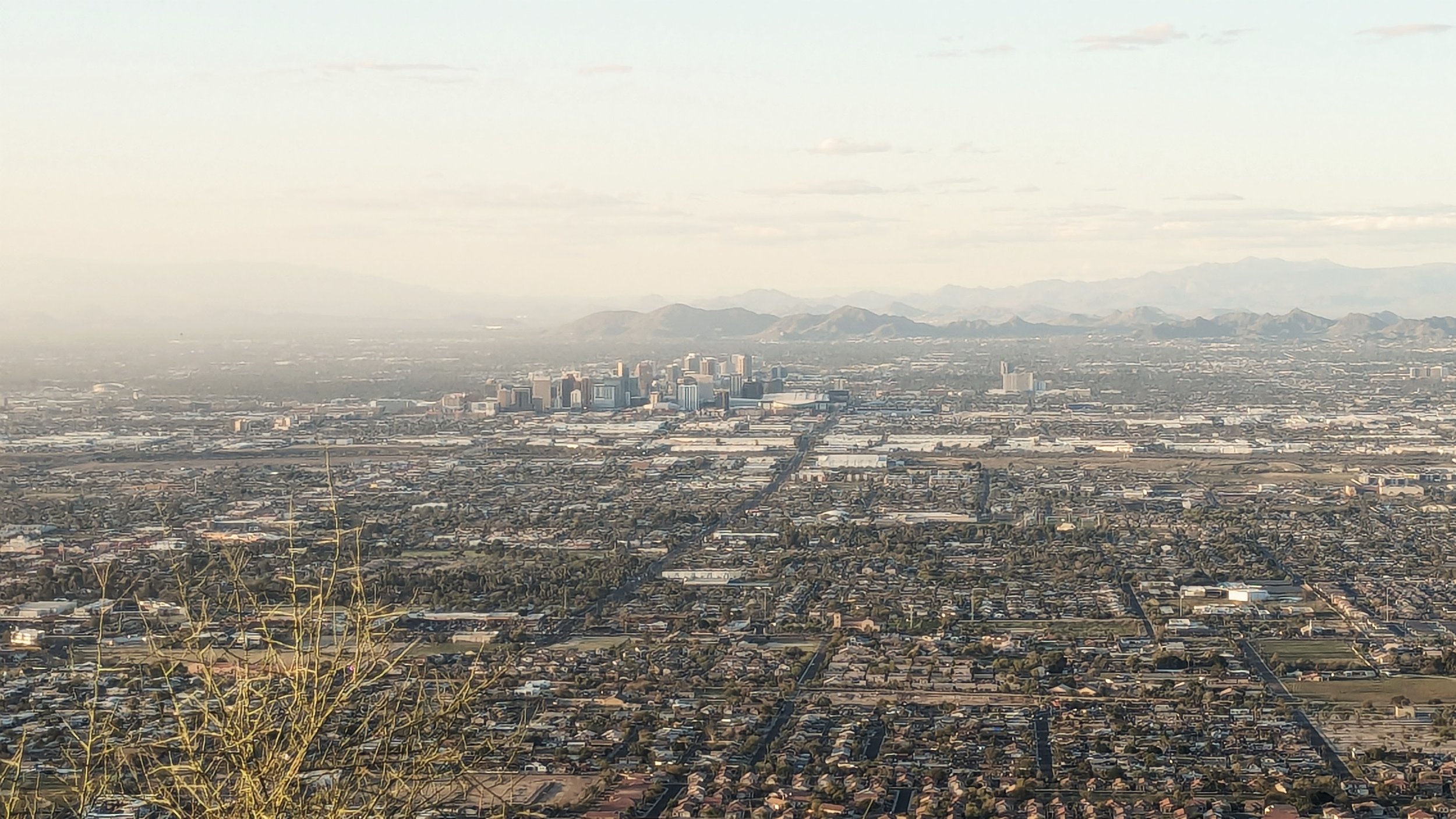
The desert - a place we often associate with vast, seemingly empty space. Where animals are often nocturnal to avoid the daytime heat and cacti have adapted to live off the minimal amounts of rain that comes each year. It's more associated with surviving than thriving. And yet, one of the United States’ fastest growing cities has sprung from the desert.

Phoenix, Arizona is sometimes derided as a suburban hellscape. Just an endless sea of sprawl that reaches for miles in all directions, sucking up the few resources that surround it, resulting in never ending conversations around drought and water supply. Yet, while it receives harsh critiques, many of which are warranted, there are signs that things are changing and a more sustainable version of the Valley may be on its way.

As I like to do when I visit different urban environments across the country, let’s take a look at what’s working, what’s not working, and some of the promising changes greater Phoenix is experiencing. While you’ll be hard pressed to find a city more different than Syracuse in terms of climate, that does not mean there aren’t things we can learn from it. It is also important to remember that these are really only first impressions, as no amount of short visits can tell the lived experience of the region.

With that in mind, let’s start with the bad - Lanes, lanes, and more lanes.

View fullsize Wide neighborhood street - Mesa.jpeg
View fullsize Wide streets .jpeg
View fullsize Screenshot 2024-03-21 at 7.35.08 AM.png
View fullsize Screenshot 2024-03-21 at 7.35.49 AM.png

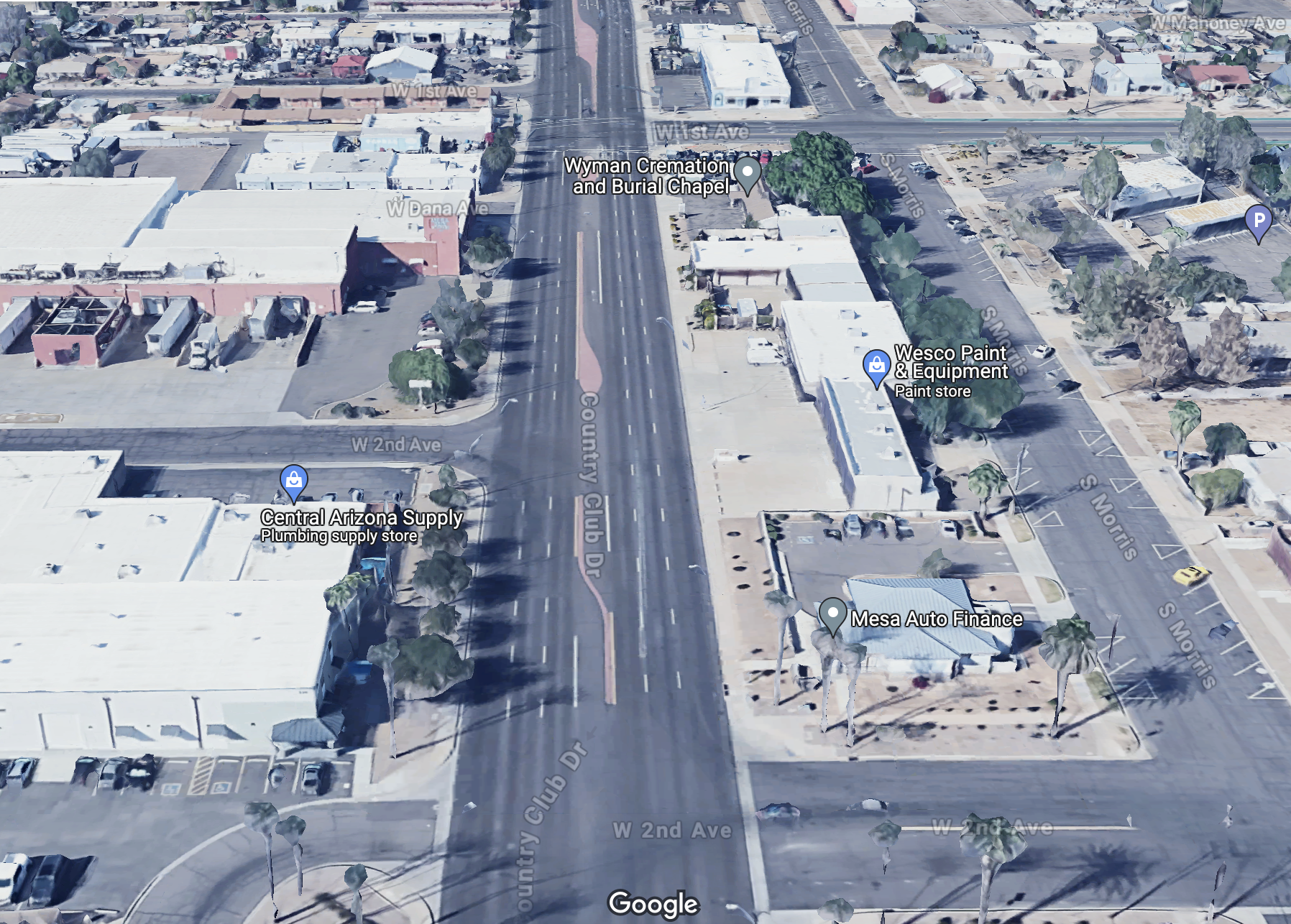
Los Angeles, often considered a car centric city with its wide highways cutting through the Hollywood Hills and its bumper to bumper traffic, is nearly 3x as densely populated (8,304 people/sq mile) as Phoenix (3,104 people/sq mile) when just looking at the central cities. Daily transit usage is roughly 8x higher in Los Angeles while the metropolitan area is home to roughly 2.5x more people. As a result, Phoenix amplifies these roadway issues as nearly everyone drives. Many neighborhoods are bordered by major arterials with 5-7 travel lanes and vehicles moving at 40+ mph. Add on top of that the incredible amount of highways that criss cross their way across the region. Traveling across the Valley, you run into multiple highway expansion projects, a signal that the region is doubling down on car infrastructure, enshrining personal vehicles as its primary mode of transportation into the future.

Not only are the streets and roadways built for ever increasing car traffic, your destinations are increasingly oriented around never leaving your car as well. Drive-thru salads, cafes, and even liquor stores line many of the main streets outside of the city center. Cars queueing up to wait 10-30 minutes wind their way onto side streets, backing up traffic and block crosswalks. In many ways, suburban Phoenix shows what suburban Syracuse is approaching if changes aren’t made soon. Tully’s has proposed a drive-thru version of its restaurant and Chick-fil-as are sprouting up with increasing frequency throughout our suburbs.

As a result of these development patterns, it should come as no surprise that Phoenix and its neighbor, Mesa, are considered two of the 10 most dangerous cities to drive in, ranking 6th and 8th respectively. In my short time in the metro area, multiple car crashes blocked intersections and rerouted traffic. Fast moving cars, weaving across multiple lanes are simply a recipe for disaster.

On top of the dangers for drivers, Arizona is ranked as one of the deadliest states in the country for people walking. As dangerous as it is for drivers to traverse multiple lanes in order to turn, the extremely wide intersections leave people on foot and on bikes exposed to danger for longer. Multiple turning lanes also make it difficult for people walking to be confident that all cars are stopped, reducing the feeling of safety. Ultimately, when you do not feel safe walking, you work to find another way to get around, often in a car, leaving the streets more dangerous for those without any other option. Most people in Syracuse would choose to avoid walking on Erie Blvd E or Genesee St in Fayetteville or Rt 31 in Clay. But when your neighborhood is encircled by roadways of that scale, it is hard to avoid.

View fullsize Sidewalks in Mesa.jpeg
View fullsize Tempe Vision Zero bike lane.jpeg

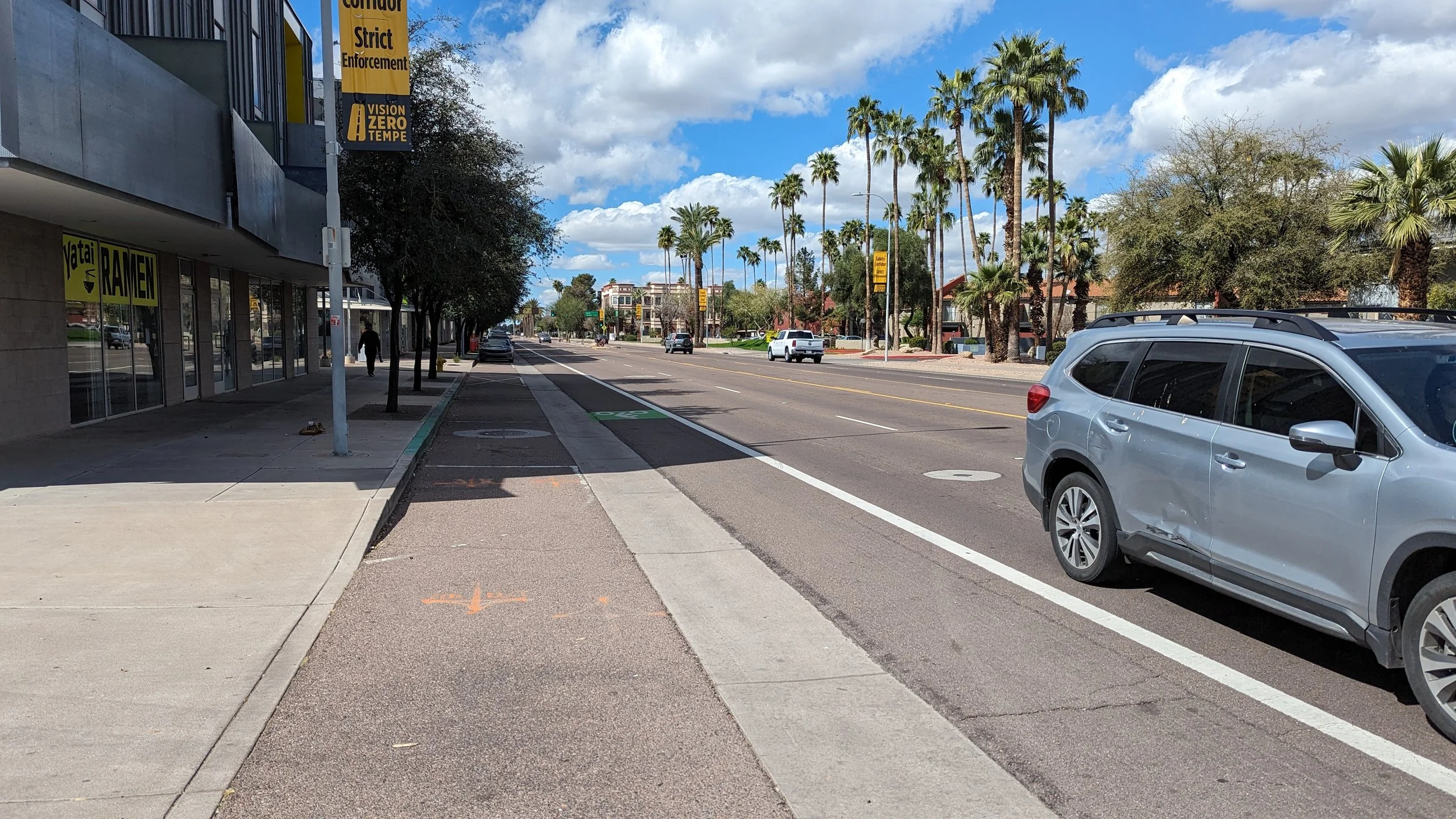
While sidewalks are almost always present, providing a dedicated space for people to walk, bike lanes are still expanding their reach. Where they do exist, the quality ranges dramatically. For every wide, protected lane, there are multiple skinny lanes pushed into the gutter that drop out suddenly before reappearing hundreds of feet further down the road. This is not just a problem around Phoenix, Mesa, and Tempe, but across the country. This problem is especially acute on the multi-lane arterials where drivers are racing, leaving people riding bikes vulnerable whether they are riding in a painted lane or on the side of the road. In Tempe, which has a Vision Zero program, at least one of its Safety Corridors, W University Dr, does not do much to prioritize safe movements of vehicles and includes very little room for its bike lane. I’ll come back to this area again later in the piece as there are some really positive things happening nearby.

And the final piece of bad news before we start looking at the positives - never ending seas of car storage.

As a metropolitan area that is dedicated to the personal vehicle, there’s an overwhelming need for car storage at all destinations. Angled street parking was a common sight around Mesa, but often that parking simply lined the curb outside of a parking lot. Even the roomy parking-protected bike lane primarily ran next to businesses surrounded by their own parking lot, reducing the likelihood of cars acting as a barrier between riders and moving vehicles. To give you a sense of the problem, there is an estimated 2.4 million cars register in the State of Arizona, but there are over 12 million parking spaces in just the Phoenix metropolitan area. All of that asphalt not only makes it unpleasant to walk in most parts of the metro area, but it also intensifies the incredible heat the area experiences during the summer months. Anyone who has ever walked through a parking lot in the summer knows just how hot it can be, but now imagine that walk when its 115 degrees out and there are no trees to shade you. The heated asphalt can even result in severe burns to those unfortunate enough to touch it with their bare skin.

But this is where we start to see some positives, and it comes from an historic form of architecture - the stoa.

View fullsize Mesa - Covered walkways
Mesa - Covered walkways
View fullsize Tempe Marketplace
Tempe Marketplace

Stoa are covered walkways often found in ancient architecture in Greece, Rome, and Spain. Downtown Mesa, which exudes traditional southwest charm in its architecture, employs stoa throughout. The coverings create pleasantly shaded paths and often include both public benches and outdoor dining opportunities. While the stoa are used to help combat the intense sunshine and heat the Phoenix area experiences, the same technique can and should be used in our colder, wetter climates to provide people walking with cover from rain and snow. In New York City, sidewalk sheds, while intended to be temporary, often provide this benefit during storms. Downtown Syracuse has lost many of its awnings and coverings over time, which becomes apparent when you see historical photos and paintings of the area. 

While stoa offer up much needed shade, they also help to expand outdoor dining opportunities for bars and restaurants. As a city that enjoys sunshine nearly all year round, outdoor dining and drinking is a common occurrence - on sidewalks out front, patios in the back, and roof tops. While northern cities like Syracuse can’t as easily provide this level of outdoor activation, we can do more than people often think. By including more covered spaces, outdoor patios and rooftops can be activated for most of the year, especially if heating lamps are strategically placed throughout. Unlike Phoenix, whose residents are spoiled with sunny days, our northern cities see all available outdoor spaces filled from the first sunny day in spring to the last grasp of warmth in the fall. We should identify ways to make these spaces work in all weather.

Sticking to this desire to be outside in social settings, suburban Phoenix has increasingly embraced outdoor malls with pedestrian centers. Tempe Marketplace, while surrounded by a moat of car storage, provides a dense, walkable environment for visitors. Yes, at its core it is simply a mall, primarily occupied by national chains and privately controlled, but it offers the possibility of becoming more than just a mall. As the need for housing expands, the large parking lots that surround the shopping center can easily be developed into housing, allowing residents to live within easy walking distance to many of their daily needs. Enclosed malls can also see some of this infill and conversion, but the focus on interior access makes redevelopment more difficult.

Now I may have been harsh on mobility across the Valley, and rightfully so, but there are some bright spots that deserve some attention.

Let’s start back with that parking protected bike lane mentioned earlier. This concept is not new and has been used extensively throughout New York City and other cities across the country. But I want to highlight the use of this technique in Phoenix, one of the most car obsessed metro areas in the country, in contrast to Syracuse’s reluctance to explore their use after neighbors caused an uproar over one near Syracuse University over a decade ago. While the execution of that bike lane was less than desirable, it is beyond time to revisit their use as a low-cost and effective way to protect bike lanes throughout the city. 

In Tempe, some neighborhood streets are utilizing raised intersections to slow vehicles, making it safer for people to ride bikes and walk across the street. By spreading these intersections along a street, cars are never able to pick up speed before they need to slow down once again, reinforcing safer speeds. Similar techniques have been used closer to Syracuse, with a high profile example in Philadelphia’s City Center neighborhood. Concerns will always be raised about maintenance, especially regarding impacts on plowing, but those concerns are truly unfounded. Similar to raised intersections, the City of Syracuse has been piloting speed cushions on neighborhood streets throughout the city. After 2 years, there has been no documented evidence of issues with plowing. If anything, a fully raised intersection may be even easier to navigate for plows as they should be moving through intersections at slower speeds to begin with.

View fullsize Tempe - Raised intersection
Tempe - Raised intersection
View fullsize Tempe - Scooter drop zone
Tempe - Scooter drop zone
View fullsize Mesa - Valley Metro Rail station
Mesa - Valley Metro Rail station
View fullsize Valley Metro Rail
Valley Metro Rail

Beyond improving the movements on our streets, Tempe is setting an example of how to handle dockless scooters. In spring 2022, social media around Syracuse was lighting up with complaints over where the new e-scooters were being left - blocking sidewalks, in parking spaces, on front lawns, etc. Since then, there has been little movement on providing better spaces for scooters to be left when they’re no longer in use. In contrast, Tempe has taken action in its downtown core by creating simple drop zones near intersections. These drop zones are painted spaces with a scooter symbol in areas already signed for no parking. As a result, they act as an additional reinforcement to daylighting regulations, where cars are prohibited to park in order to enhance visibility within an intersection. Similar techniques have been used with great success in Hoboken, NJ, which has not seen a traffic death in over 7 years. To encourage the use of these new drop zones, Tempe has worked with the e-scooter providers to enact fees and penalties for not leaving their scooters within the designated areas. Syracuse, and other cities with micro mobility options, should explore similar policies once drop zones are implemented and widely spread across neighborhoods.

All of this begins to add up to some of the more promising projects occurring around the region, all of which are building off the investment the region made in light rail. While Valley Metro Rail is fairly limited in scope, dense development has followed in its wake.

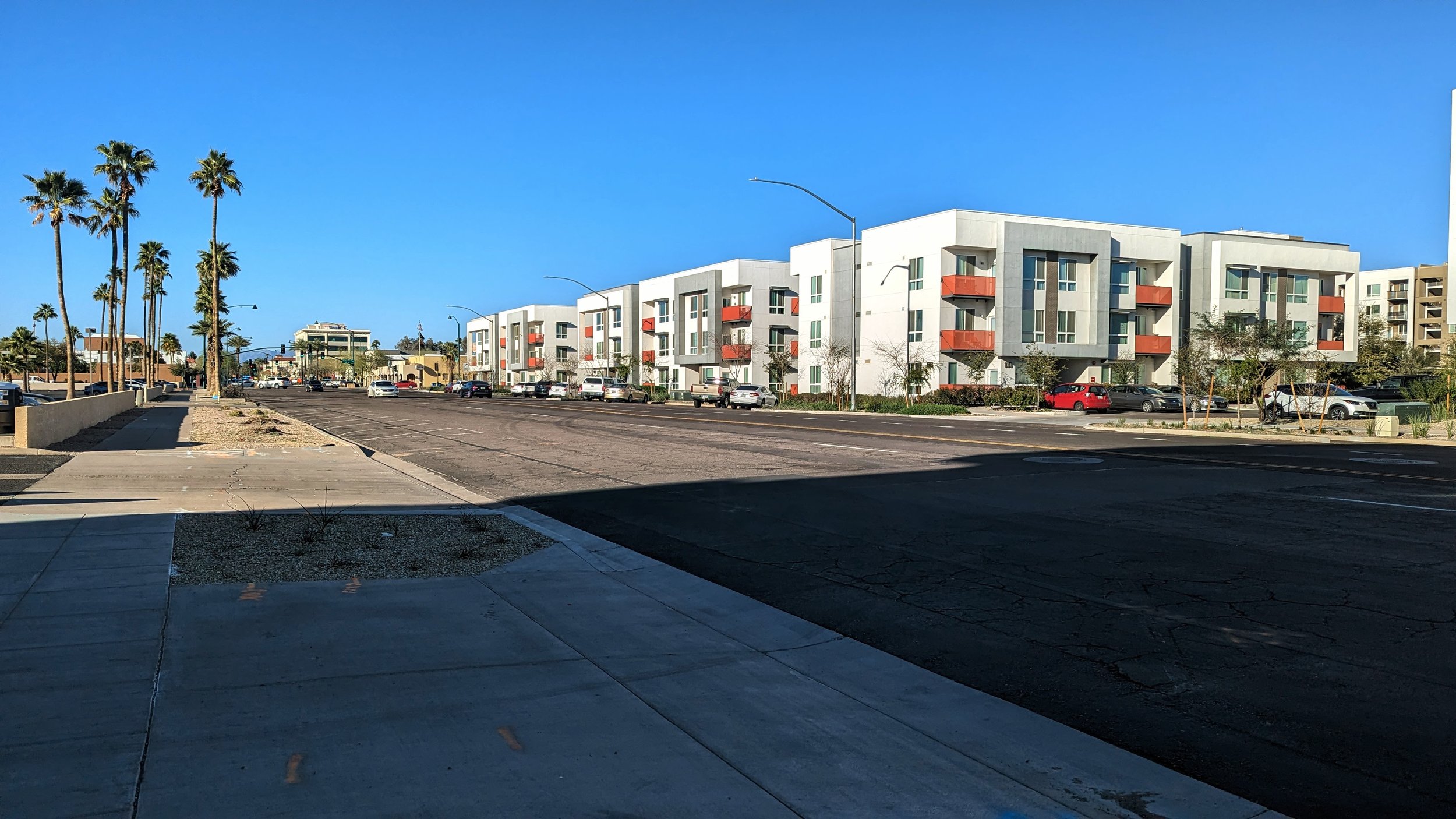
Five and six story residential buildings are popping up across the Valley within easy walking distance of the light rail corridor. While they are primarily residential only, some mixed-use development is popping up as well, with many buildings facing the main corridor while placing whatever parking they do provide in less visible locations.

View fullsize Culdesac interior street
Culdesac interior street
View fullsize Culdesac bar / restaurant
Culdesac bar / restaurant
View fullsize Culdesac secure bike parking
Culdesac secure bike parking
View fullsize Other housing construction near Culdesac
Other housing construction near Culdesac

As a sign of what may be possible in the near future, a much talked about new development, Culdesac, is aiming to show that even in this car dominated region, you can live car free. This development, located directly at a light rail station, emphasizes car-free living, providing secure bike parking throughout, narrow pedestrian only streets, small courtyards, and commercial/retail outlets sprinkled along the first floor of many buildings. While the development was in soft launch mode while we walked around in early March 2024, you could get a sense of what the place was aiming to be - a fully integrated community. The small shops are meant to serve not only residents of Culdesac, but also the hundreds of apartments popping up nearby. A bar/restaurant sits at the entrance to the development as you cross from the light rail station, with outdoor seating lining the sidewalk. This choice emphasizes the need for social third places for neighbors to come together.

Now this type of development may not be possible everywhere, but its staking out a claim in a region that has been hostile to pedestrian and transit oriented developments. As the Syracuse region eyes significant growth for the first time in decades, we should look to ambitious developments like Culdesac for ideas on how to increase walkability even in more suburban environments. Locate your developments where transit investments are occurring, emphasize access to daily needs, and create spaces that are human scale.

Even though the Valley of the Sun mostly remains a cautionary tale in terms of urban development, there are plenty of lessons we can learn, both good and bad, from its growth. Let’s make sure we learn the right ones.

In Transportation, Urban Planning, Walkability, Housing
Comment

The Movie Theater at the Urban Core

January 31, 2024

A common theme that we hear in recent years is that we are always connected but never truly connecting. Our phones and computers allow us to constantly check in on friends, family, news items, and go down rabbit holes of our own. But it is often lamented that this ultra connection has severed our connection with the here and now. 

I agree with this sentiment to a certain extent, especially as someone who struggles to put down their phone throughout the day, and that’s why my interest was sparked on a recent episode of the Ezra Klein Show podcast. The episode, which focused on how to find your own aesthetic taste, took a short detour to talk about going to the movies. In 2024, the movie theatre is one of the last places where being on your phone is frowned upon, and often results in people expressing their displeasure vocally. The importance of this is not the public pressure to stay off your phone, but the result that you are forced to engage fully with the story in front of you, developing your own meanings and takeaways, before you are able to be influenced by outside sources. 

Obviously you may be influenced by a review you read or the opinion of a friend before you go. But at the moment, you’re focused on the screen. Developing questions, forming connections, and determining your opinions on the work in front of you. This is why the movie theater is important and why we should find ways to work them back into our urban fabric.

For over 100 years, movies have brought strangers together and the movie theater has been at the center of the action.

View fullsize Former Brighton Theater
Former Brighton Theater
View fullsize The Palace Theatre
The Palace Theatre

Starting out as novelty where crowds famously feared that a train was barreling down on them, the medium quickly became an artful way to tell stories and explore new ideas. By the early 1900s, small neighborhood theaters and nickelodeons (named after the price of entry) were popping up across cities and towns. Due to their limited space and small screens, these first small theaters filled storefronts in neighborhood business districts, playing collections of short films (15-20 minutes typically). By 1908, over 8,000 of these nickelodeons were spread across the US, with many packed to the brim with customers in standing room only conditions. 

But soon, these small theaters gave way to larger venues aimed at playing longer films and providing more comfortable settings. In the later 1910s and into the 1920s, larger neighborhood theaters, akin to Syracuse’s still standing Palace Theater, began to anchor their respective urban neighborhoods. When looking at lists of theaters across the City of Syracuse during this time, as provided in Norman O. Keim’s Our Movie Houses: A History of Film & Cinematic Innovation in Central New York, you see this mini movie palaces popping up in each neighborhood, such as the Brighton Theater on S Salina St or the Westcott Cinema on Westcott St.

While these neighborhood gems served their communities as gathering spaces, the true palaces were reserved for urban downtowns. 

The RKO Keith’s, the Paramount, and, of course, the Loew’s State Theatre, now known as the Landmark, were grand cinema houses that lined S Salina St in Downtown Syracuse. Their opulence set them apart from all other movie theaters in the region and formed the core of a theater district who’s impact is still felt today.

View fullsize Pantages Theater - Minneapolis
Pantages Theater - Minneapolis
View fullsize James M. Nederlander Theatre - Chicago
James M. Nederlander Theatre - Chicago

Movie palaces of this scale allowed the average citizen to escape into a world of royalty for a few hours, as most feature films were accompanied by short films and news reels before the main attraction rolled. Movies were events that allowed you to stay informed and engage with the culture of the day.

Throughout the 30s, 40s, 50s, and 60s, a select few films, often musicals or big budget historical epics, would utilize a promotional technique known as the roadshow. Roadshows would travel the country to these magnificent movie palaces and be presented on the scale of a live performance. Often props, or replicas of props, would follow the film to create buzz around the community. Classics such as the Sound of Music, the Ten Commandments, and Gone with the Wind were all presented in this fashion.

Slowly this elevated place of movies within the culture would fade. The advent of TV in the 1950s, home video in the 1980s, and the swift currents of suburbanization would zap the cultural relevance of the movie theater. Soon,  multiplexes, especially in suburban shopping malls, would come to dominate the industry. In Syracuse, many of our neighborhood theaters would close, from the Genesee Theater in Westvale Plaza to Cinema North in Mattydale, or transition out of the business, as the Palace Theater in Eastwood has. Movie going habits would continue to shift and the experience would become more common place and less of a to-do. In many ways, this is a positive, as more and more people were able to take part, but the importance of the theater in our lives would diminish as it would become buried the commercial landscape.

This decline would accelerate even further over the last several years as TV screens have grown larger, streaming services have taken over, and our attention spans have dwindled. When I talk to friends about going to the movies, often they’ll opt to wait for the movie to come out on streaming so they can watch it at home. They’ll complain about the cost, the uncomfortable seats, the unwillingness to travel to the mall (or fear of the mall as some unfortunately feel), or the belief that their TV is a good substitute.

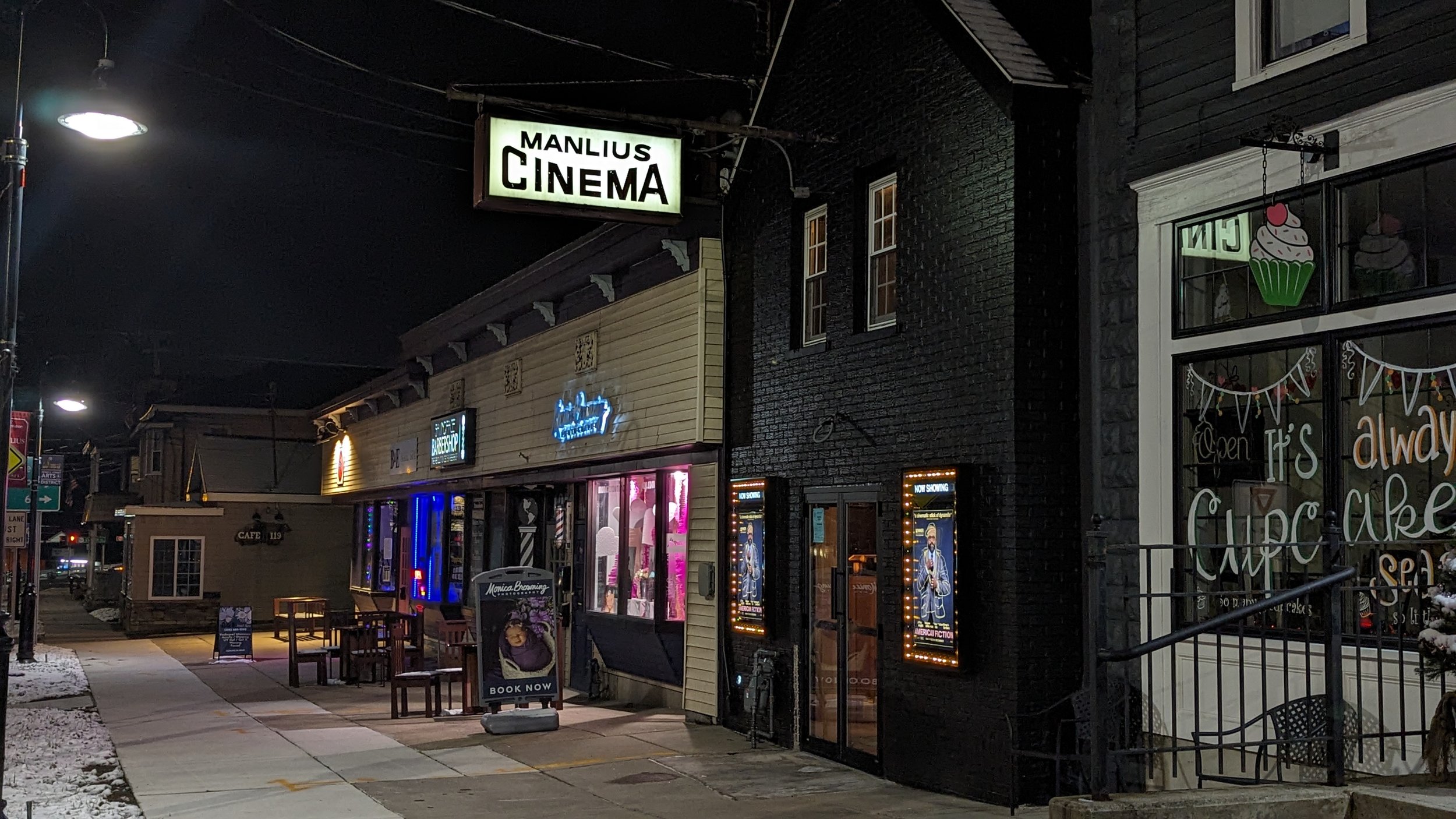
So why do I bring this up? Movie theaters still exist. Even in Syracuse we still have a few options (Regal, Movie Tavern, the Manlius Cinema, and the Hollywood). Why should we care about movie theaters? And how does this relate to our urban fabric?

We will never go back to the golden age of cinema, and it probably is not desirable to. While going to the movies was an event, it wasn’t always accessible to everyone, and it still isn’t. Multiplexes, like Regal and Movie Tavern, allow people to see a far wider variety of movies than the single screen theaters of the past allowed, and streaming allows for even more variety.

While our viewing habits may have changed permanently, we should still celebrate the moments we are able to gather together as a community and have a collective experience. We should be given moments where we are fully engaged in a cultural event that we not only shape our own views on without constant distractions, but also connect with others as they do the same.

The legacy theaters, such as the Manlius Cinema and Palace Theater, should be preserved and encouraged to keep working as movie theaters. They should be encouraged to curate content that is distinct from the multiplexes and provide experiences typically only available in larger cities. We should encourage the development of other neighborhood theaters that tie into local coffee shops, restaurants, bars, etc. The Little Theater in Rochester is a prime example of a local theater acting as its own center of gravity to benefit the community around it.

For our former cinema palaces, such as the Landmark Theatre, explore opportunities to revisit their legacies of hosting roadshows. While many have been converted to handle traveling Broadway shows, which has seen tremendous success, there are opportunities to re engage with their cinematic histories. Schedule special screenings of movie musicals or grand epics, both new and old. Host film festivals, including for local student filmmakers, providing them an opportunity to see their work in a unique venue. 

In the end, this is really just a call for each of us to find new, or old, ways to engage, as any good city should allow you to do. Our best urban spaces and experiences will give you a reason to disconnect from your devices and embrace a shared experience. But for now, maybe let’s just start by seeing a movie. And don’t forget the popcorn.

Comment

The Case for a Holiday Village

November 30, 2023

City sidewalks, busy sidewalks, dressed in holiday style

In the air there's a feeling of Christmas

Children laughing, people passing, meeting smile after smile

And on every street corner you hear

Silver bells, silver bells

It's Christmas time in the city

- “Silver Bells” by Jay Livingston and Ray Evans

“Silver Bells,” like many other holiday classics, celebrate cities and the gathering spaces they offer during this festive season. As I wrote about back in 2021, the lights, displays, shopping, and events highlight walkability and the ways people engage with their communities. One holiday tradition I only briefly touched on, but think is worth exploring further, is the advent of the Holiday Village.

Holiday Villages, which are essentially mini-neighborhoods that pop up in public squares, are a German tradition stretching back as far as the 16th century. Filled with food and drinks, and plenty of small shops, these villages become key gathering places for both residents and visitors alike. The tradition has since grown across Europe and into the United States.

In Europe, Holiday Villages often include dramatic lighting displays with small, ornate sheds creating their own internal street network. Typically located in historic city centers, the traditional architecture around the squares are adorned with lights that highlight their features.

In the US, cities big and small have begun embracing these Holiday Villages. 

View fullsize Bryant Park - NYC
Bryant Park - NYC
View fullsize Market Square - Pittsburgh
Market Square - Pittsburgh
View fullsize Wrigleyville - Chicago
Wrigleyville - Chicago
View fullsize ROC Holiday Village - Rochester
ROC Holiday Village - Rochester

New York City’s Department of Parks & Recreation build out several small villages across the City filled with small scale vendors and snack shacks. The village in Bryant Park offers free ice skating as well.

Pittsburgh’s Market Square sees itself transformed into an Alpine village throughout the holiday season, attracting both local and international vendors for visitors to enjoy. Market Square itself is lined with bars and restaurants year round, providing shoppers with plenty of places to extend their stay into the night.

Chicago’s Wrigley Field sees its new public square turned into Christkindlmarket Wrigleyville. The ballpark installs an ice skating rink just outside its walls and lines it with many German-inspired huts and local craft artists.

Closer to home, Rochester, for the past five years, has hosted the ROC Holiday Village in Martin Luther King Jr. Park. Similar to many of the larger Holiday Villages, the shops surround a public ice skating rink, offering fun activities for all ages. A fairly unique feature to Rochester is the Igloo Inn, which allows groups to rent large, inflatable igloos that are furnished in cozy, classic holiday styles.

So why doesn’t Syracuse have a Holiday Village? While it may be too late to get a village in place for the holidays this year, there is plenty for us to think about if we want to organize one for next year.

First, to consider its location.

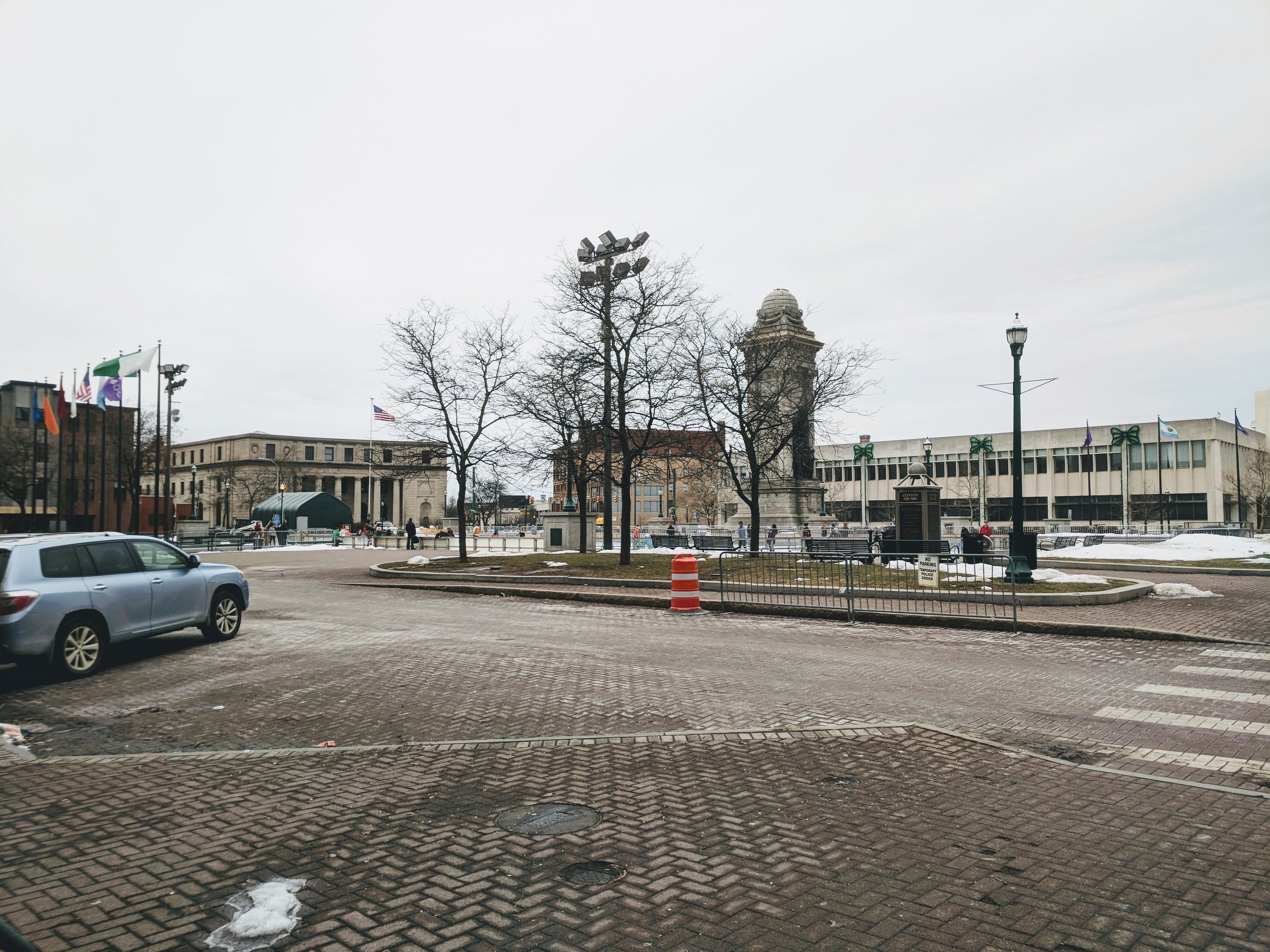
Nearly all large festivals in the City of Syracuse take place in Clinton Square, and for good reason. Its wide open layout makes it easy to quickly build up and take down tents for vendors and performance stages. It is also the location for the City’s outdoor skating rink and municipal Christmas tree. At the same time, these are some of the reasons Clinton Square should not be considered. 

Back in 2018 I reflected on some of the shortcomings of Clinton Square, from the lack of tree coverage and natural congregating spaces to the windswept feeling caused by short surrounding buildings that fail to address the square. When you compare Clinton Square to the location of Holiday Villages mentioned above, it lacks the desired “human scale” they display.

View fullsize Clinton Square - Syracuse
Clinton Square - Syracuse
View fullsize Bryant Park - NYC
Bryant Park - NYC

When discussing “human scale” in the context of a plaza, we are mostly considering the sense of enclosure they provide. Clinton Square, with its wide open area and relatively short surrounding buildings on 3 out of 4 sides, fails to provide any sense of enclosure. When you look at Bryant Park in NYC, which is more than twice the size of Clinton Square, the height of the surrounding buildings, along with its tree canopy, helps provide a sense of enclosure that is inviting. 

The good thing is we don’t need to look too far to find a better option.

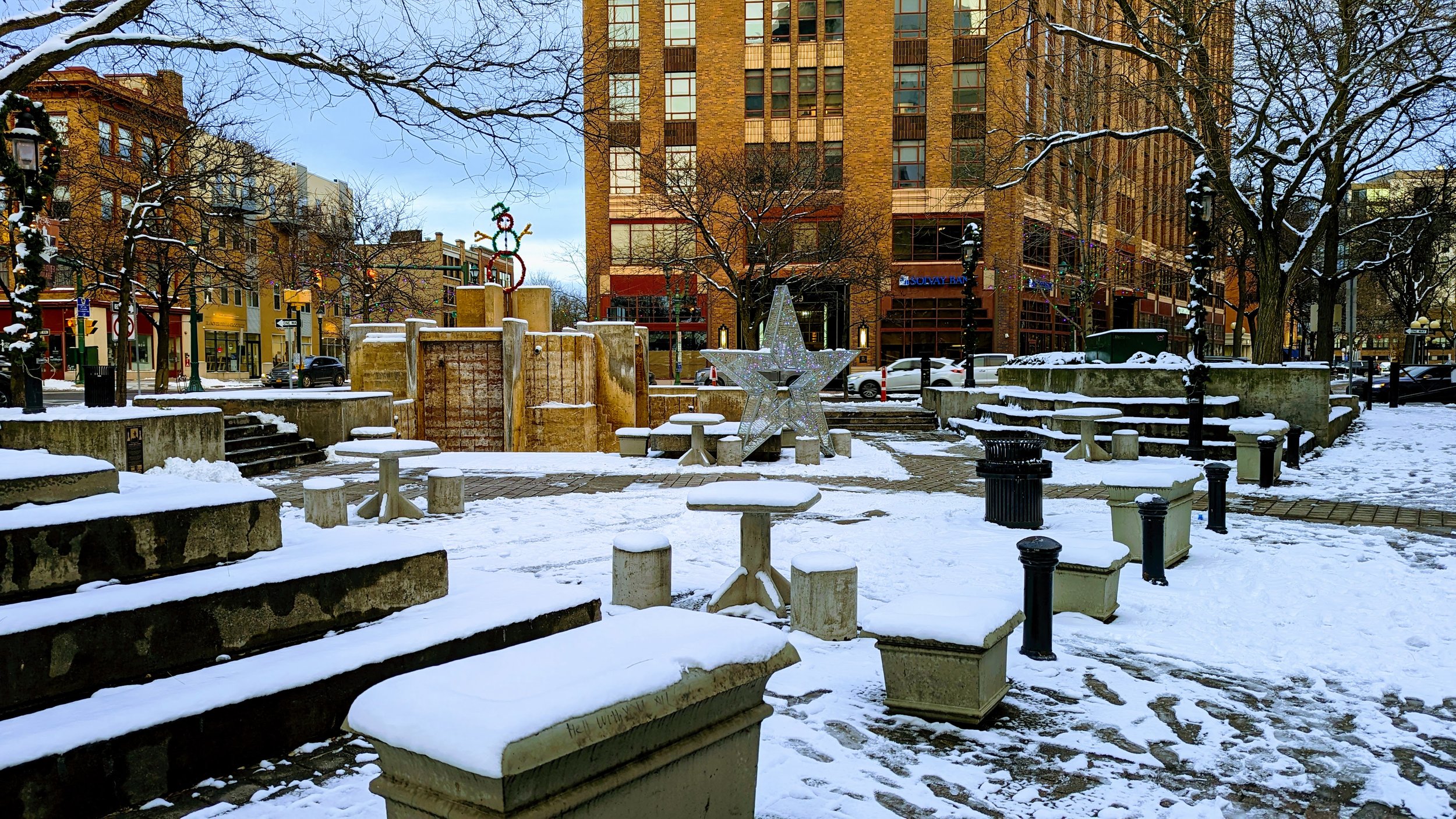
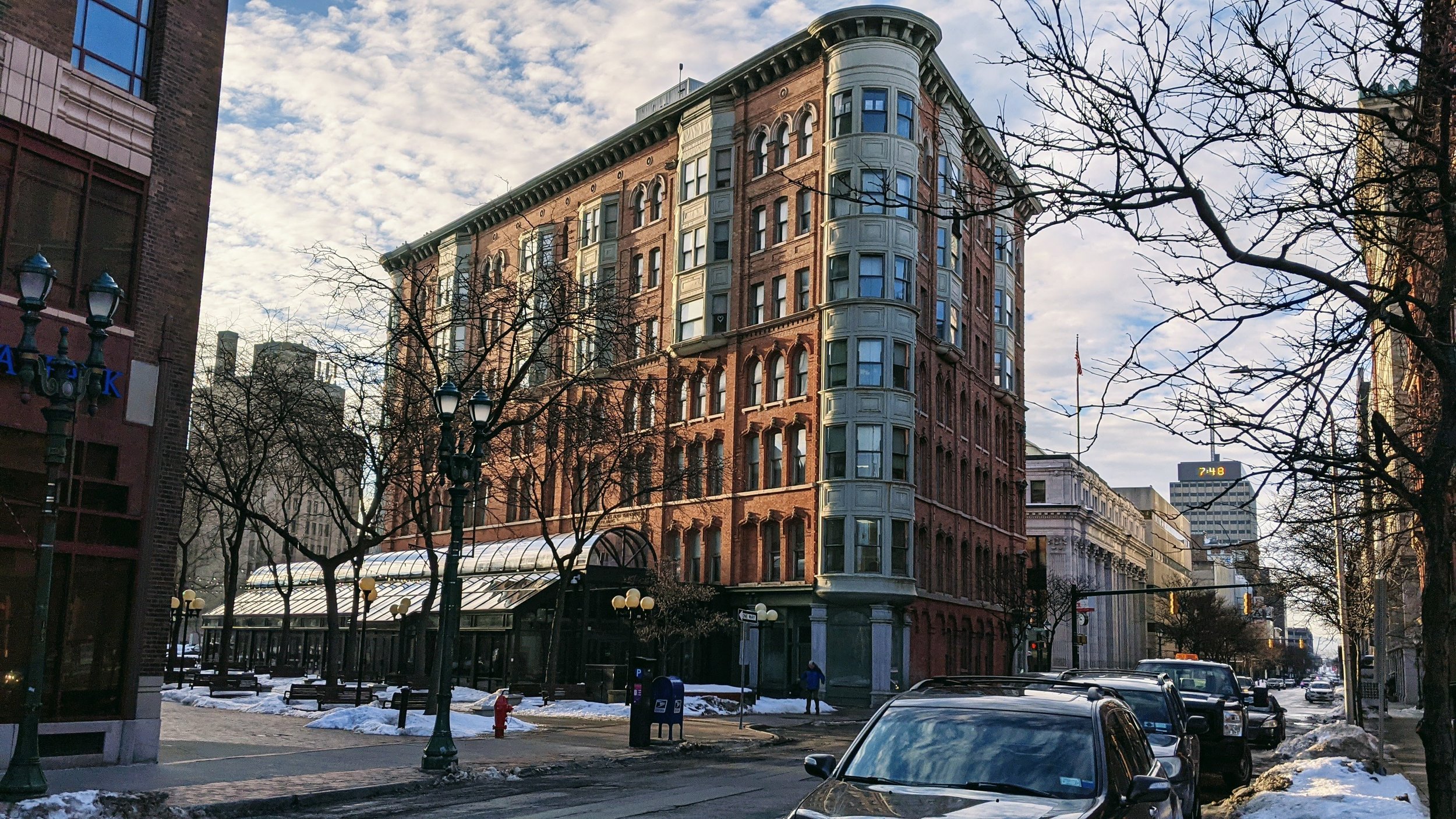
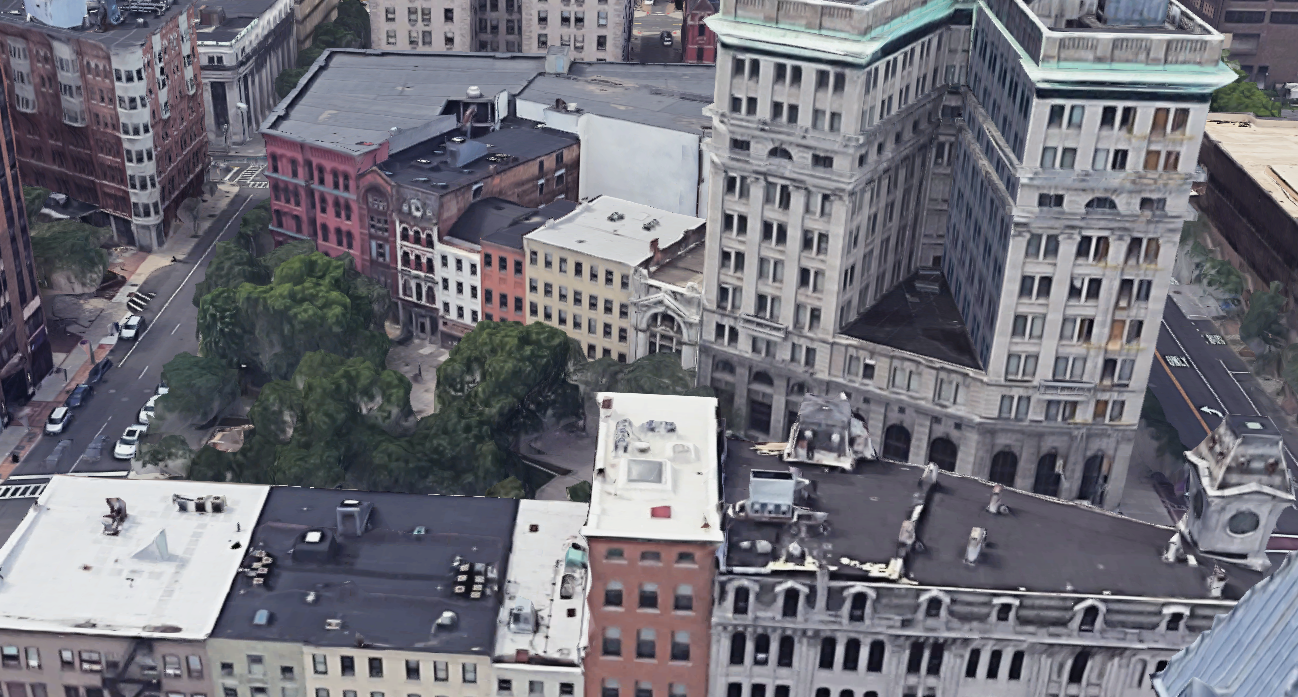
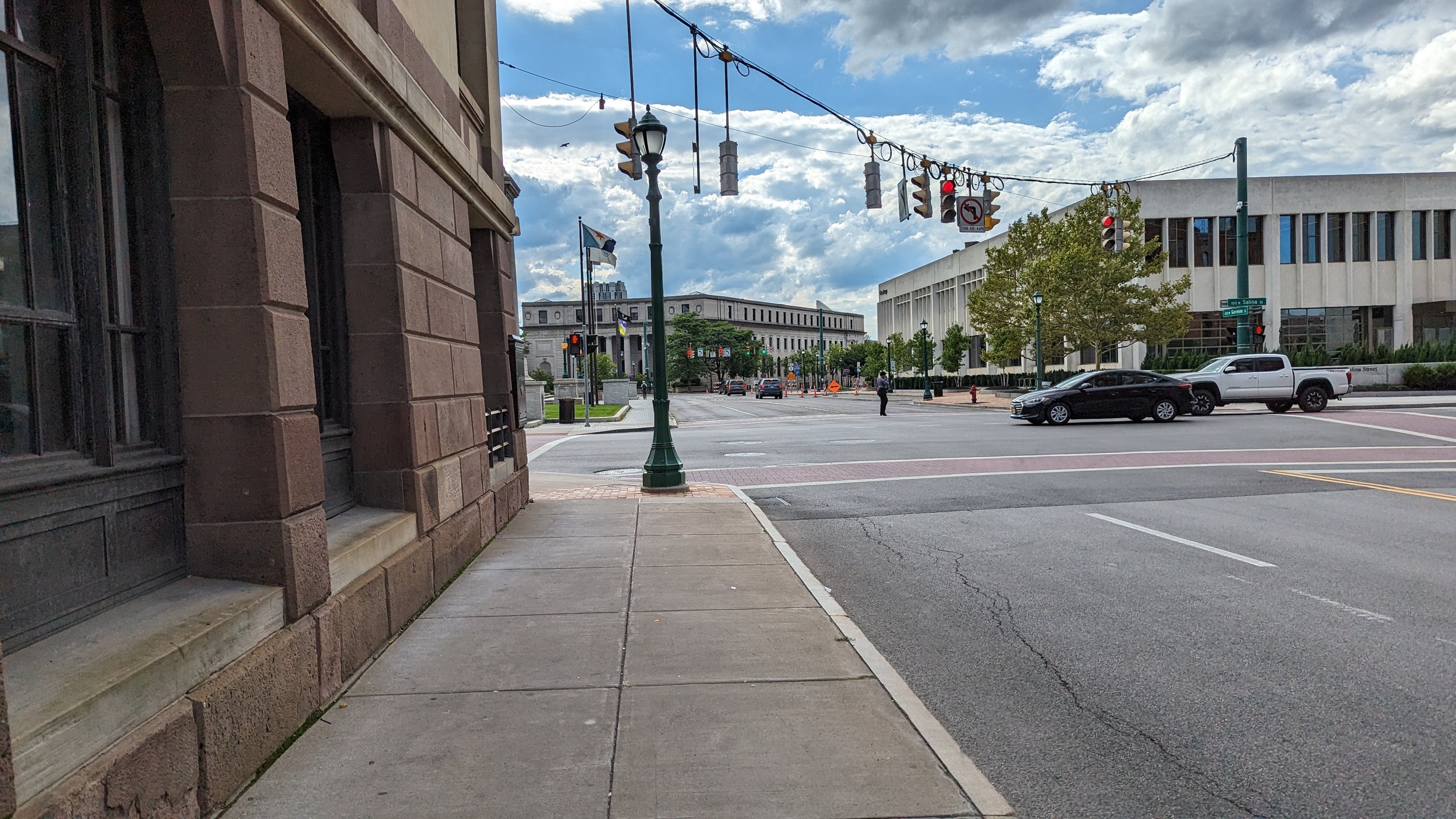
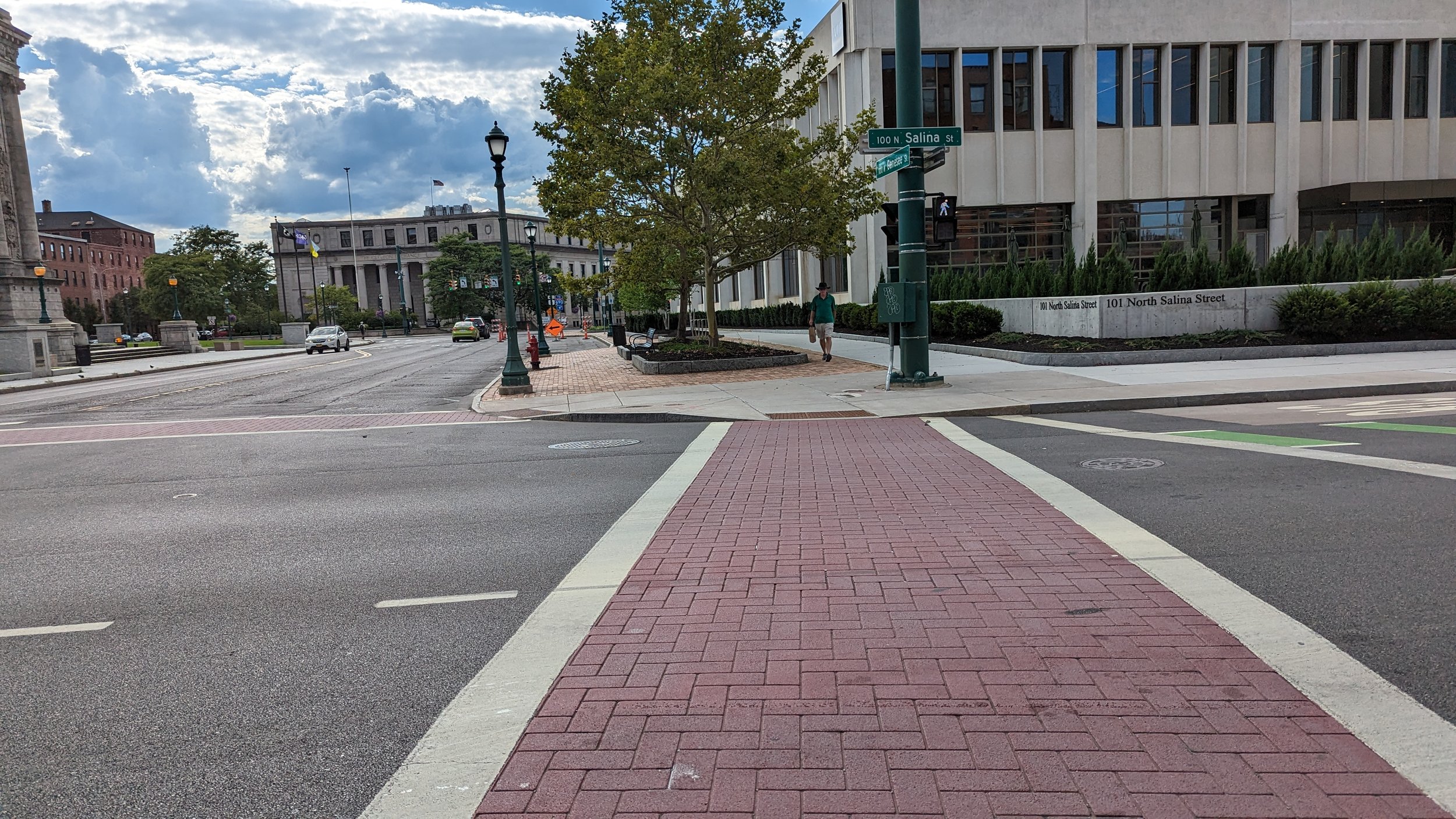
Hanover Square, located across S Salina St from Clinton Square, offers this sense of enclosure while also adding architectural interest and commercial activity.

Home village 1.jpeg
Home village 2.jpeg
Home village 3.jpeg
Home village 1.jpeg Home village 2.jpeg Home village 3.jpeg

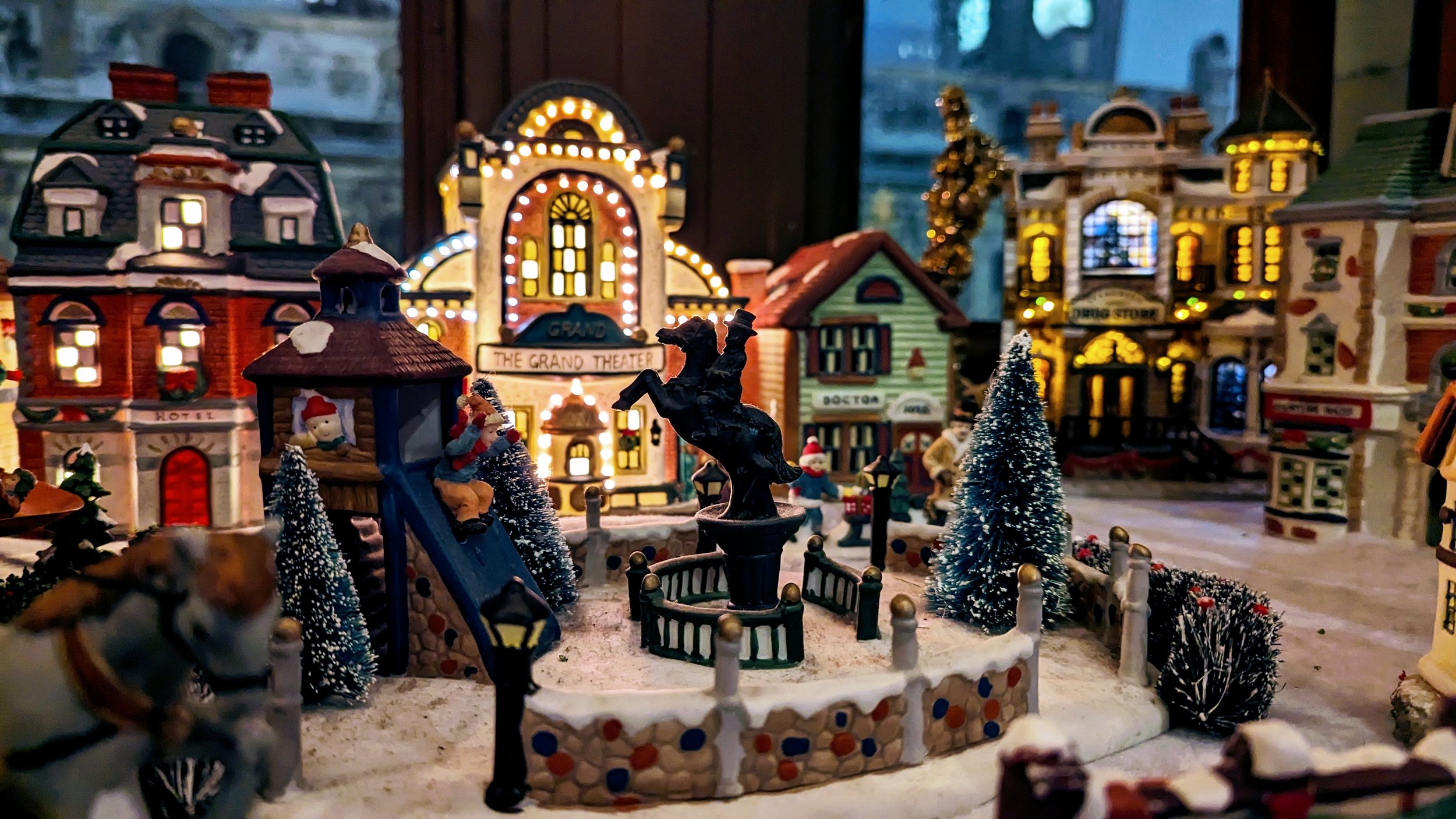
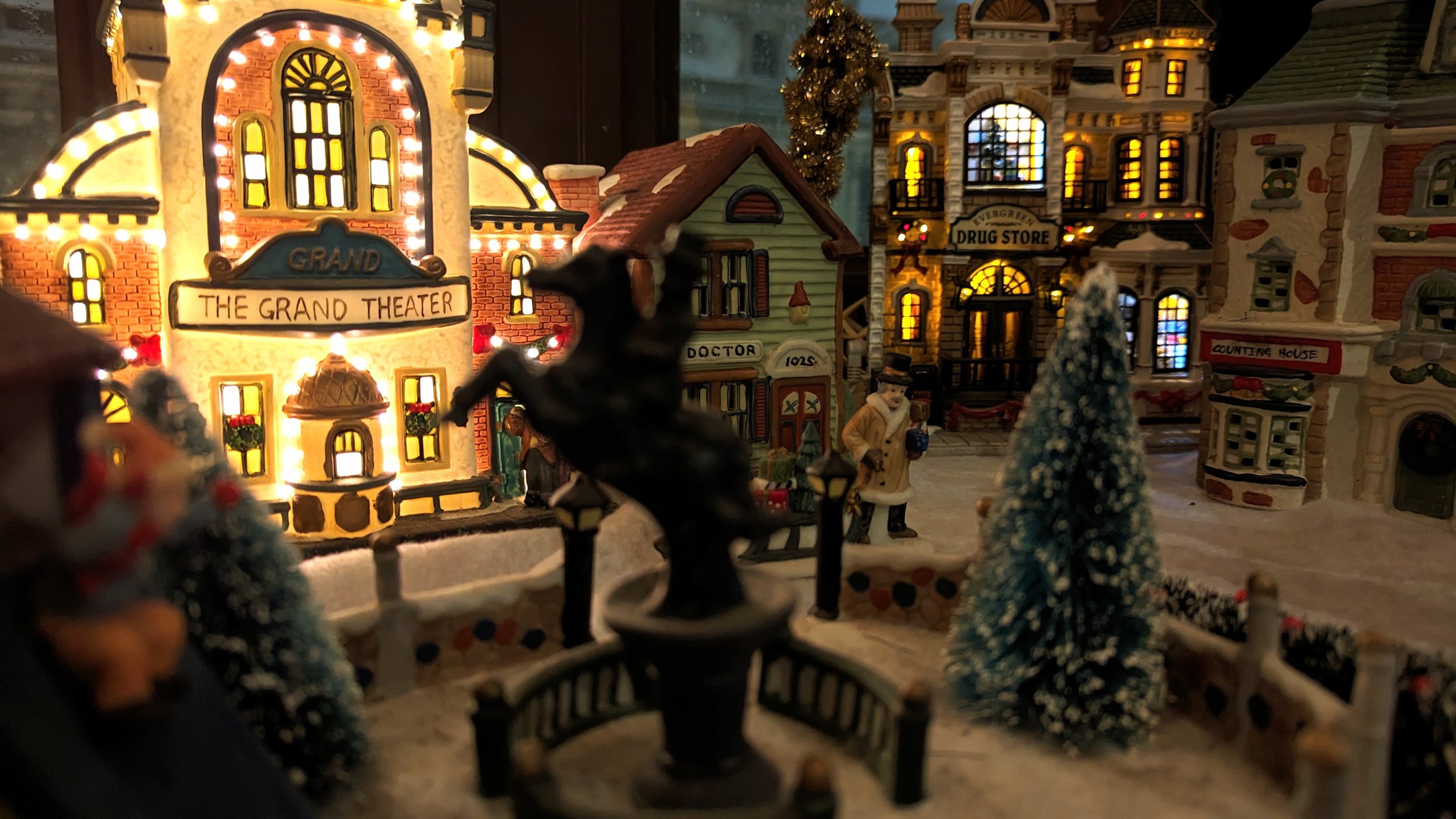
So many of our holiday traditions date back to the late 19th and early 20th centuries, from the look of Santa Claus to Christmas cards and carols. It is one of the many reasons the Christmas Villages many of us put up in our homes (including the one I put in my window above) typically mimic Victorian era buildings. Luckily for Syracuse, Hanover Square, the first commercial square in the City, still maintains many of these historic touches.

Adding to the architectural display, the square’s layout already emphasizes creating congregation points, with built in seating, perfect corners to gather, and a wonderful tree canopy. On top of this, the City has permanently closed two blocks of E Genesee St to through traffic, allowing people to flow between businesses without having to interact with cars. To add to this, the City should consider closing the 100 block of E Water St during the holiday season to open the square up further and create a true destination. For the past two summers, the City has closed the street on Thursdays during August to host Hanover Thursdays, a weekly concert series, which have been wildly successful. Closing the block for 3-4 weeks is a taller ask, but its a worthwhile endeavor. Should the event prove successful, similar treatments currently in place on E Genesee St should be explored, blocking cars from driving through but still allowing access when absolutely necessary.

Hanover from S Salina.jpeg
Hanover with tree.jpeg
Hanover from Warren.jpeg
Hanover Star.jpeg
City Hall Commons.jpeg
Hanover atrium.jpeg
Hanover from S Salina.jpeg Hanover with tree.jpeg Hanover from Warren.jpeg Hanover Star.jpeg City Hall Commons.jpeg Hanover atrium.jpeg

So what might this Holiday Village look like?

Hanover Square already finds itself covered in lights and wreaths, providing a festive spirit. During Hanover Thursdays, vendors at tables and under tents tuck themselves into the corners and along the street. A Holiday Village would need more sturdy structures than a simple tent. Wooden huts would keep with the more traditional vibes that many Holiday Villages aim to display. You could also aim for a slightly more modern vibe, using glass stalls similar to those seen in Bryant Park. Either way, they should be sure to open up towards the bars and restaurants that currently line the street while creating a more complex, maze like inner network of streets. Holiday Villages should be about wandering and bumping into experiences, not straight lines and grids, like so many of our city streets are. 

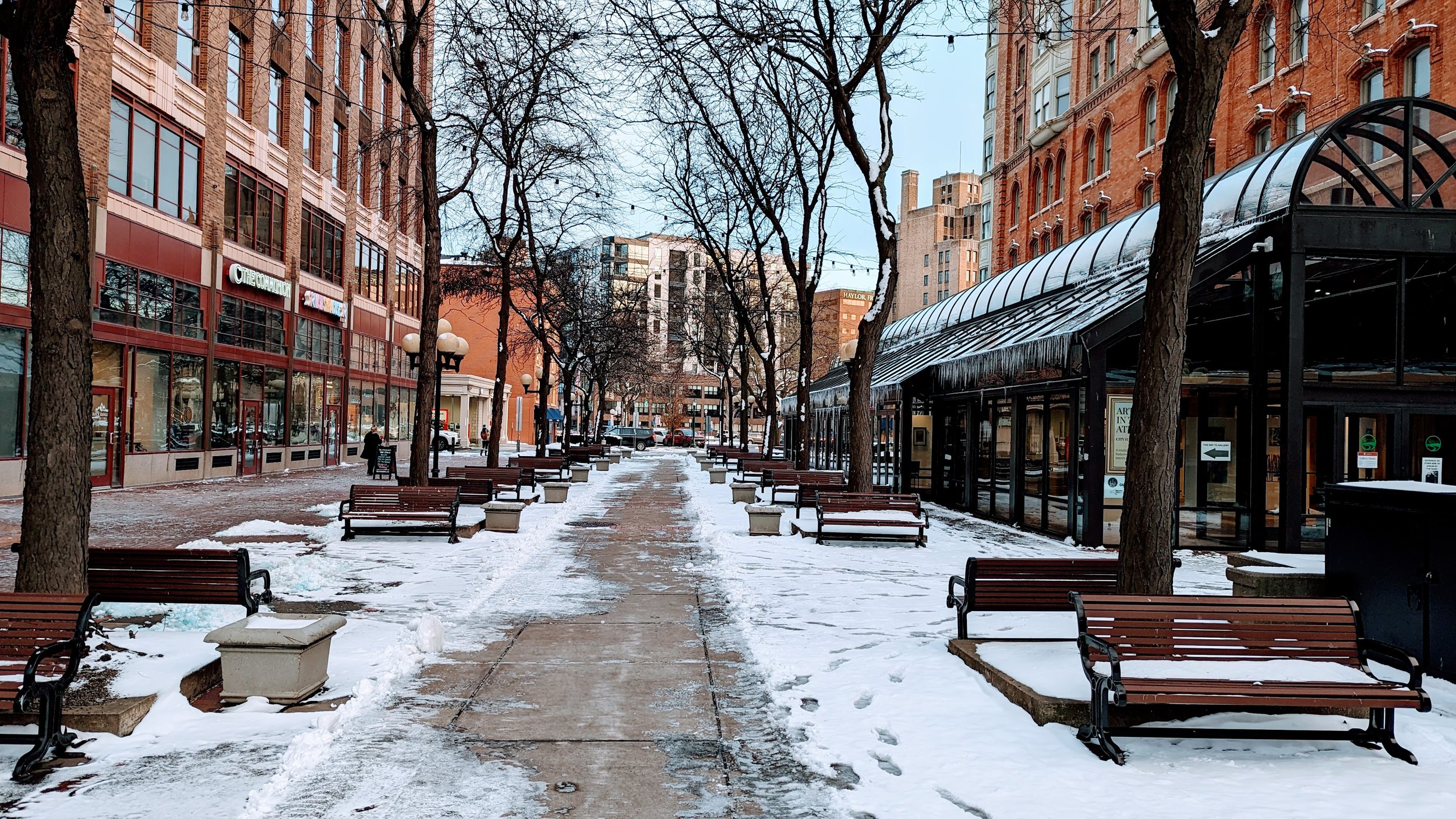
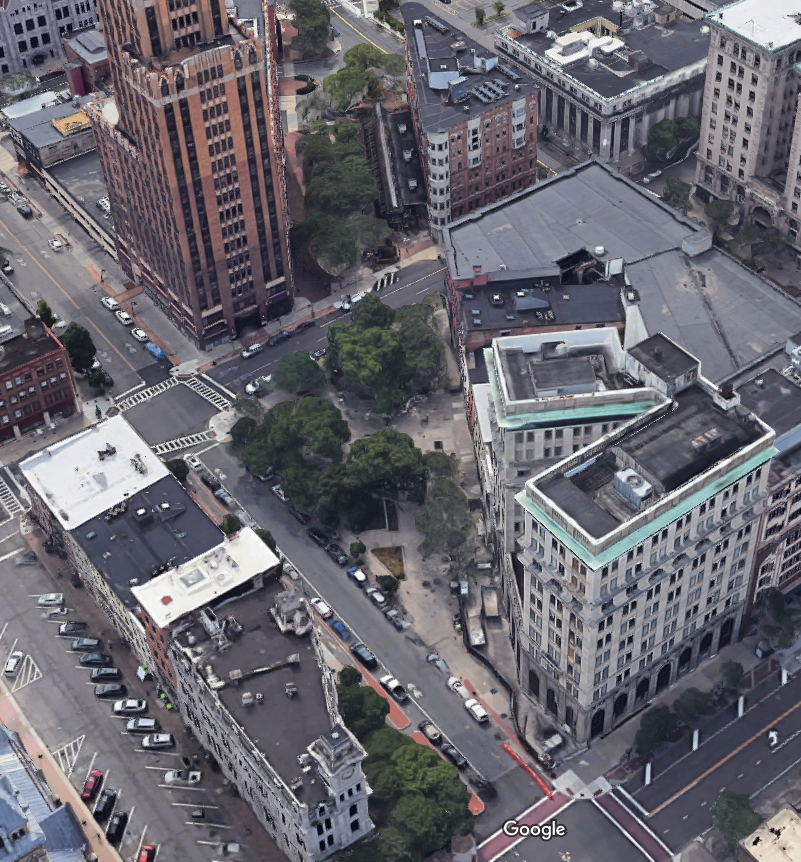
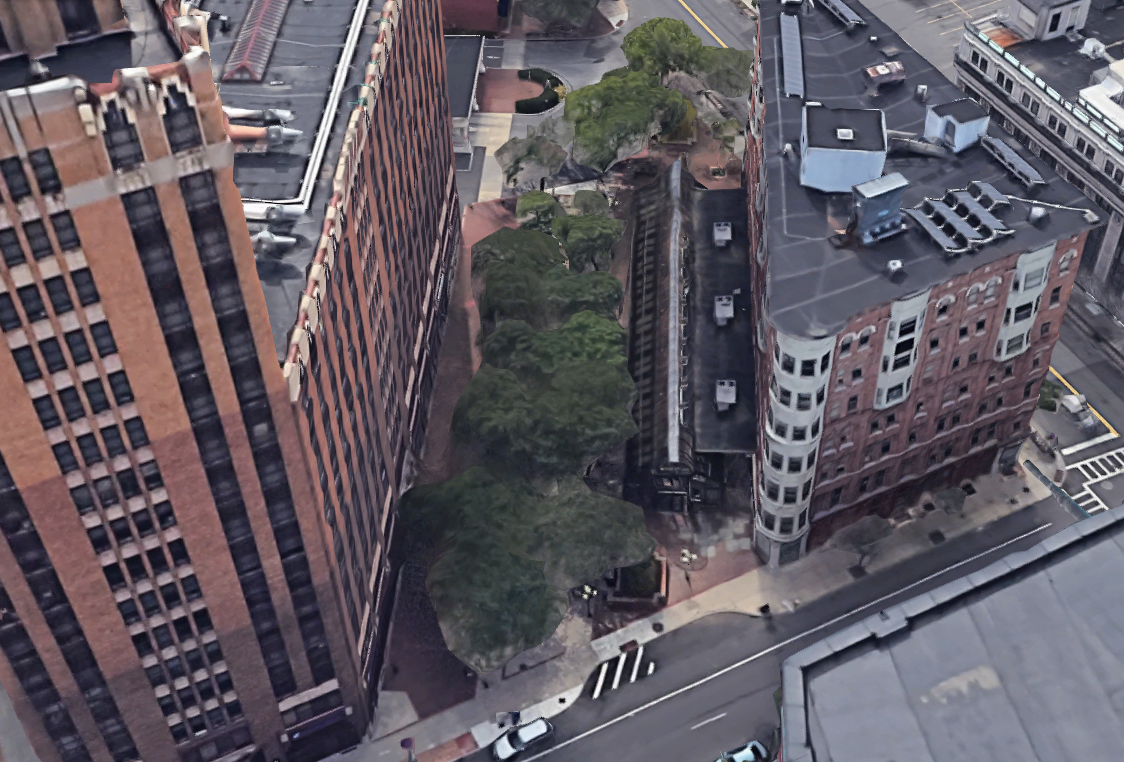
For the second block of Hanover Square, where the Communion Wine and Spirits is located, the City should work with the new owners of City Hall Commons to open up the atrium for smaller craft artists to share spaces and provide opportunities for visitors to warm up. This block of Hanover Square always feels underutilized, likely due to only one store being present on it. By extending the Holiday Village to this second block, you help tie the two spaces together and can showcase what is already an architecturally beautiful space. With added traffic, and an introduction to this space, it may become more attractive to other business owners to locate, especially once City Hall Commons finishes its renovation and adds hundreds of residents.

Hanover Square - Both Blocks
Hanover Square - Main Square
Hanover Square - Atrium Block
Hanover Square - Both Blocks Hanover Square - Main Square Hanover Square - Atrium Block

There’s many more logistics that would need to be worked out in order to build our very own Holiday Village, but the City of Syracuse deserves one. Syracuse is a city built on events and we struggle to translate that into every day activity on our streets. A Holiday Village that runs for nearly a month begins to bridge that divide. Short enough to still be an event, but long enough to encourage people to visit repeatedly and perhaps start to see the enjoyment of walking around Downtown to do their shopping. Let’s start building back that downtown culture and get ourselves a Holiday Village!

Comment

The Walk: To Middle Ages

October 31, 2023

The Walk is a series of blog posts dedicated to documenting the current experience of walking between Downtown Syracuse and its surrounding neighborhoods. The purpose of these pieces is to highlight the importance of connections between neighborhoods. Small pockets of walkable spaces exist throughout the City, but there are large gaps between each. Building out safe, pleasant, and convenient routes between the City center and nearby neighborhoods is a great place to start.

To many people, the Middle Ages Brewing Company is already in Downtown Syracuse, and they may be right. It is located right near the heart of the City, just over half a mile from Clinton Square. In years past, plenty of National Grid employees, with its headquarters located just a few blocks away, would line the street with their cars during the day as the closest place to store them for free.

But, according to the City of Syracuse, it lies within the Park Ave neighborhood on the City’s westside. And there are clear barriers between the Park Ave neighborhood and Downtown Syracuse that you notice when you’re on foot. Barriers that only require a little thinking to overcome and stitch these neighborhoods together as they should be.

Clinton Square old.jpeg
service-pnp-det-4a10000-4a12000-4a12100-4a12105v.jpg
Syracuse_1920_clinton-square.jpg
Clinton Square festival.jpeg
Clinton Square winter.jpeg
Clinton Square old.jpeg service-pnp-det-4a10000-4a12000-4a12100-4a12105v.jpg Syracuse_1920_clinton-square.jpg Clinton Square festival.jpeg Clinton Square winter.jpeg

Clinton Square

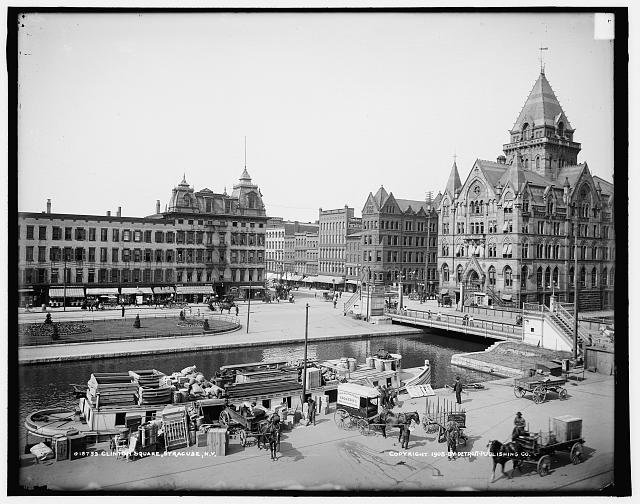
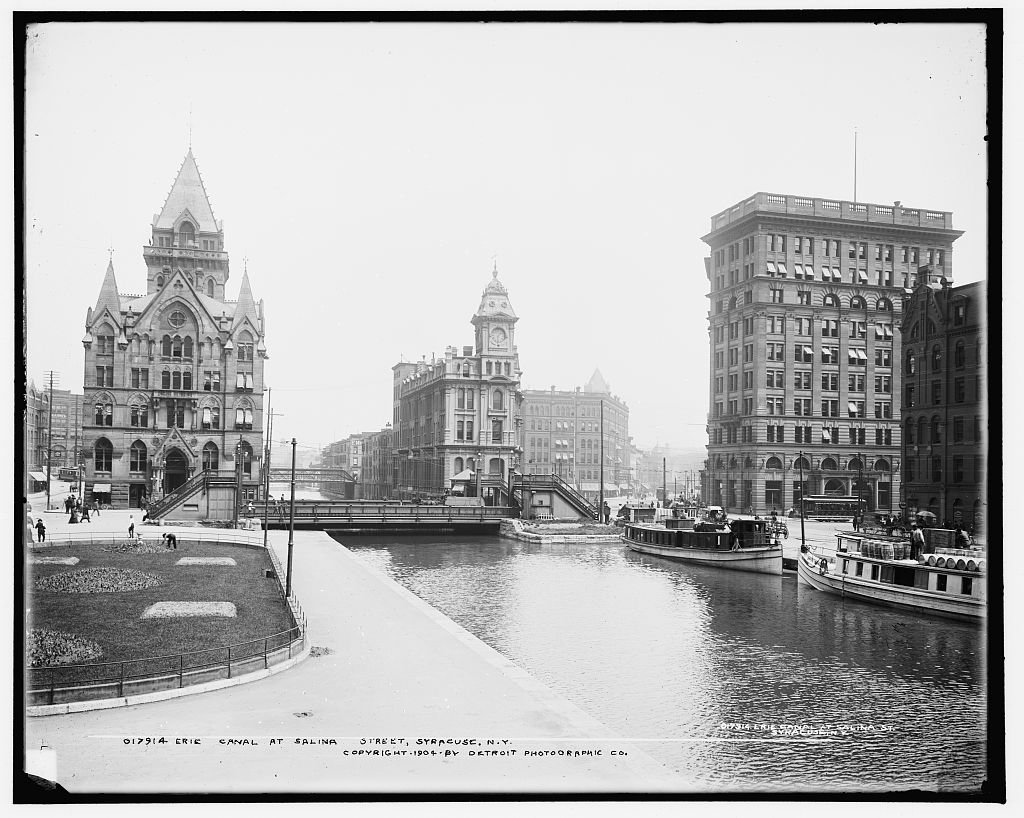
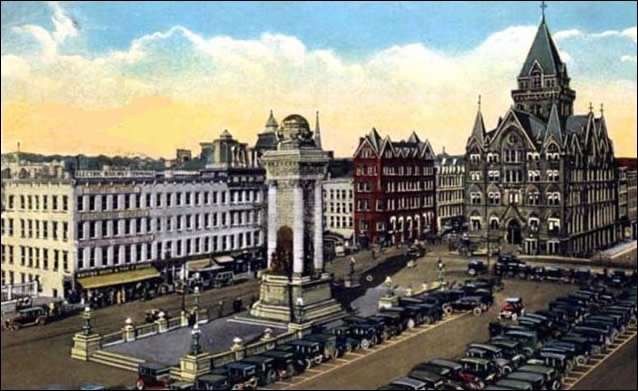
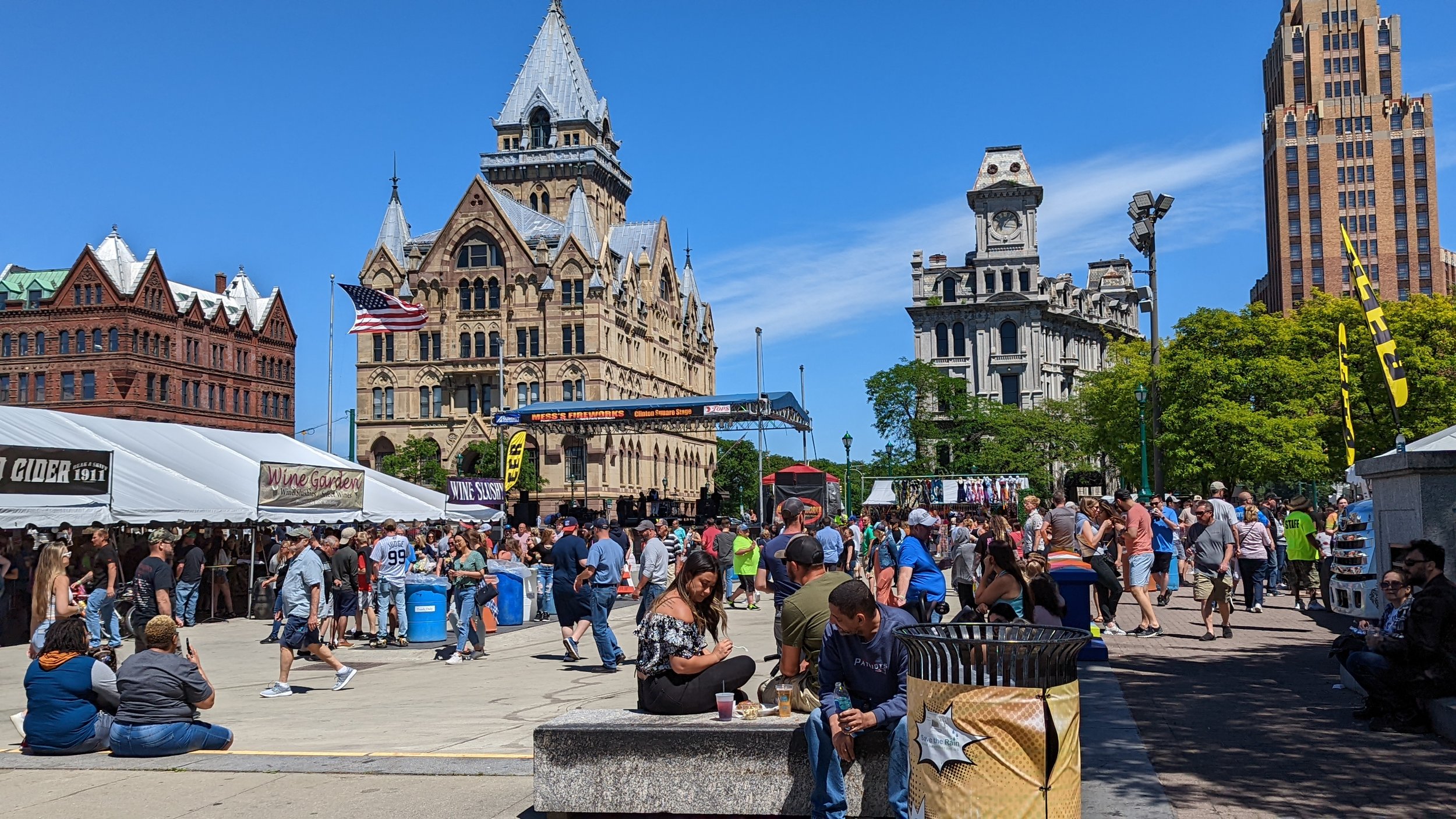
As with all walks in this series, we begin in Clinton Square. As I wrote years ago, Clinton Square, in its current form, does not provide the feeling of a human scale space. The Square’s wide open layout leaves people without good spaces to cluster. The short buildings along three of the four edges adds to this effect. Historically, the Square was surrounded by a dense wall of architecturally ornate buildings, which helped frame the public space and provided visual interest to those wandering by, spending time in the smaller public park, or coming through along the Erie Canal. You can see this vividly in the historic photos above from the Library of Congress compared to more recent photos.

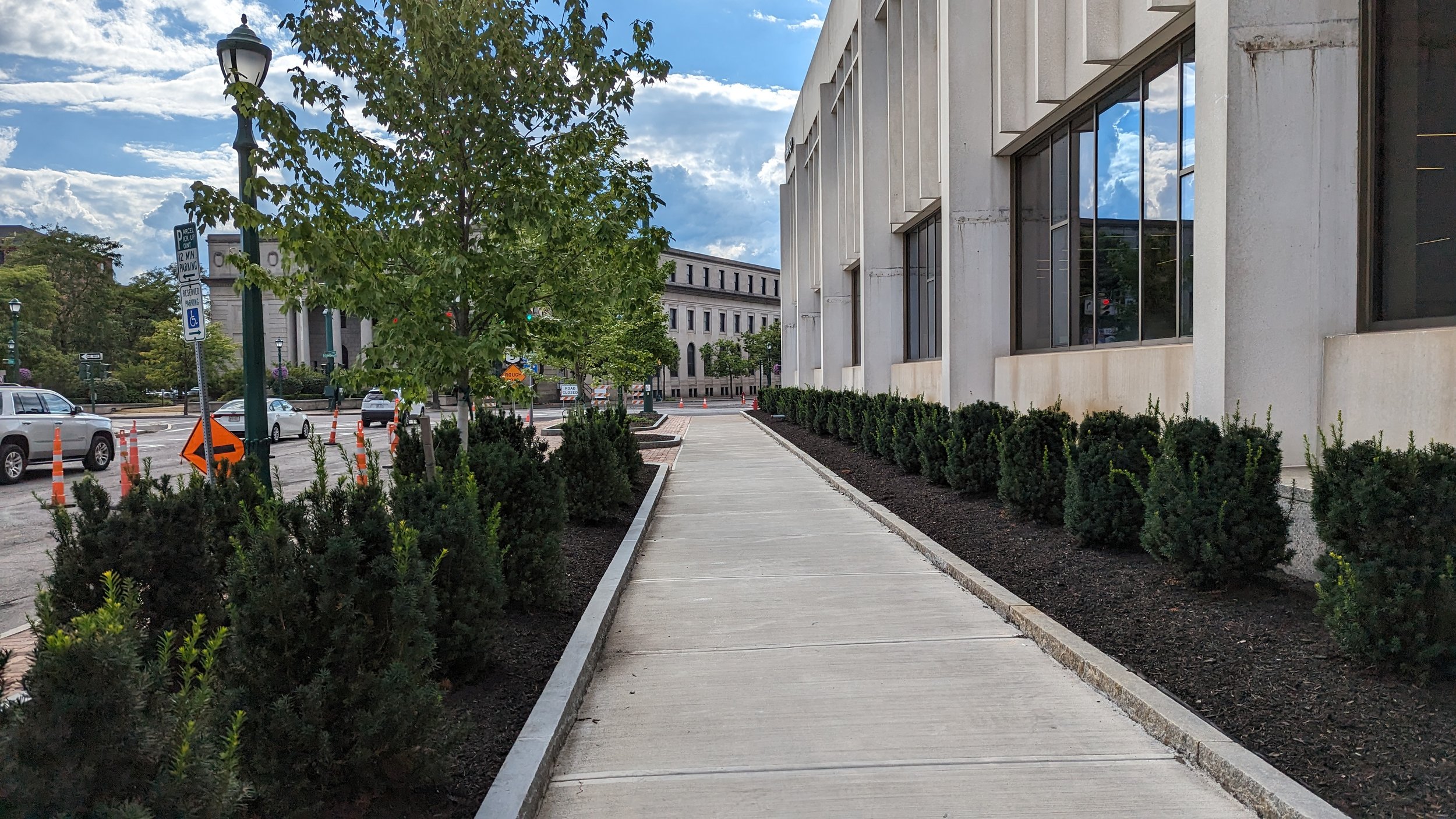
Today, the low slung former home of the Post Standard, now named The Post, and the bland wall of brown brick that is the Atrium, offer poor substitutes.While the buildings themselves do little to enliven the walk around the Square, the renovation of the Post has led to new investments in sidewalks and street trees which do make the walk more pleasant, if not more interesting. 

PXL_20230817_205910638.jpg
PXL_20230817_205952467.jpg
PXL_20230817_210033728.jpg
PXL_20230817_210209724.jpg
PXL_20230817_205910638.jpg PXL_20230817_205952467.jpg PXL_20230817_210033728.jpg PXL_20230817_210209724.jpg

As you walk through along the Square towards Erie Blvd W, you pass by the old Clinton Exchange, a former post office turned headquarters to the mall developer, Pyramid Group. The building opens up beautifully to the Square, but its small plaza is often blocked by parked cars belonging to employees or closed off during festivals to keep the general public at bay. Its a very insular life for a building that began as a vital public building.

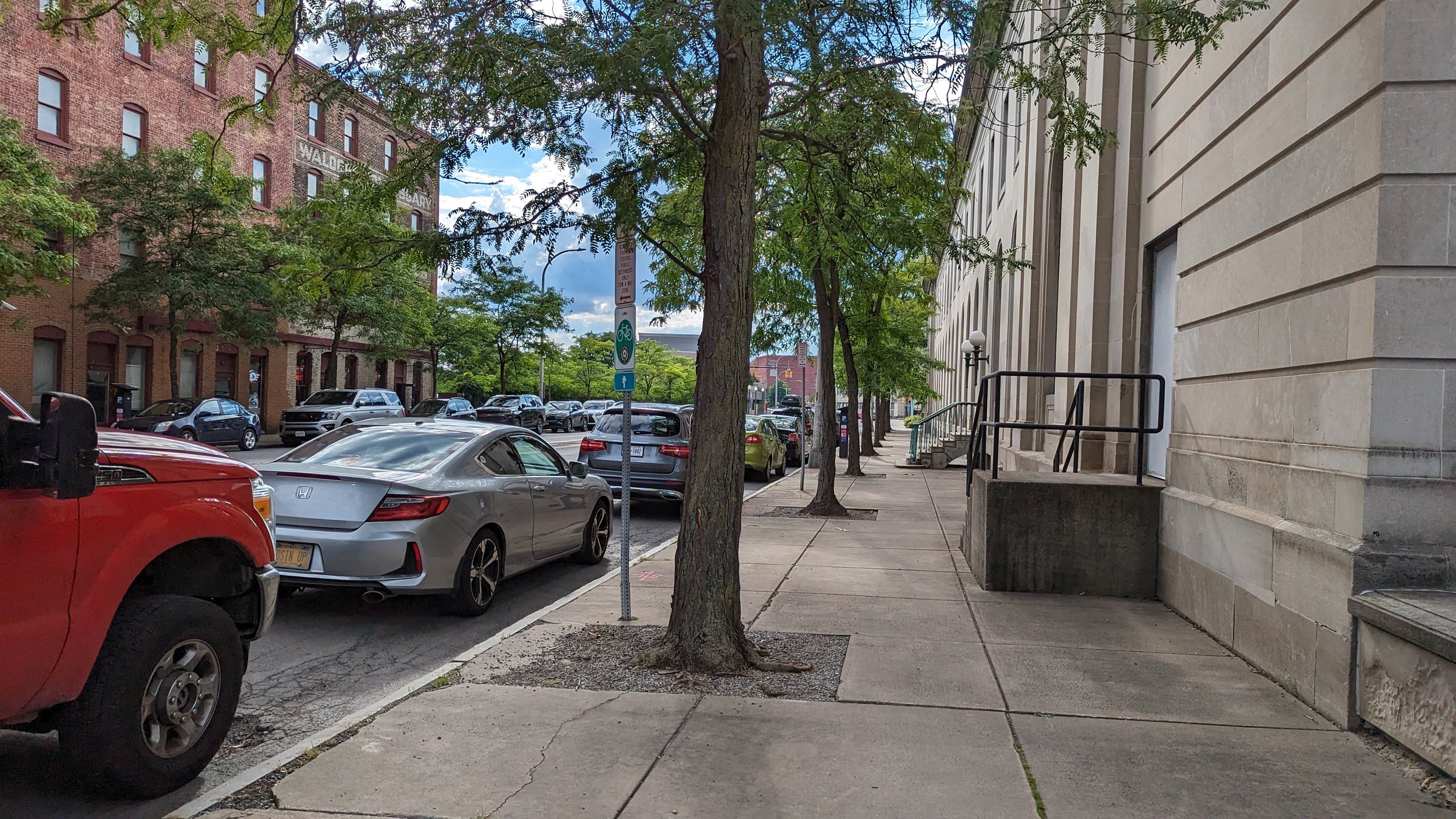
As we reach Erie Blvd W, the architecture of the Erie Canal era is apparent. When the Canal ran through the City, building facades facing the canal were utilitarian at best, while their facades on Water St were ornate and welcoming. Canal barges needed easy access to loading areas, so narrow sidewalks lined by flat, brick finished buildings were the norm. The Amos building is one of the finest examples of this dichotomy. The Clinton Exchange, with its main entrance of Clinton St, also de-emphasizes its facade along Erie Blvd W, with maintenance doors opening up to the street. At the same time, a wider sidewalk, lined with street trees helps to keep the street welcoming and pleasant to be on as you approach possibly the most iconic building in the City of Syracuse.

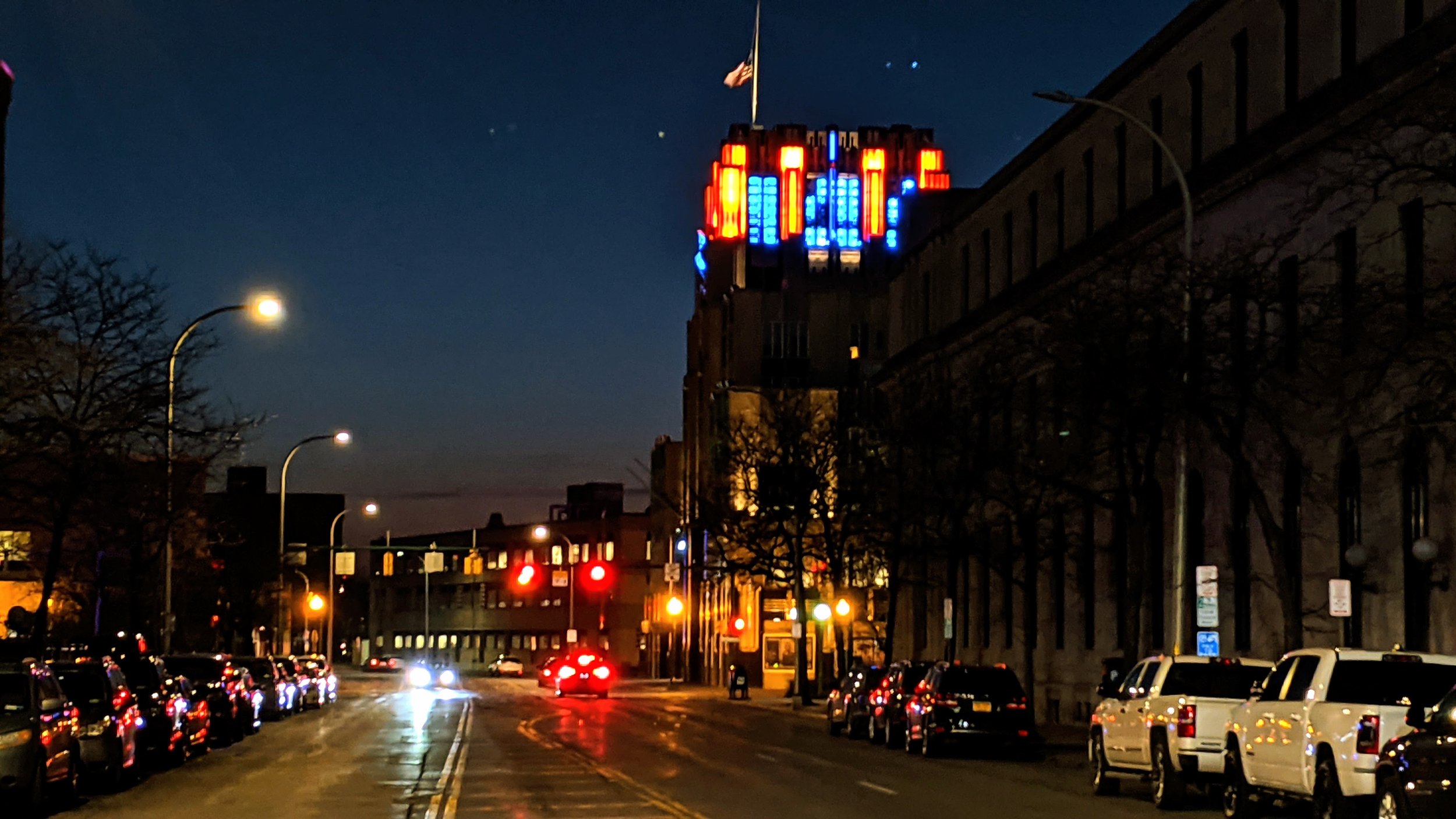
NiMo 2023.jpeg
NiMo at Night.MP.jpg
NiMo Daytime.jpeg
NiMo orange and blue.jpeg
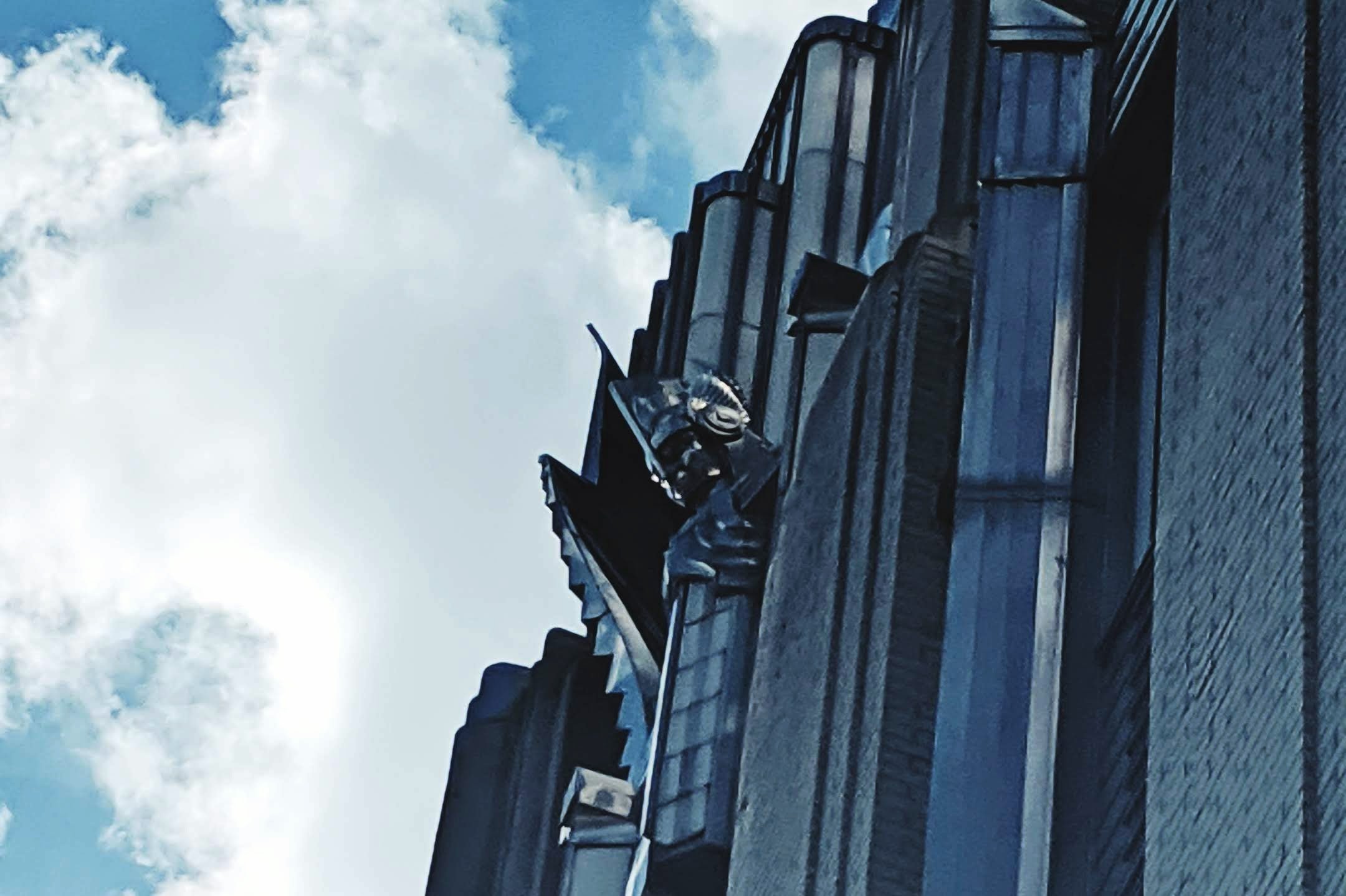
NiMo Statue.jpg
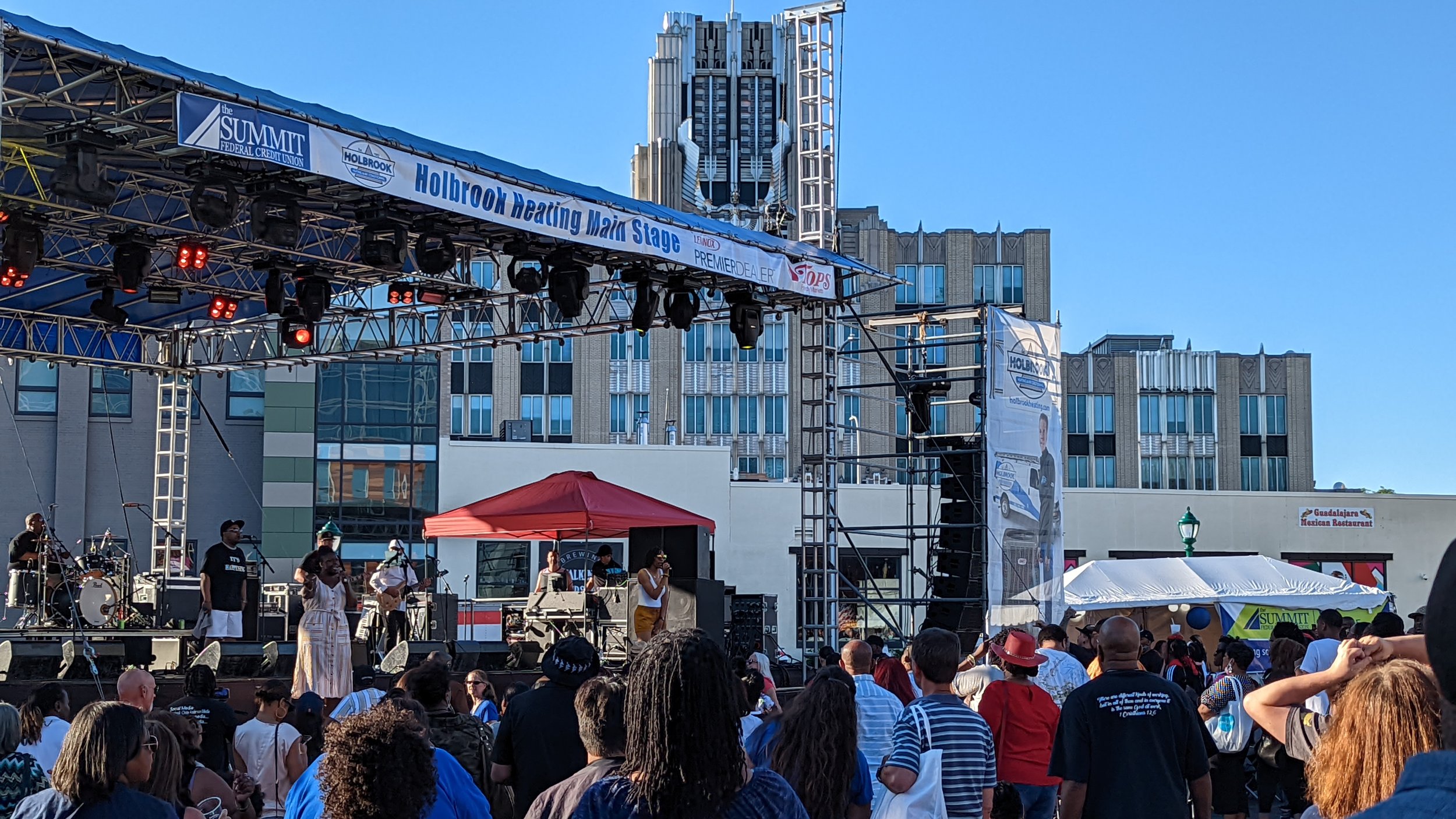
NiMo festival.jpeg
NiMo 2023.jpeg NiMo at Night.MP.jpg NiMo Daytime.jpeg NiMo orange and blue.jpeg NiMo Statue.jpg NiMo festival.jpeg

Past an Art Deco Icon

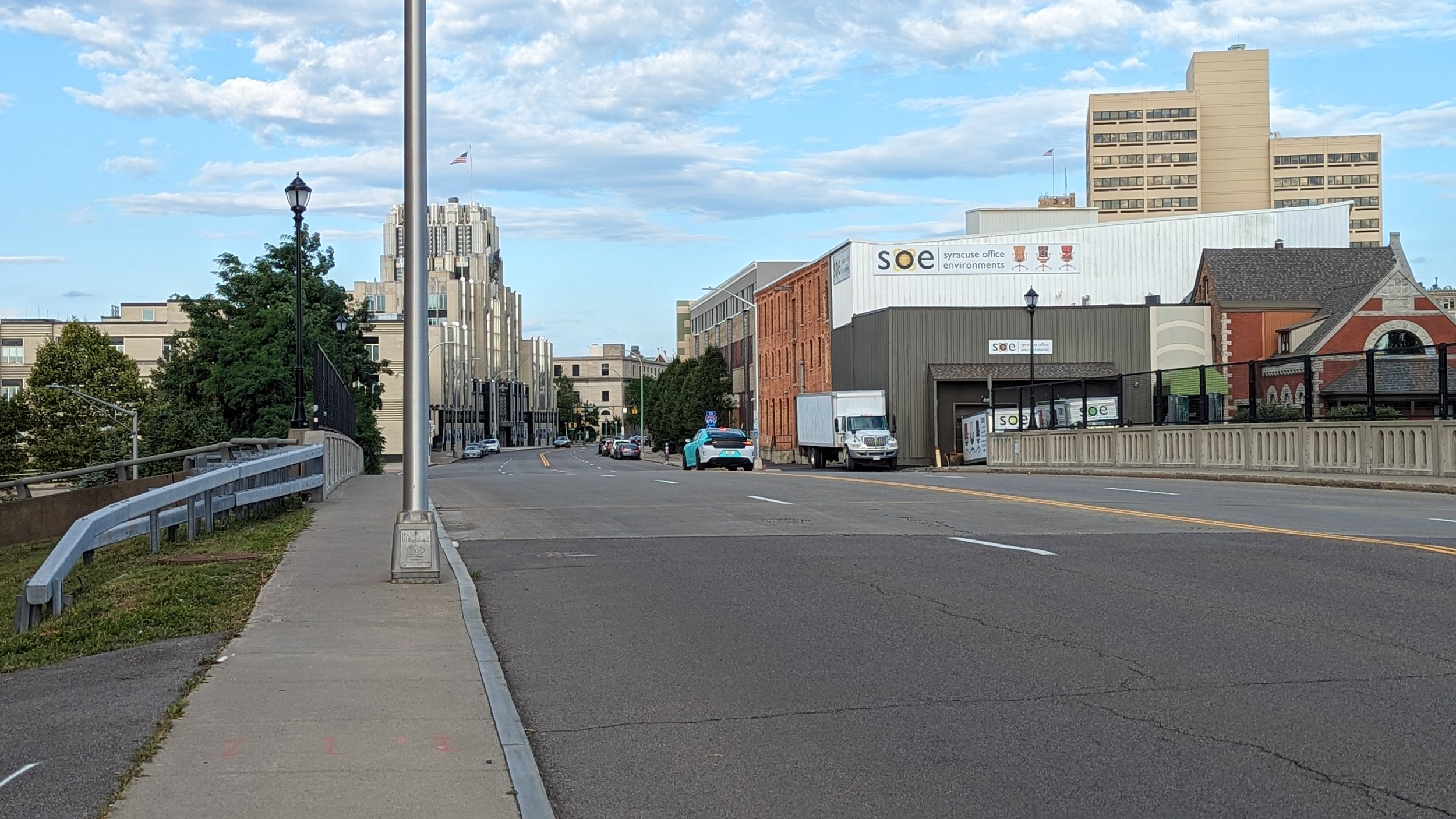
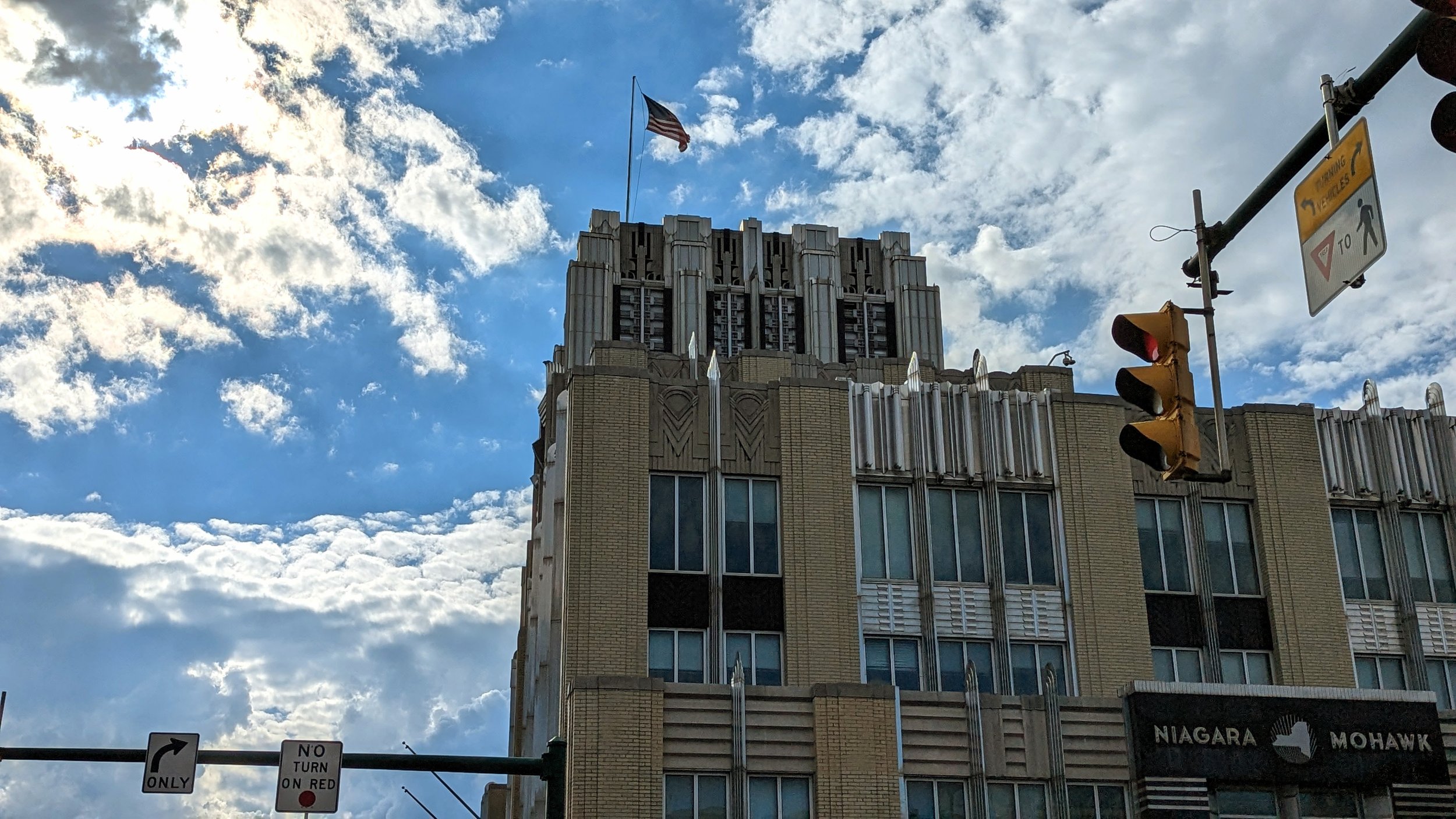
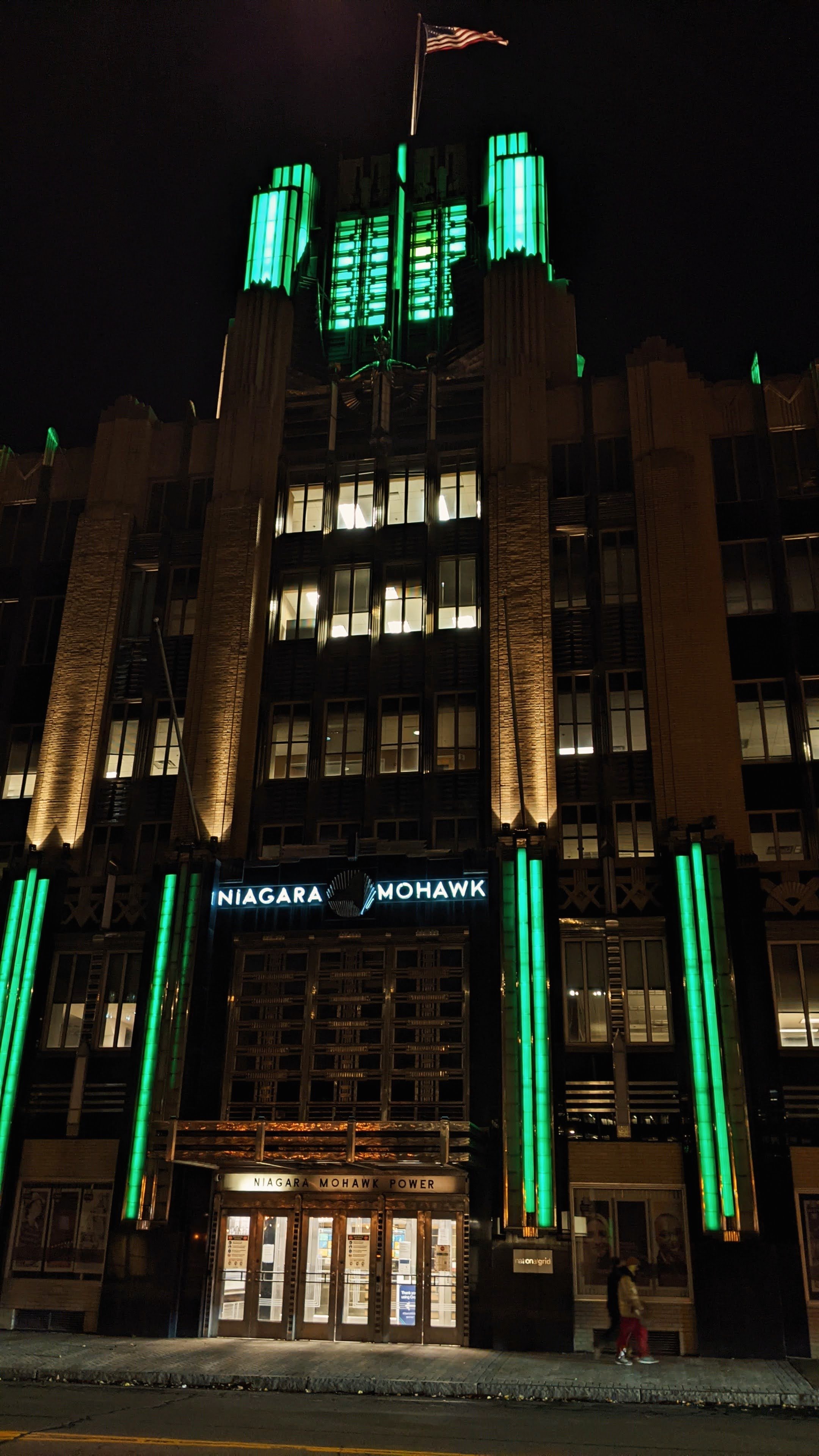
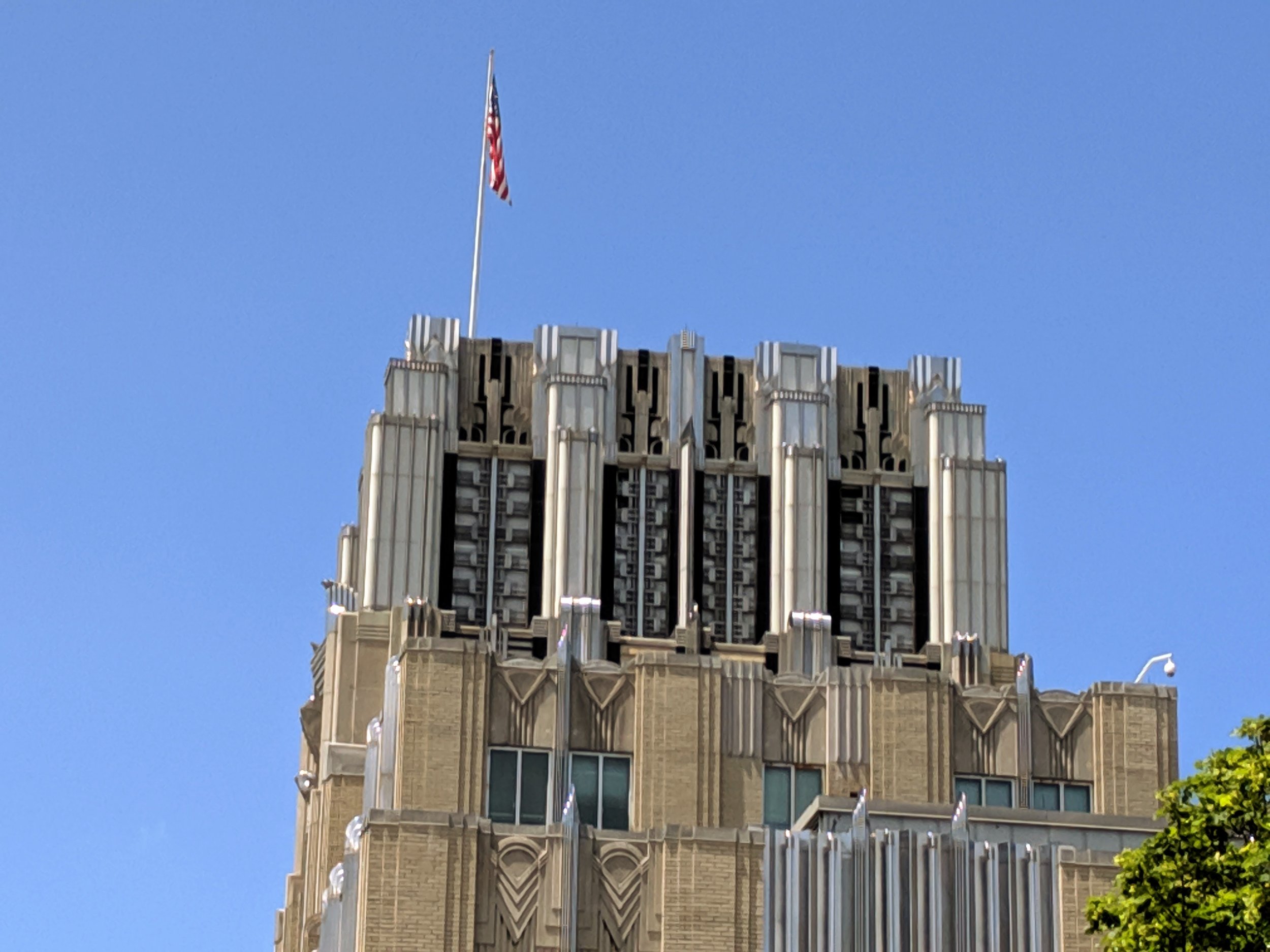
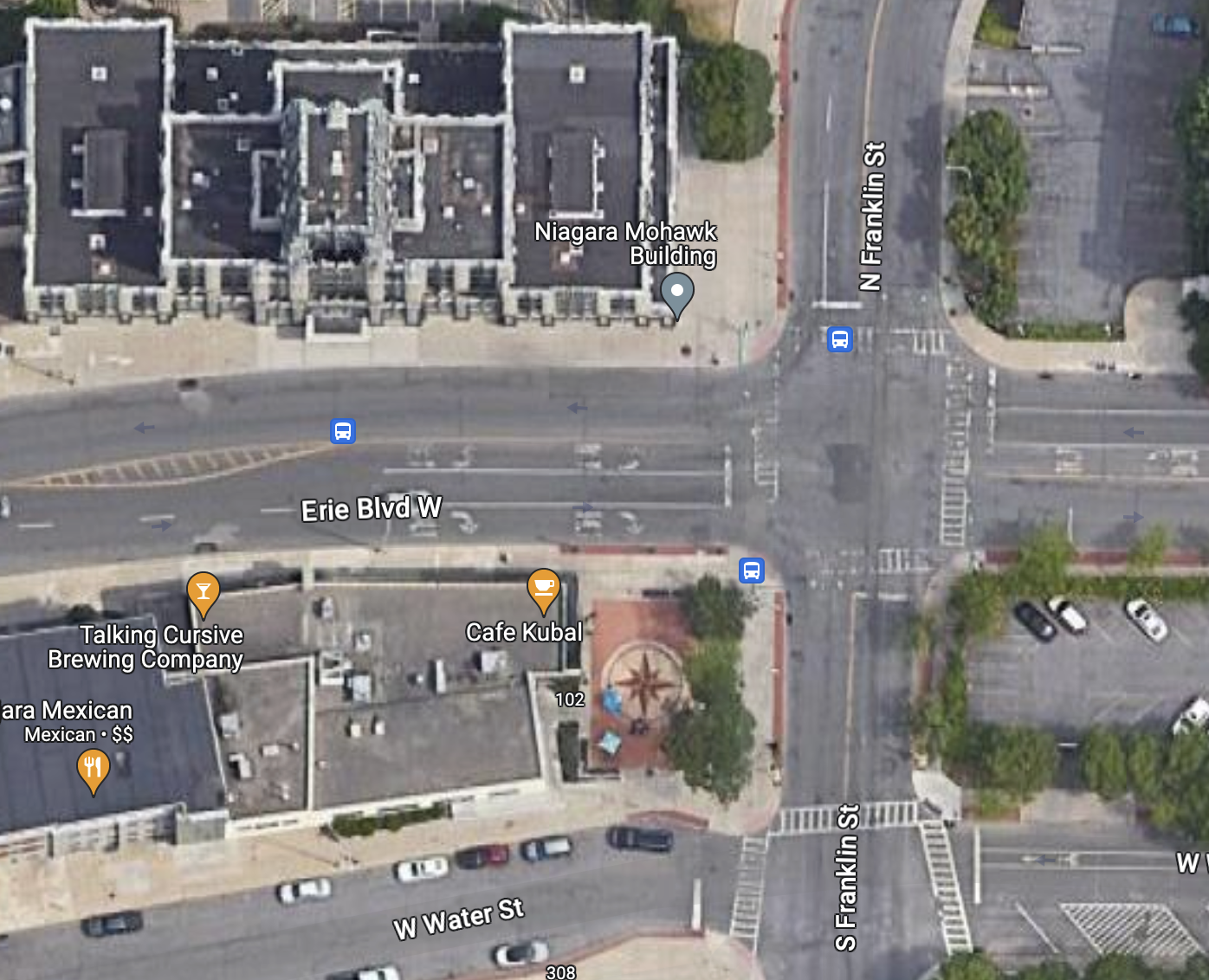
Sitting at the corner of Erie Blvd W and Franklin St, the former Niagara Mohawk (NiMo) headquarters, now the regional headquarters for National Grid, makes its presence known. Chrome and lights cover the structure, making a striking sight no matter what time of day you wander past. The building is often cited as one of the best examples of art deco architecture in the country, often mentioned alongside the likes of the Chrysler Building and Empire State Building. At the same time, its iconic crown is only a small part of the larger building complex. As you pass the main entrance, with its ornate marquee, you are greeted by the bulk of the building - an uninspired tan brick wall with black stripes. The building no longer concerns itself with the street level and instead focuses on efficiency, which leads to a deadened streetwall. 

View fullsize PXL_20230817_210355157.jpg
View fullsize PXL_20230817_210446309.jpg

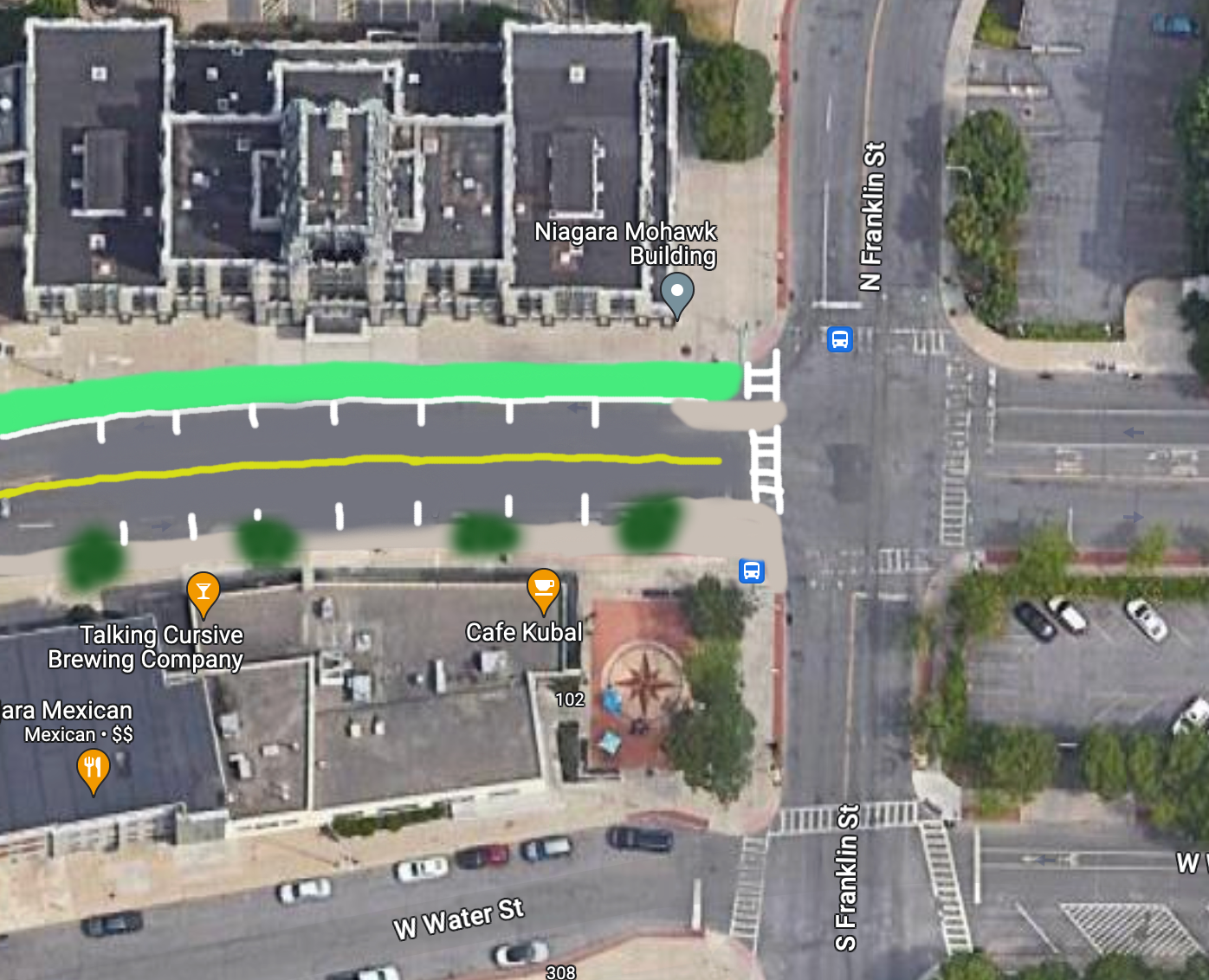
NiMo’s neighbor to the south offers little help. While the corner at Erie Blvd W and Franklin St is activated by a Cafe Kubal, Guadalajara Mexican cantina, and Talking Cursive Brewing Company, the bulk of the building, known as Creekwalk Commons, does little to address the street. The building’s design in some ways mimics the back end of the NiMo building, with stripes of alternating colors (red and tan) and lack of pedestrian oriented design.

When we look at the street as a whole, you get the sense that people should not be walking here. The street, four lanes wide, is lined with cobra style street lights, more common place on highways and major arterials in suburban areas. Minimal street trees are present along the block and the ones that do exist are evergreens pushed right up against Creekwalk commons. These trees provide minimal shade to people as they walk and offer zero protection from vehicles, both visual protection and physical, as true street trees help to visually narrow the roadway and slow drivers down.

Screenshot 2023-10-30 at 6.17.28 PM.png
Erie Blvd New.png
Screenshot 2023-10-30 at 6.17.28 PM.png Erie Blvd New.png

The built environment along this corridor is screaming that it's meant for cars, but there is room for improvement if we’re willing to chip away at the space dedicated to cars.
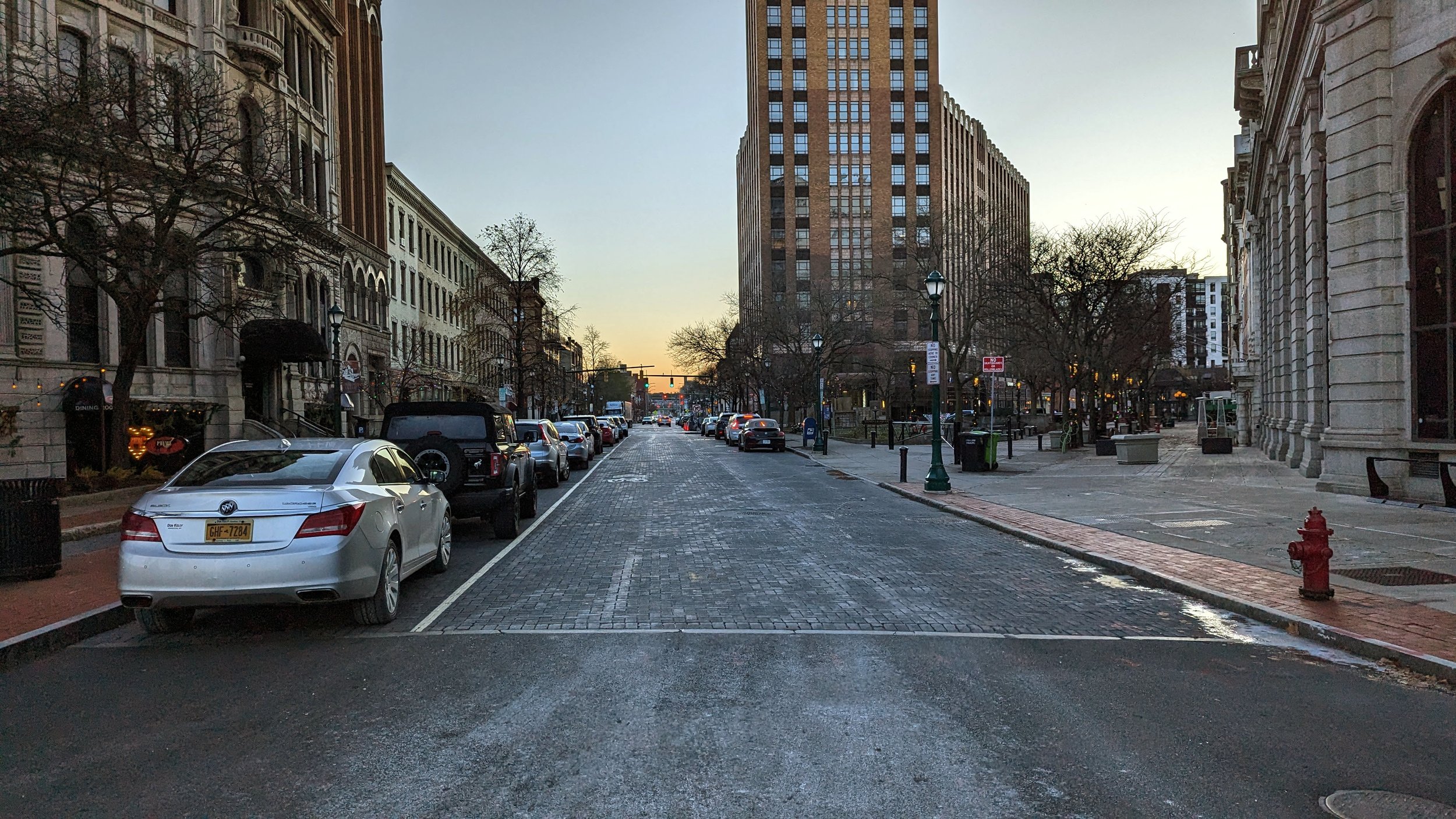
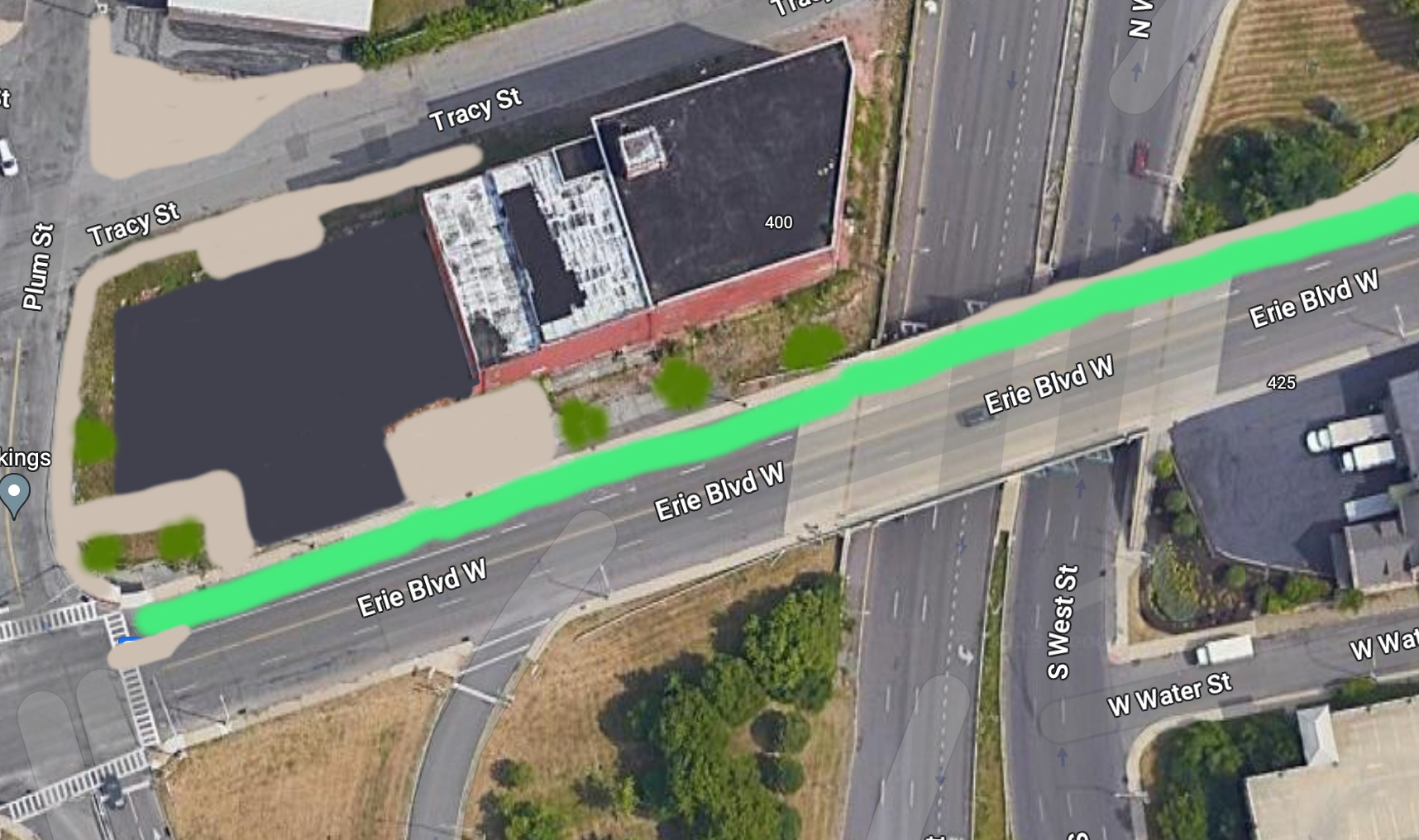
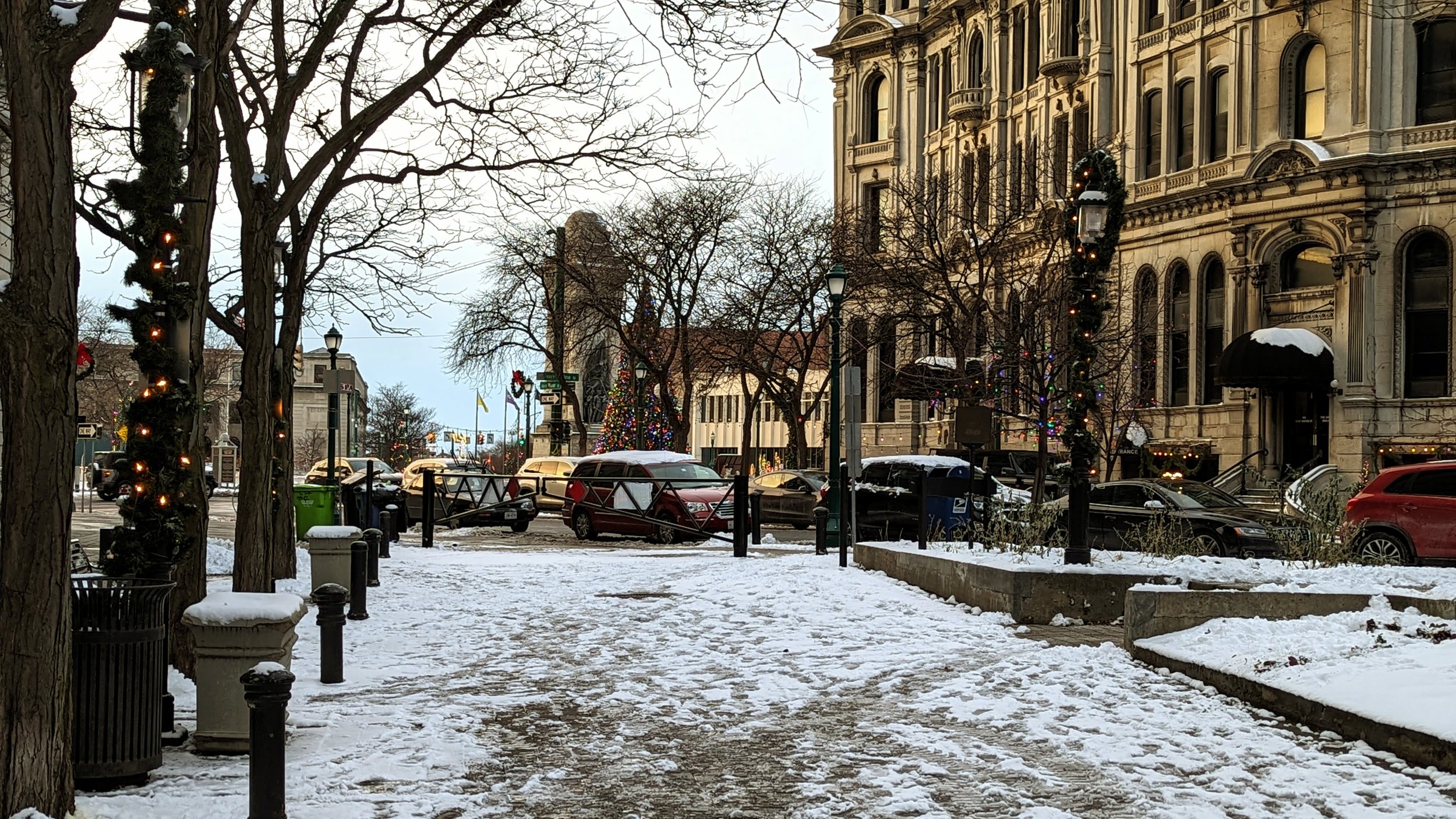
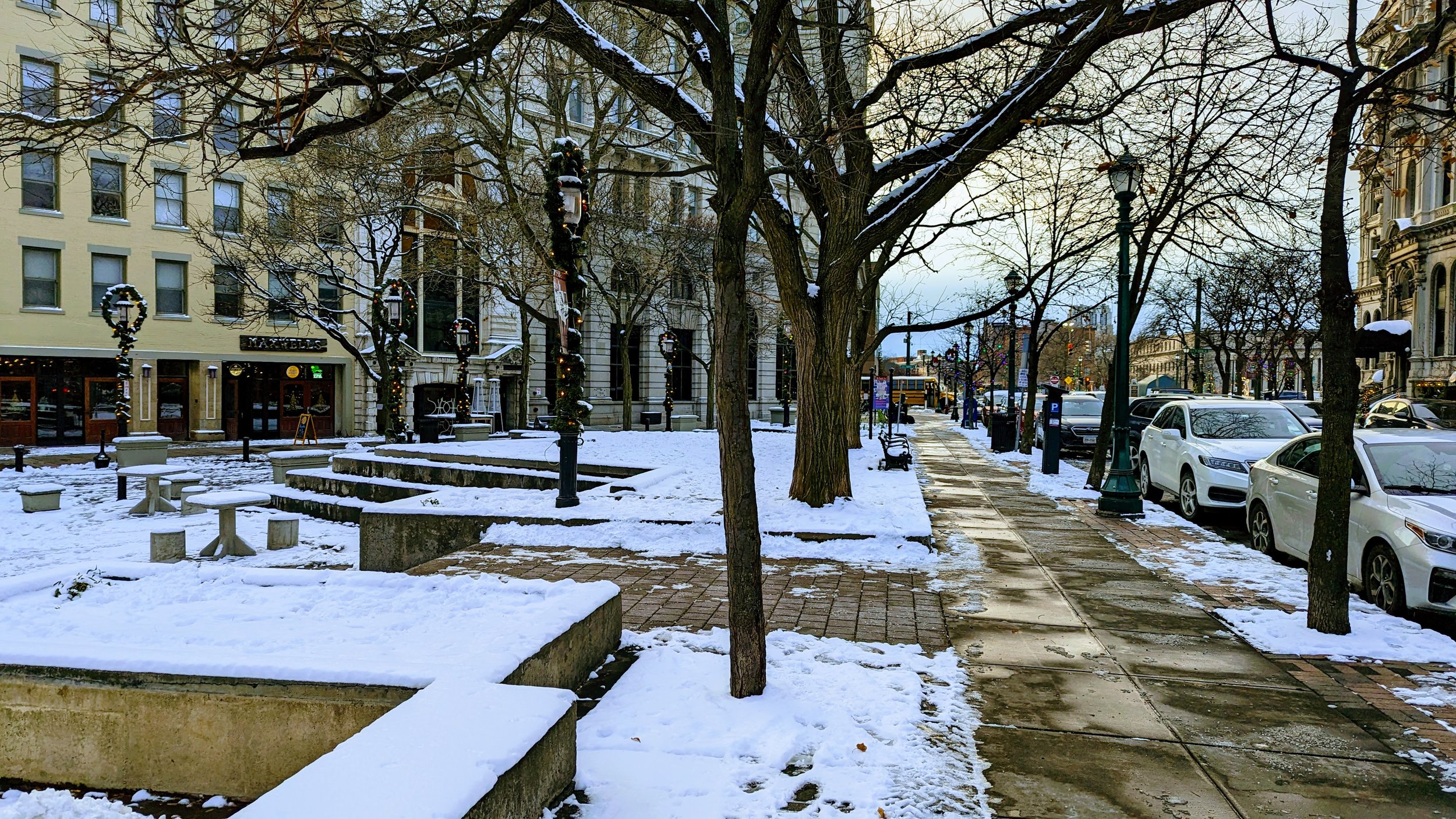
First thing’s first, we need proper street trees. While the existing sidewalks are already wide, there is plenty of space to widen them further and provide ample room for street trees and benches. Additional road space should be given over to people on bikes. While Erie Blvd E is home to the Empire State Trail, there is no equivalent facility connecting the west side of the City. A protected, two-way cycle track would help bring cyclists from west side neighborhoods into Downtown and connect them to the regional trail network. This would leave space for one travel lane in each direction for vehicles, along with on-street parking.
West St

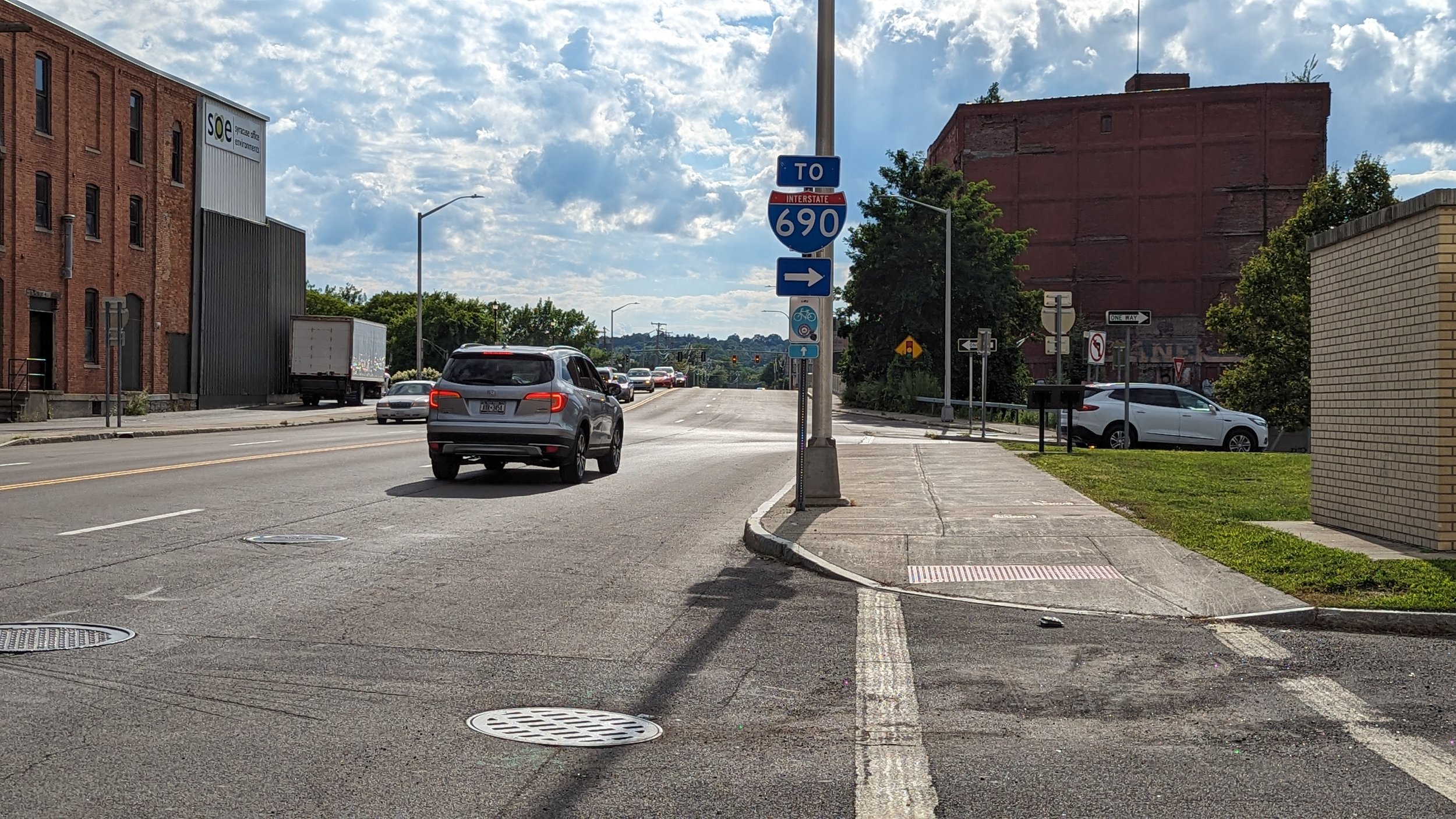
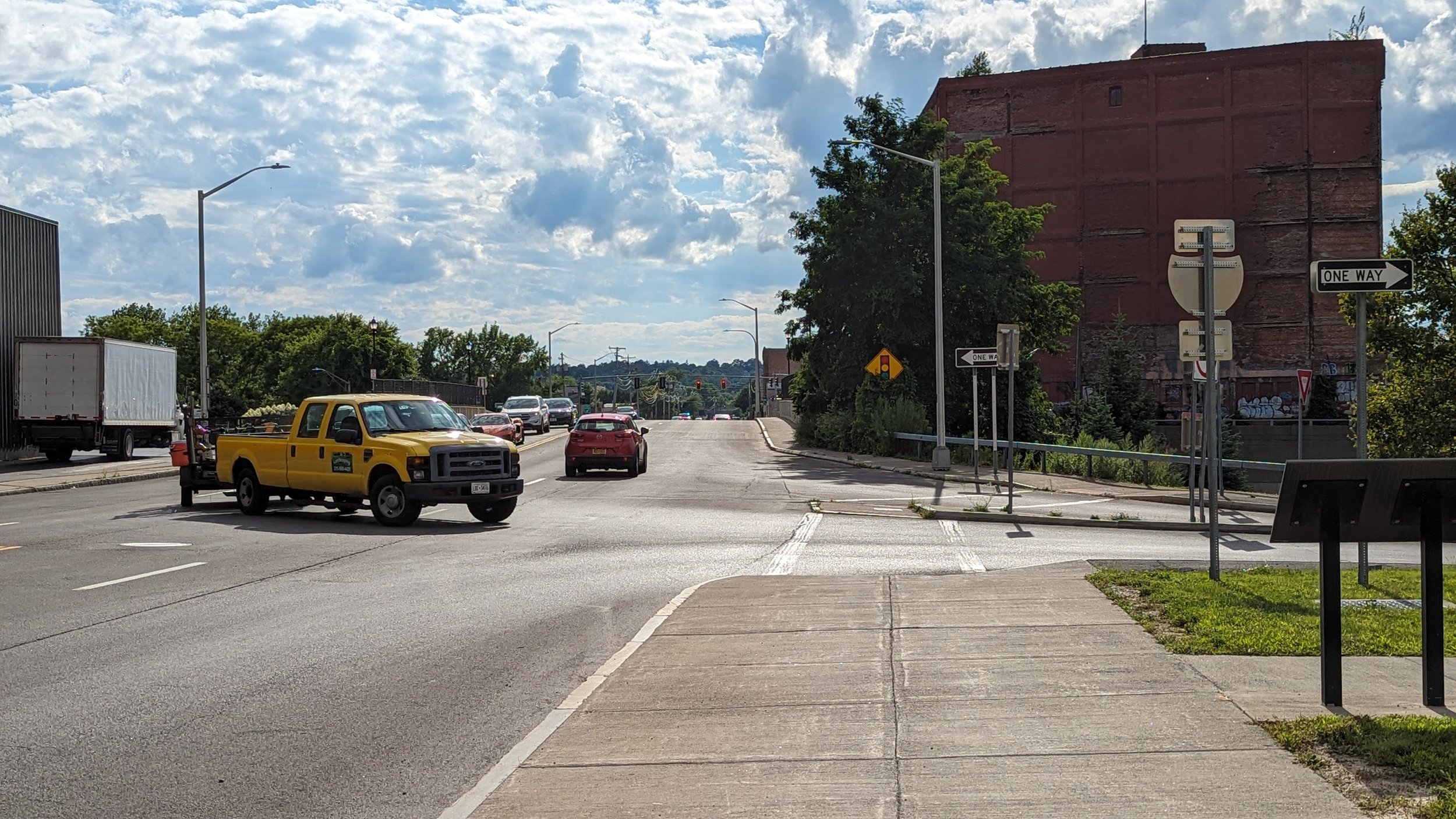
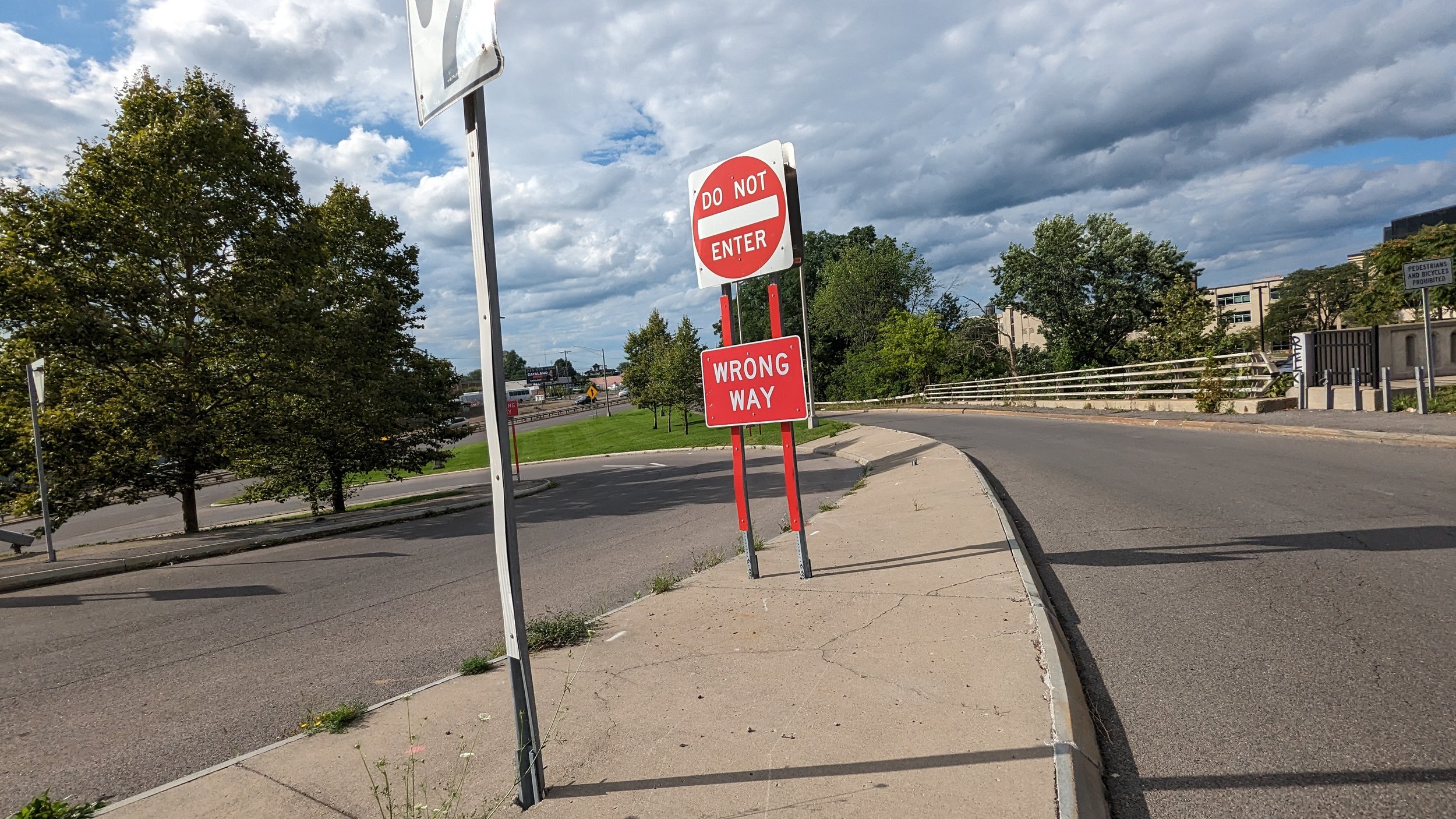
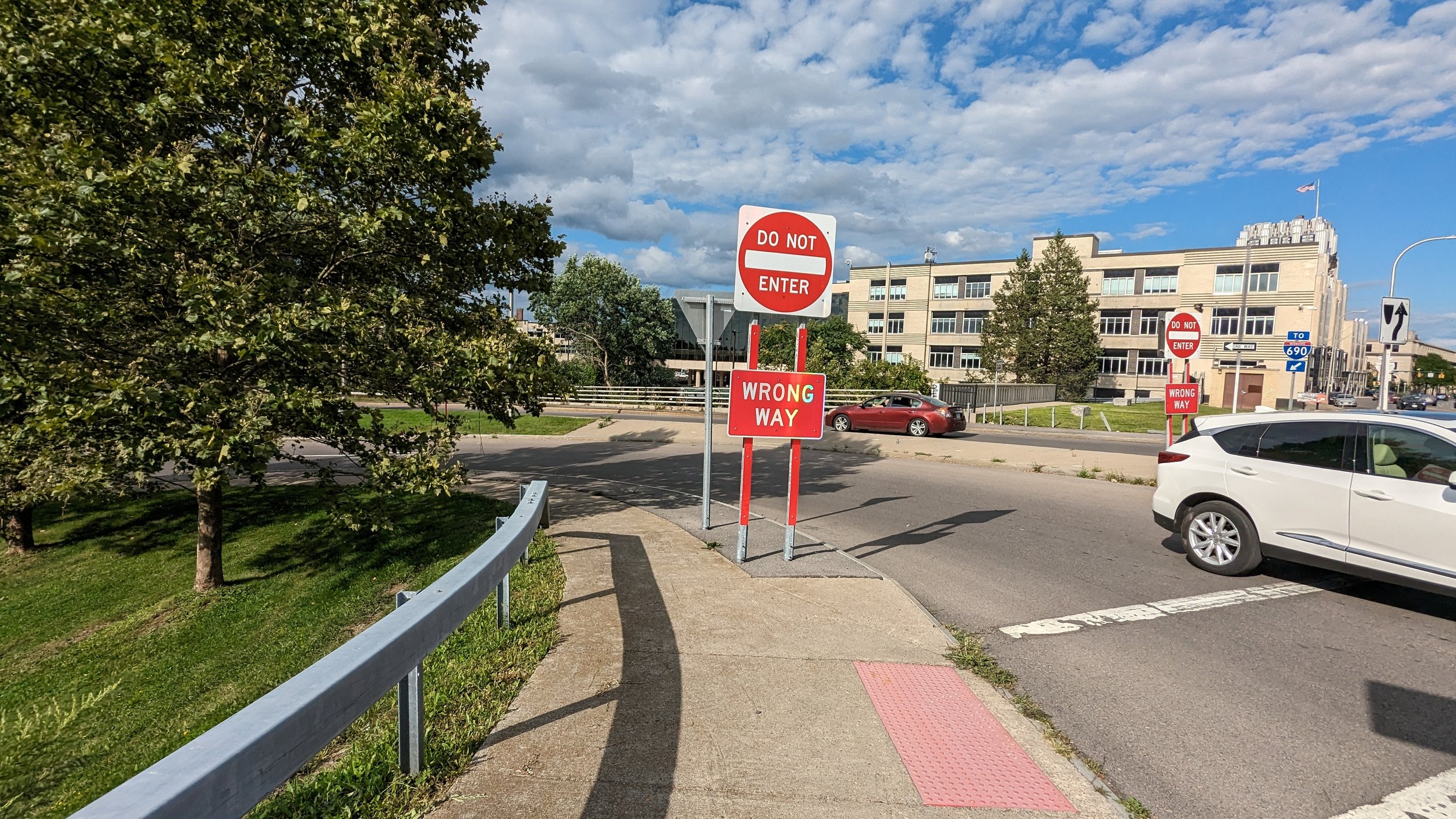
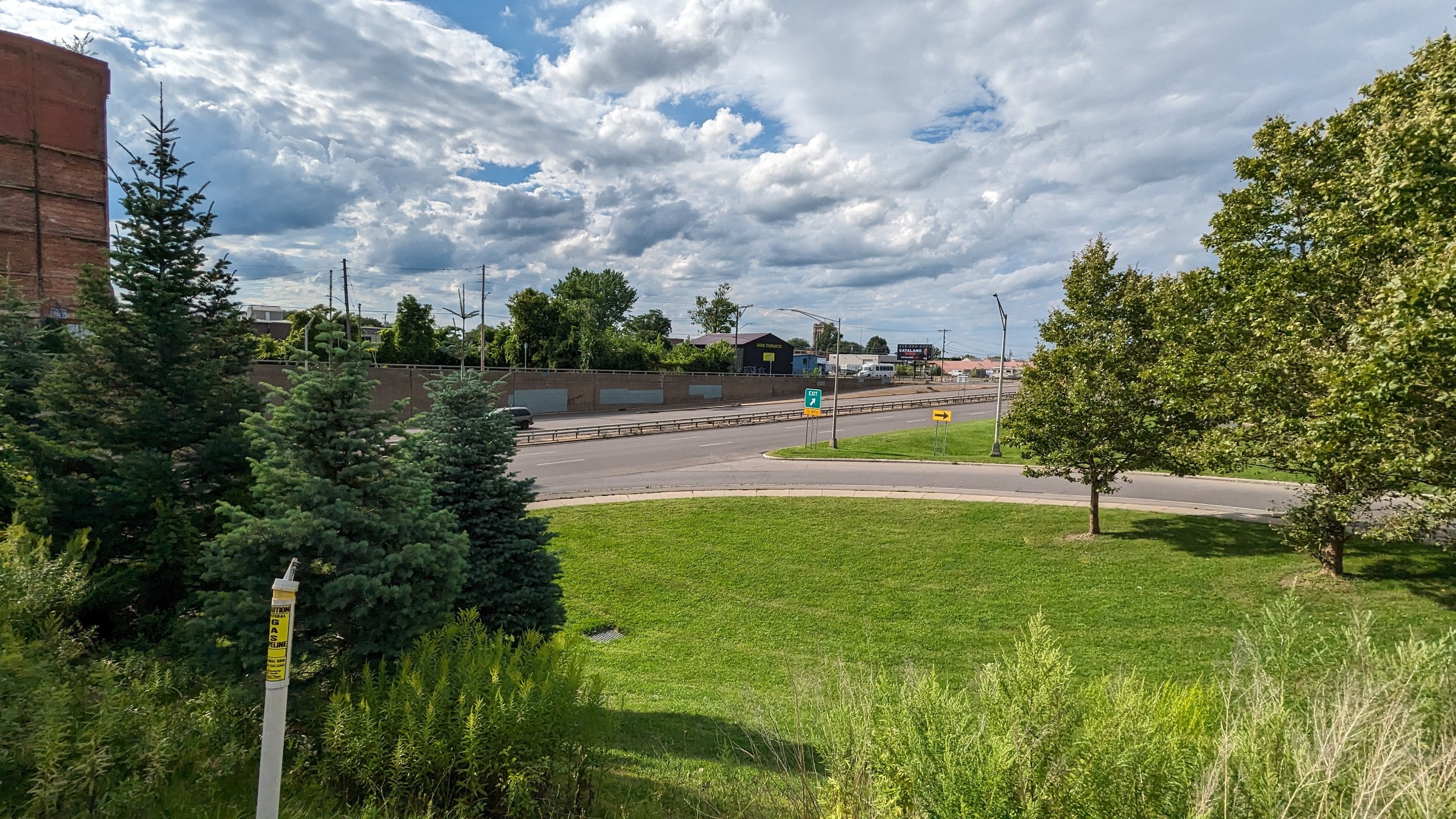
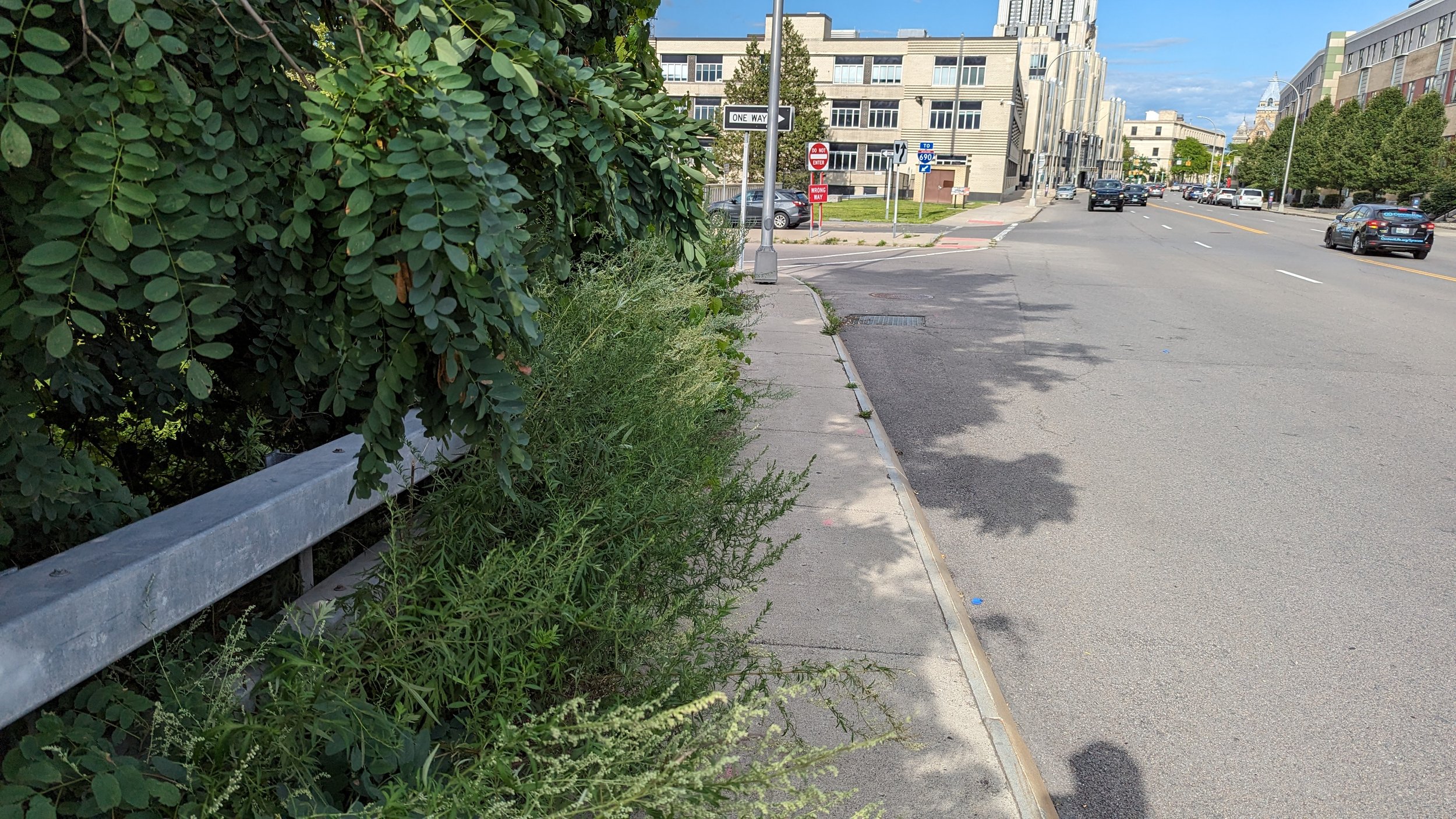
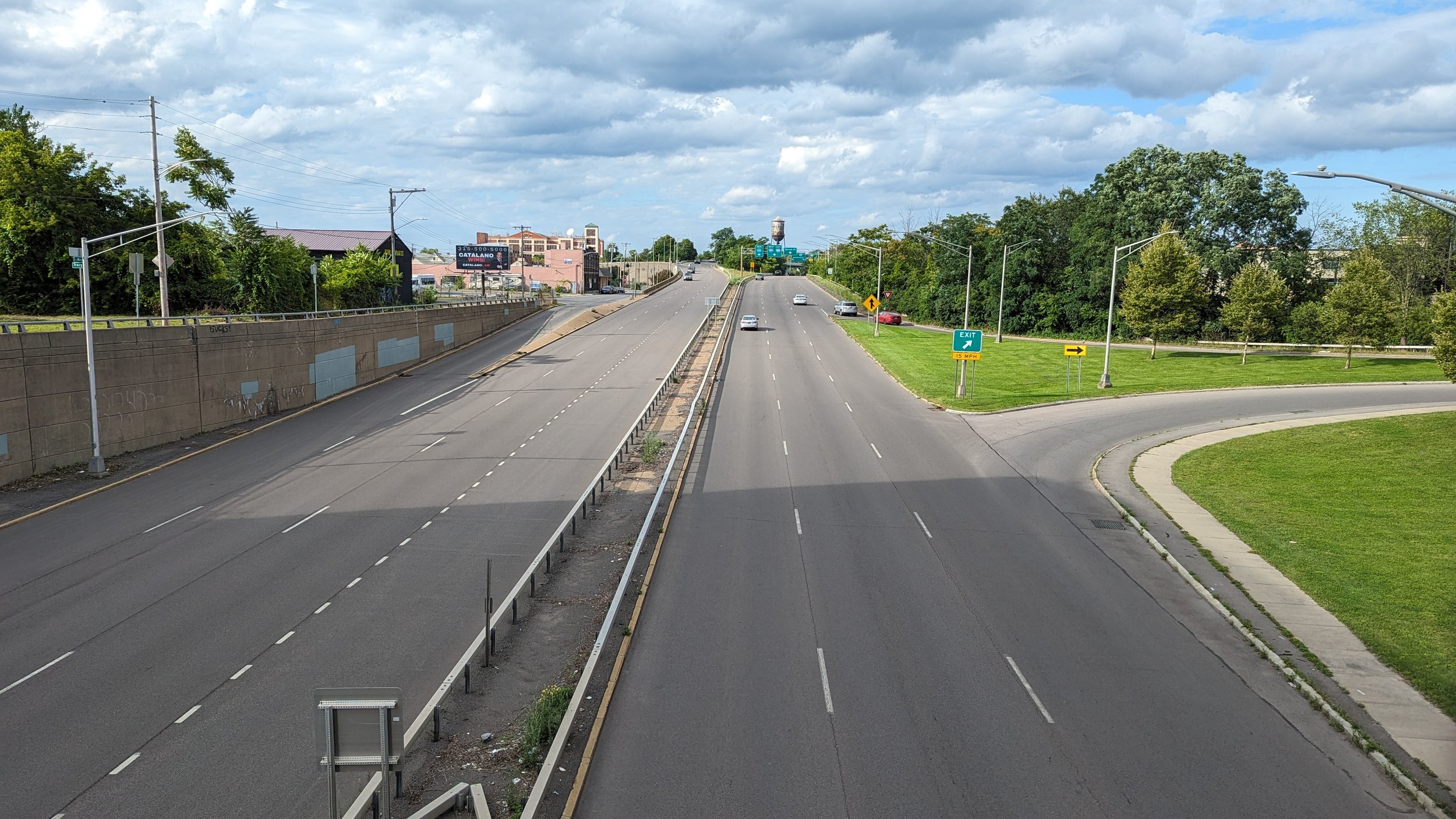
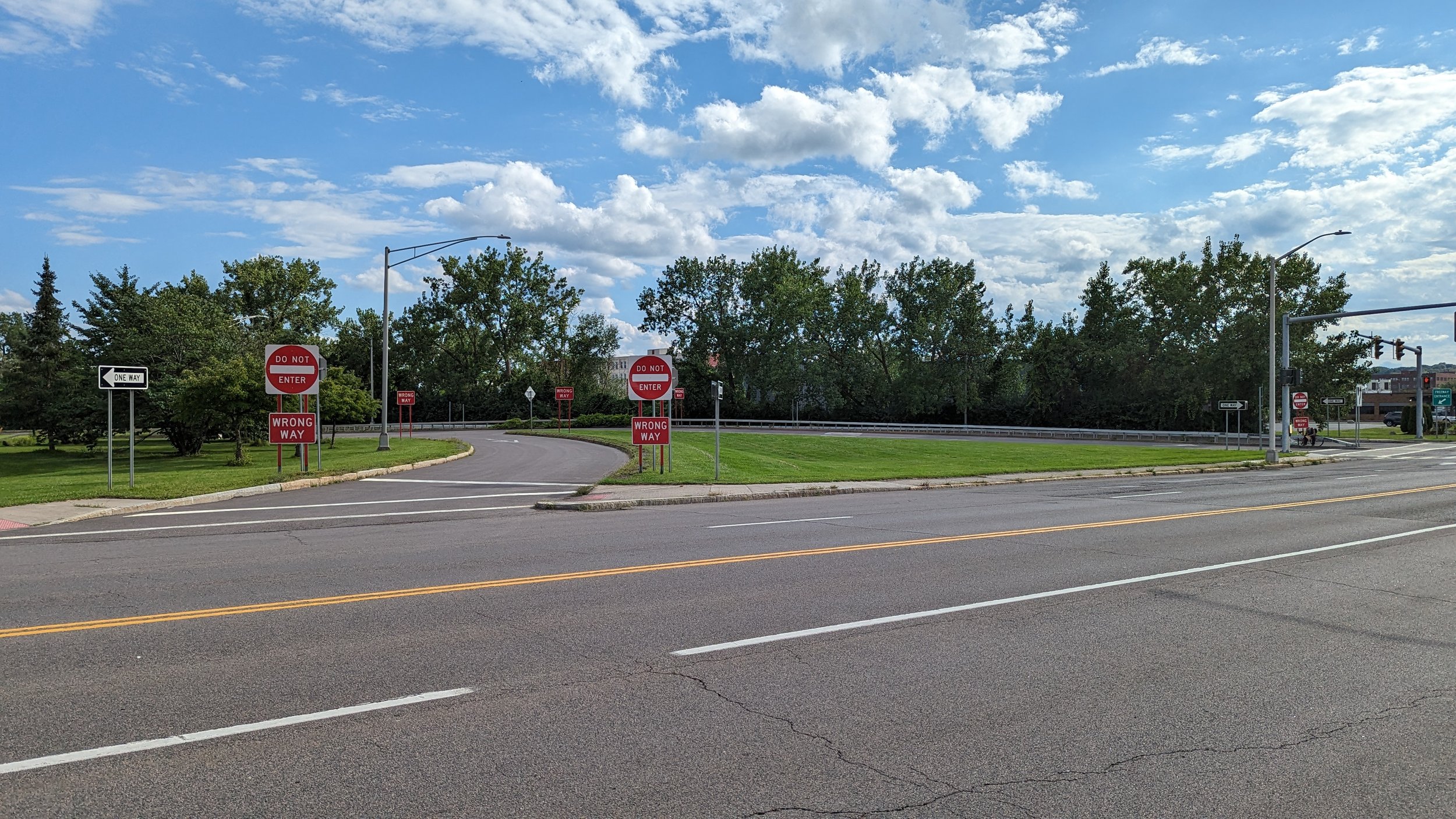
Just past the NiMo building and Creekwalk Commons you reach the bridge across West St. As discussed in The Walk: To Tipperary Hill, West St acts as a mini highway through the heart of the City, creating an unpleasant barrier to cross. While Erie Blvd W does not directly intersect with West St, it is home to two on-ramps and an off-ramp. As with most on- and off-ramps, cars looking to use them are often only on the lookout for other cars, with all other people on the street entering their mental blindspot. 

PXL_20230817_210536530.jpg
PXL_20230817_210553170.jpg
PXL_20230817_210614652.jpg
PXL_20230817_210628065.jpg
PXL_20230817_210631589.jpg
PXL_20230817_210647188.jpg
PXL_20230817_210712193.jpg
PXL_20230817_210814466.jpg
PXL_20230817_210536530.jpg PXL_20230817_210553170.jpg PXL_20230817_210614652.jpg PXL_20230817_210628065.jpg PXL_20230817_210631589.jpg PXL_20230817_210647188.jpg PXL_20230817_210712193.jpg PXL_20230817_210814466.jpg

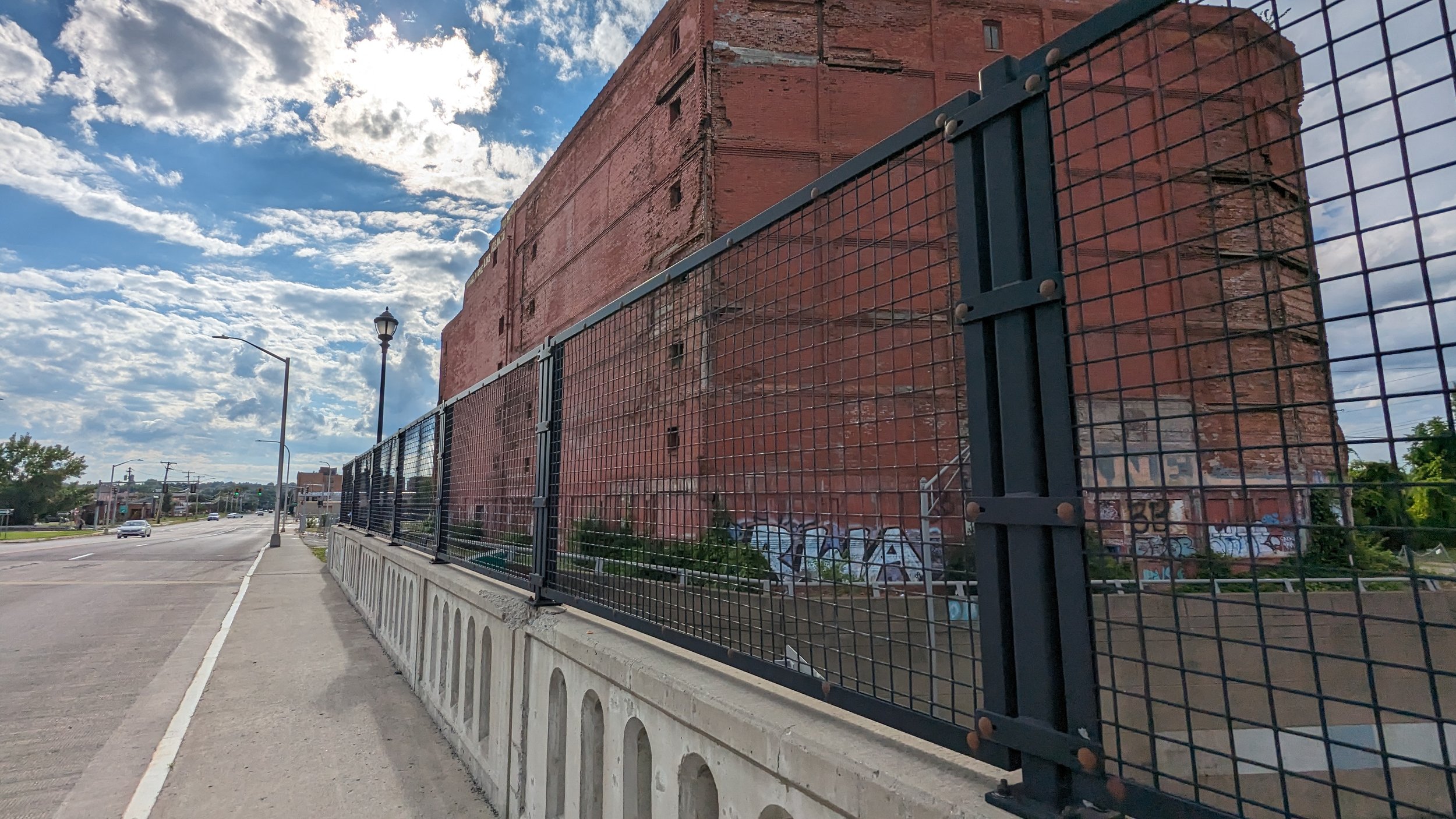
The I-81 - Community Grid plan leaves this interchange largely unchanged, as West St will continue to run beneath Erie Blvd. Narrowing the roadway and providing additional, protected spaces for other road users would help improve a person’s ability to safely cross these on-ramps, but the bridge, with its overgrown brush in spots, will always make the Park Ave neighborhood feel separate from Downtown. Widening the sidewalks and adding pedestrian scale, ornamental lighting would go a long way to make the space more comfortable for people on foot, but the view of West St will never have the same feeling as crossing a body of water or green landscape. One way to address this issue is to have a visual anchor on the other side of the bridge to draw you in. Lucky for us, there’s a large vacant building that is ready for replacement.

Vacant and Underused Spaces

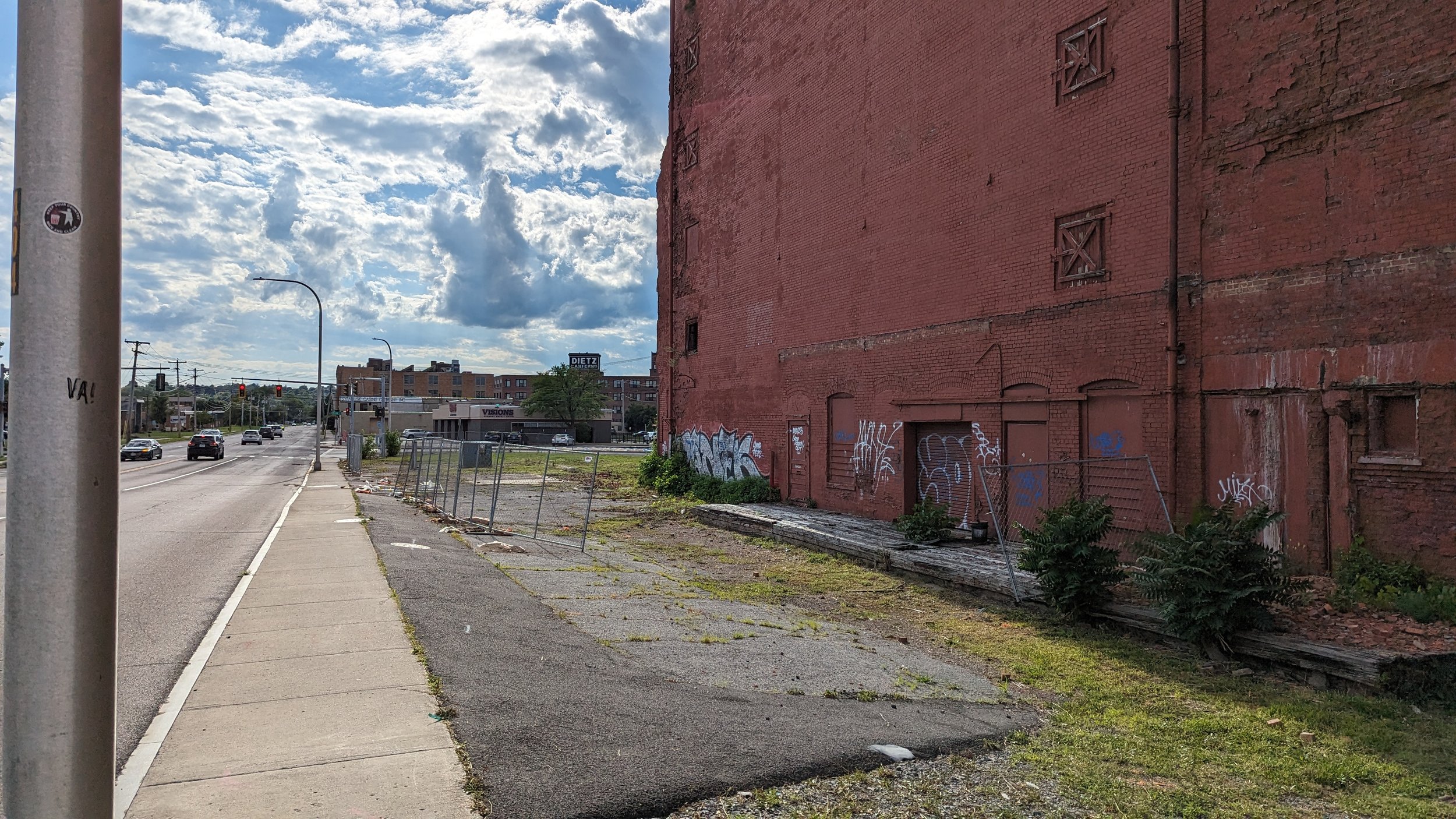
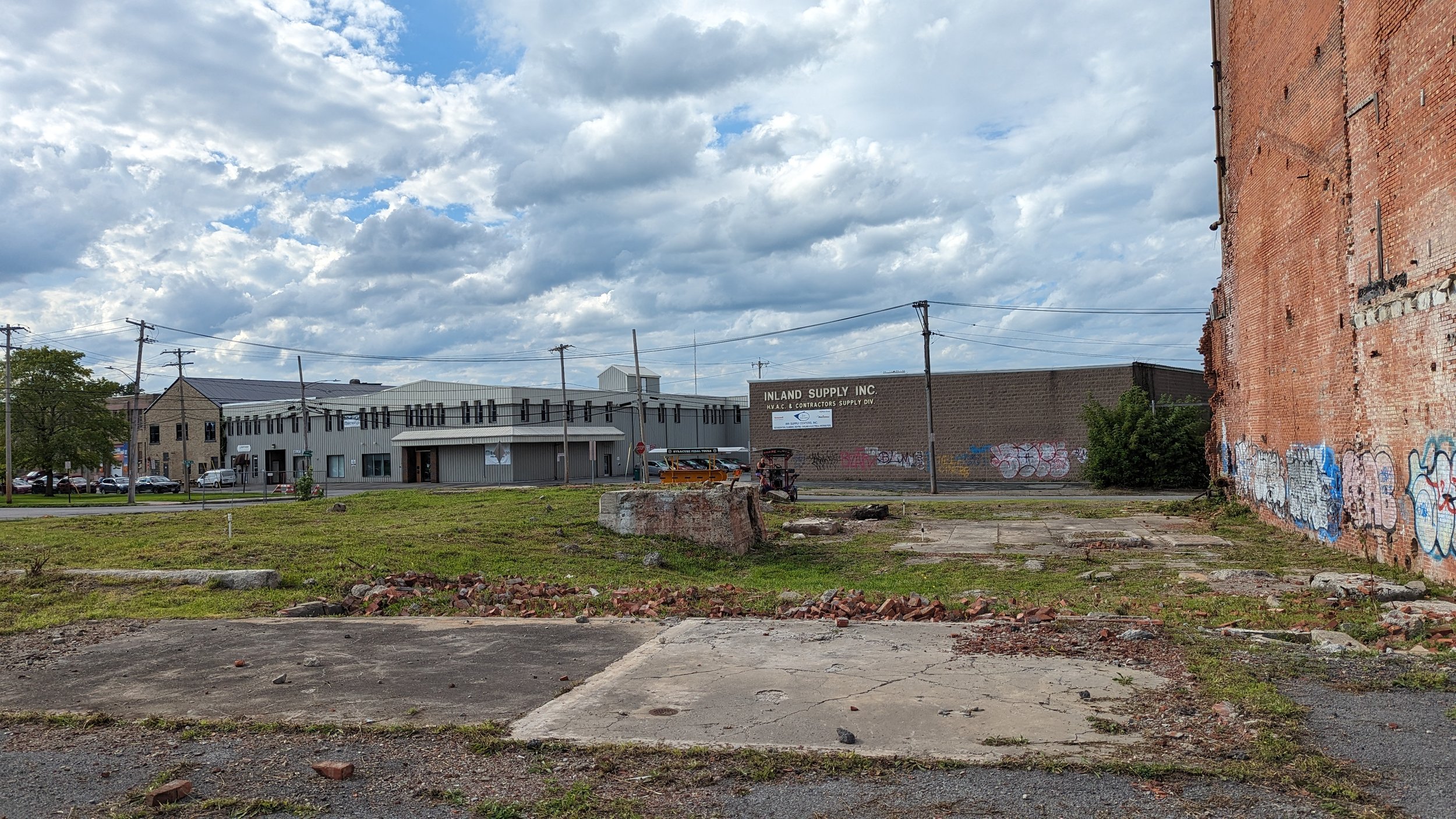
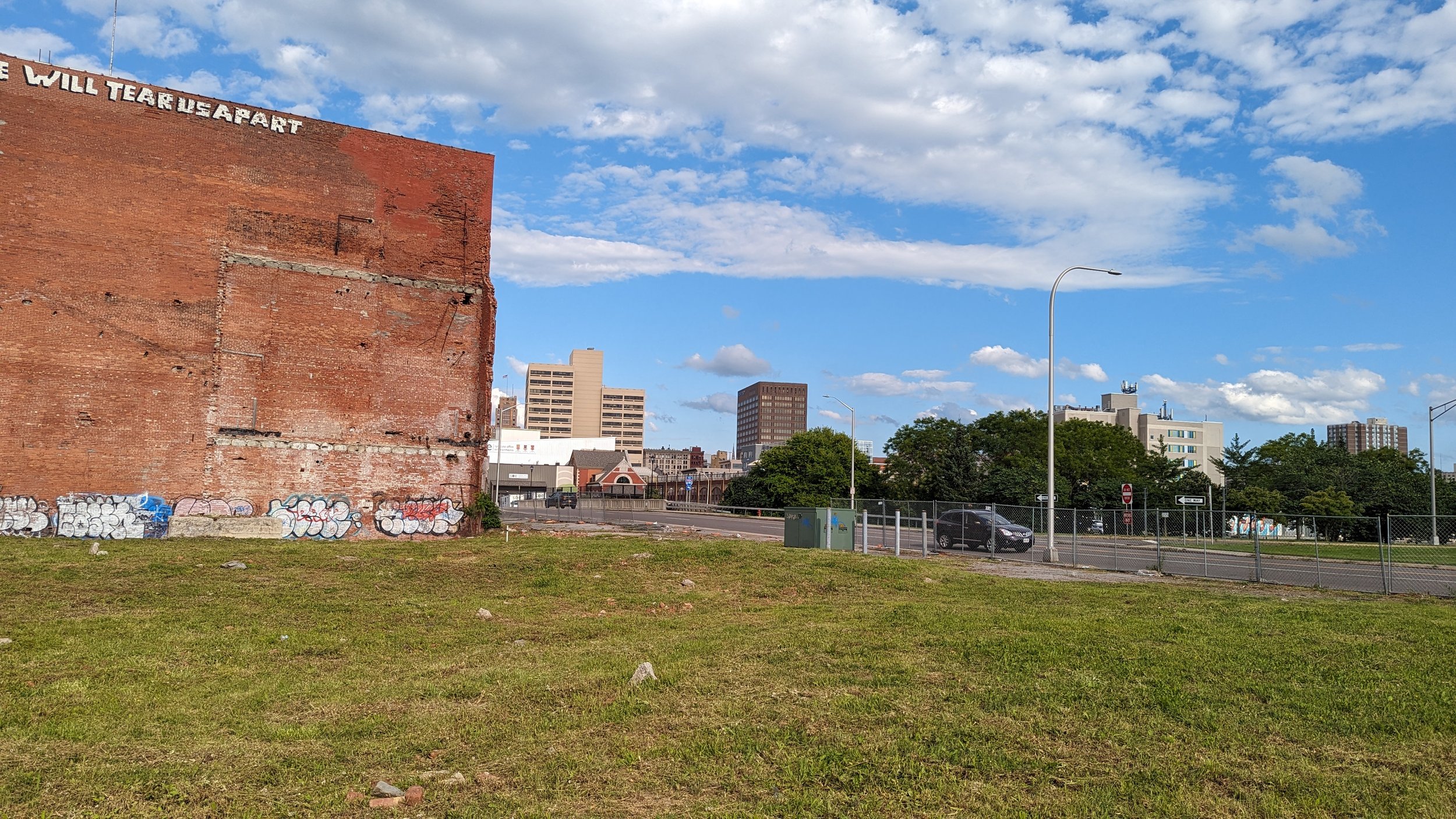
A large, red warehouse sits just west of Downtown Syracuse. It has been vacant for as long as I can remember. Vacant buildings of this scale can deaden spaces as they loom over any neighboring buildings. They also present opportunities. 

PXL_20230817_210723909.jpg
PXL_20230817_210748399.jpg
PXL_20230817_210819381.jpg
PXL_20230817_210901213.jpg
PXL_20230817_210914708.jpg
PXL_20230817_210723909.jpg PXL_20230817_210748399.jpg PXL_20230817_210819381.jpg PXL_20230817_210901213.jpg PXL_20230817_210914708.jpg

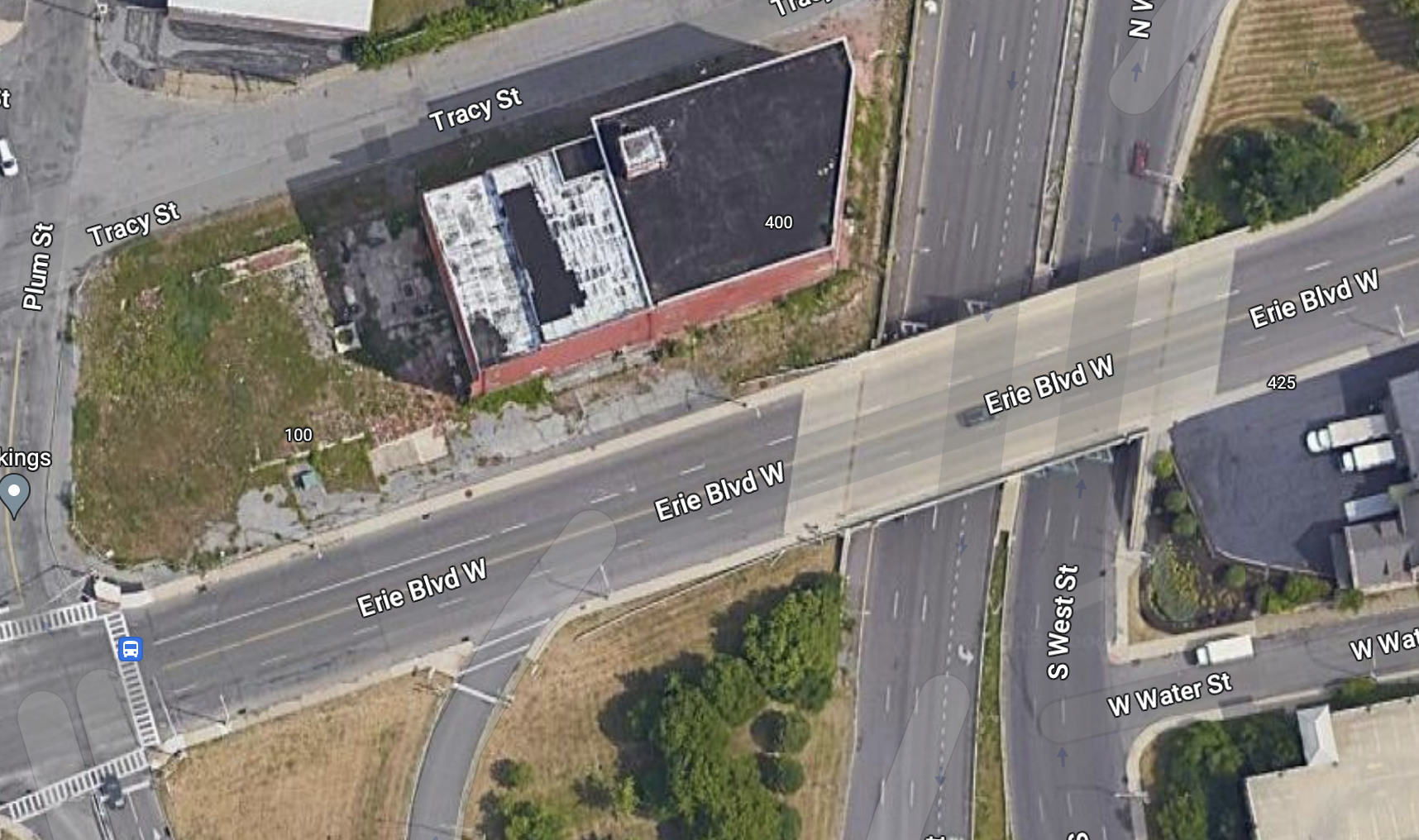
If the building is structurally sound, its redevelopment into a mixed-use building, including a modern expansion into the vacant lot next door, would help visually connect the two neighborhoods while also adding residents within a quick walking distance. The commercial spaces on the first floor could also play off the nearby bars and restaurants in Creekwalk Commons and Middle Ages. One of the reasons Armory Square and Hanover Square are so lively is the concentration of uses. Being able to comfortably and quickly walk between different bars and restaurants invites more people into the neighborhood. Give people options and they will take them.

If the building is not structurally sound, a full teardown may be in order, but the same design considerations should be maintained. Fill the full block, with the building’s facade coming up straight to the street.

Screenshot 2023-10-30 at 6.16.58 PM.png
Vacant lot development.png
Screenshot 2023-10-30 at 6.16.58 PM.png Vacant lot development.png

Unfortunately, many of the spaces further west down Erie Blvd W are built in a suburban style, set back from the road with parking prominent out front. While this walk does not take you in this direction, the development of a strong anchor in this location may encourage further redevelopment in a more urban style. 538 Erie and the Dietz Lofts, which both occupy former industrial buildings, already exemplify this type of development. With another larger addition, the neighborhood will continue to approach a critical mass in terms of demand.

The Final Stretch

Once past the vacant land, you experience both good and bad examples of urban design.

PXL_20230817_210953275.jpg
PXL_20230817_211022848.jpg
PXL_20230817_220526506.jpg
PXL_20230817_210953275.jpg PXL_20230817_211022848.jpg PXL_20230817_220526506.jpg

On the positive side, the neighborhood benefits from the use of small, urban parks. Leavenworth Park, which is further west of Middle Ages, is the perfect scale park for our urban neighborhoods, filled with flowers, trees, grassy open spaces, and a playground. Directly in front of Middle Ages, a small extension of the park offers half court basketball and more tree cover. These small parks give people easy access to public green spaces that welcome impromptu interactions between neighbors and visitors alike.

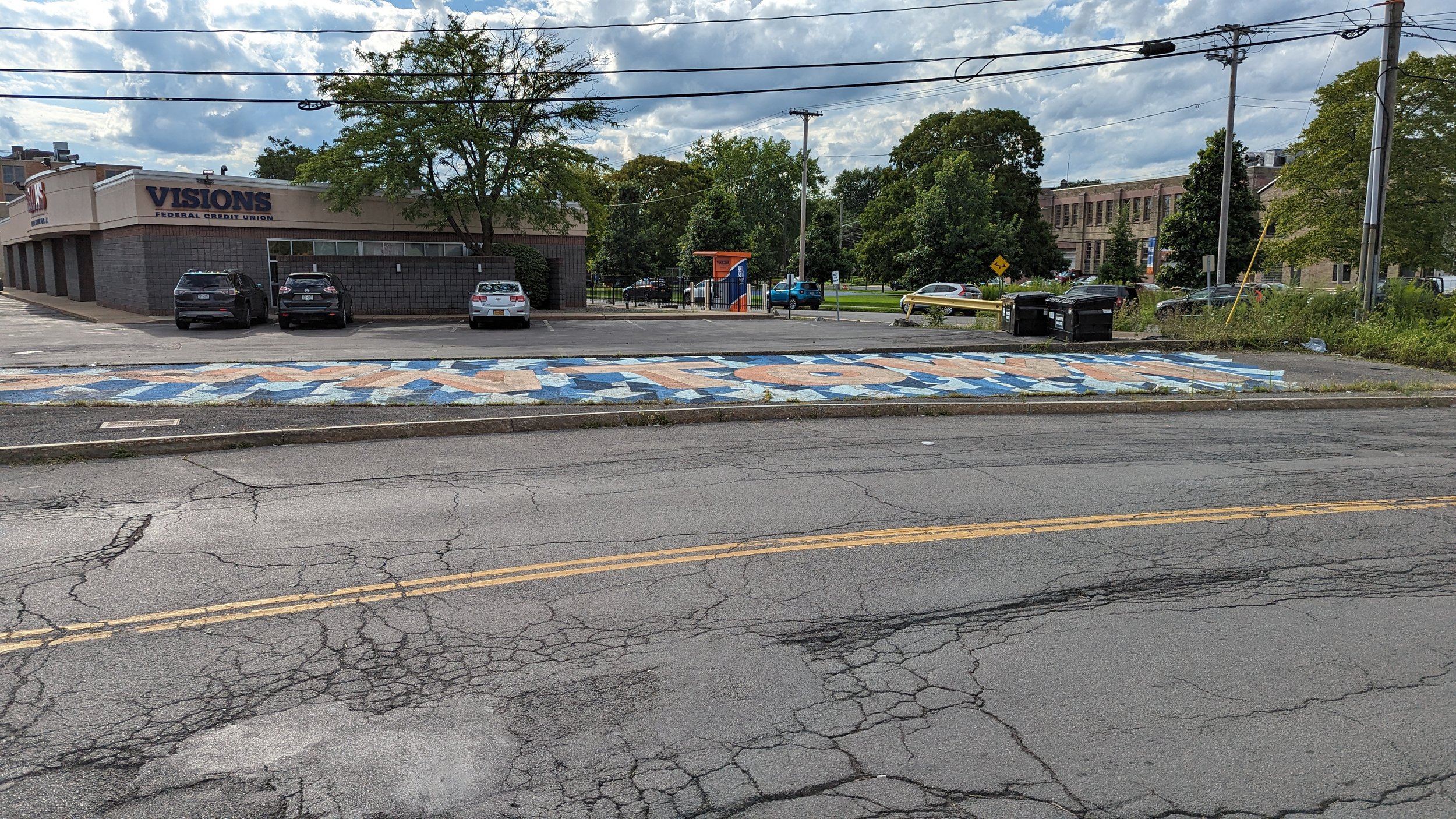
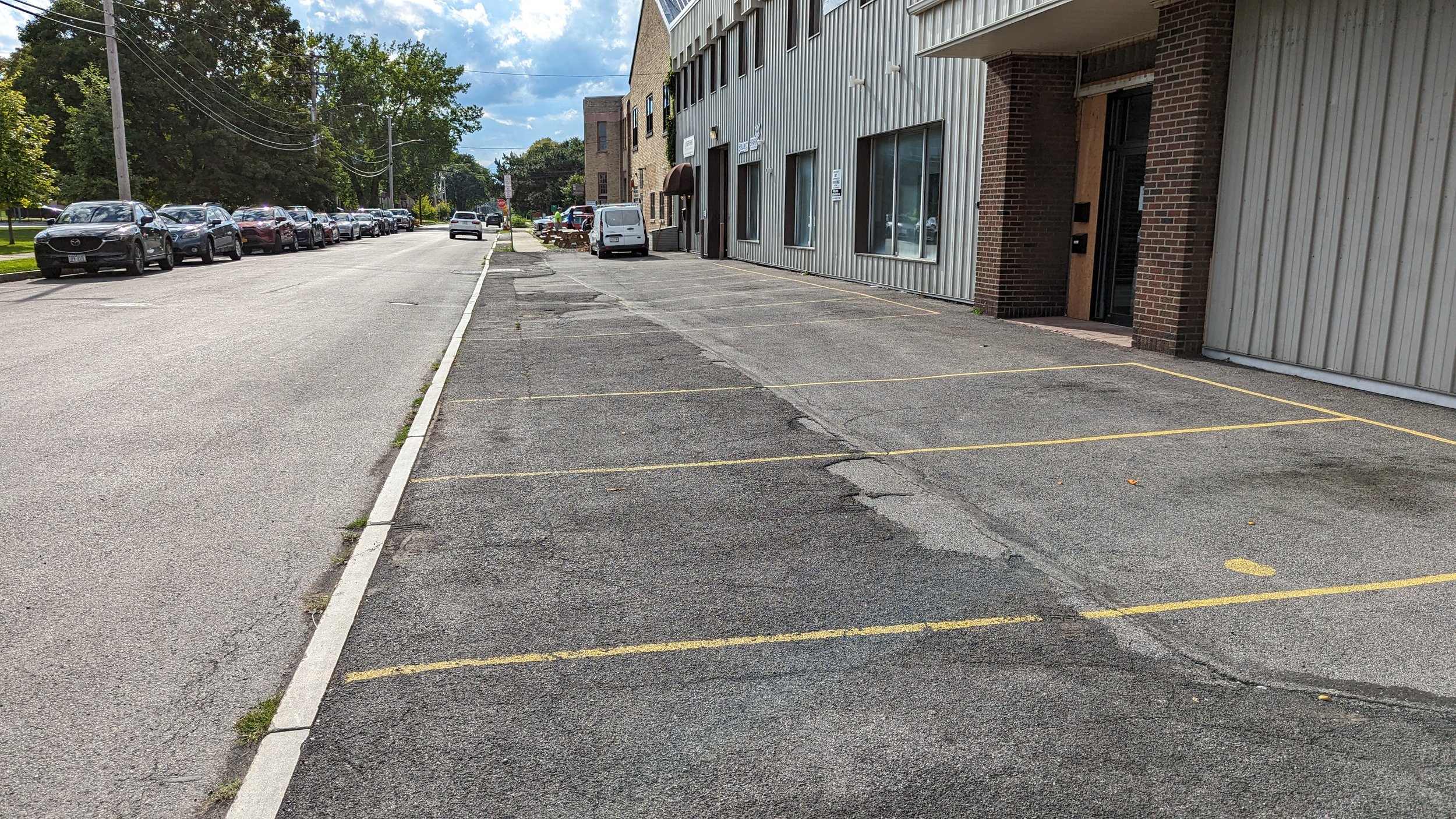
On the negative side, we have a confusing intersection and car storage occupying space ideally set aside for walking.

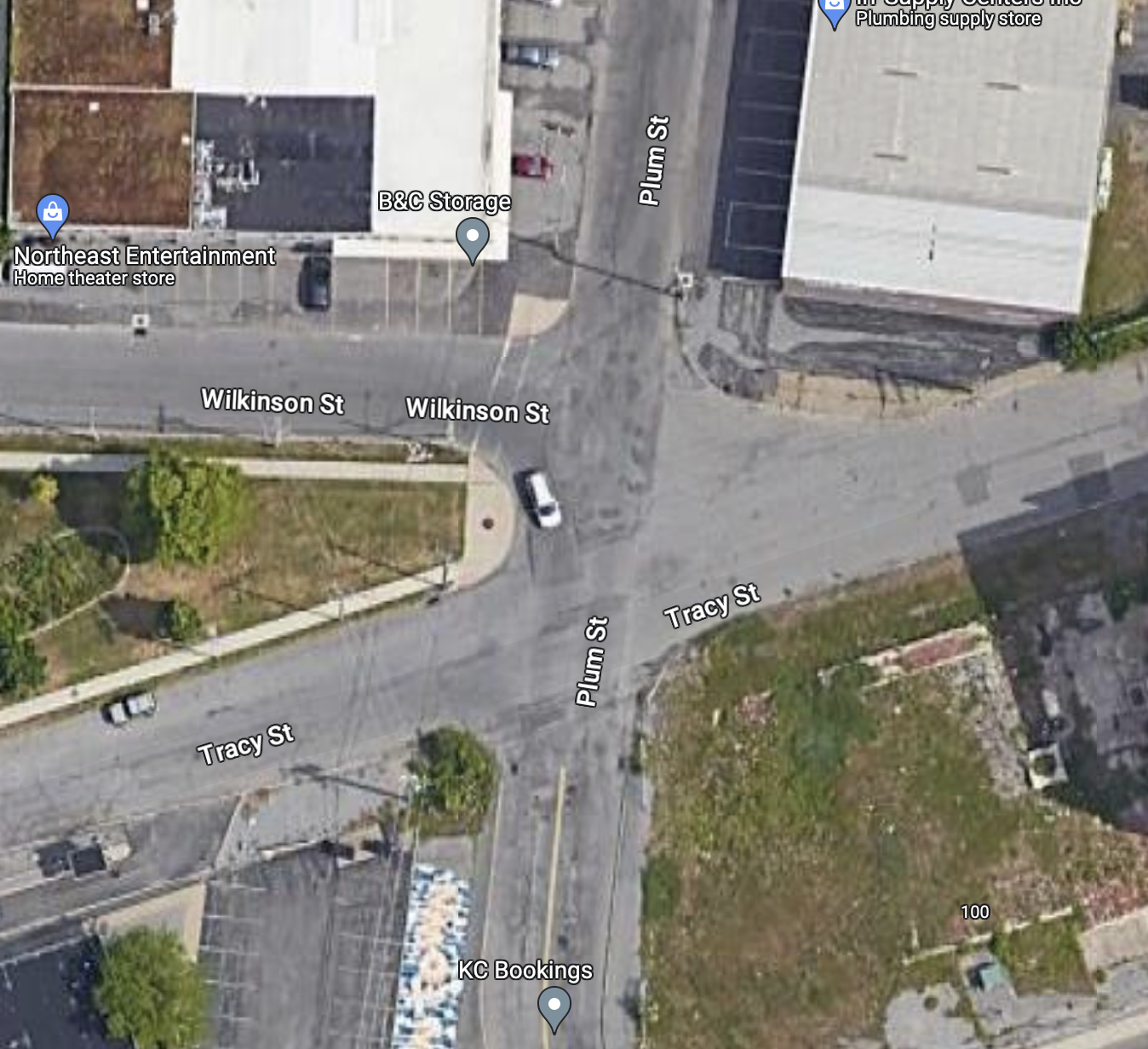
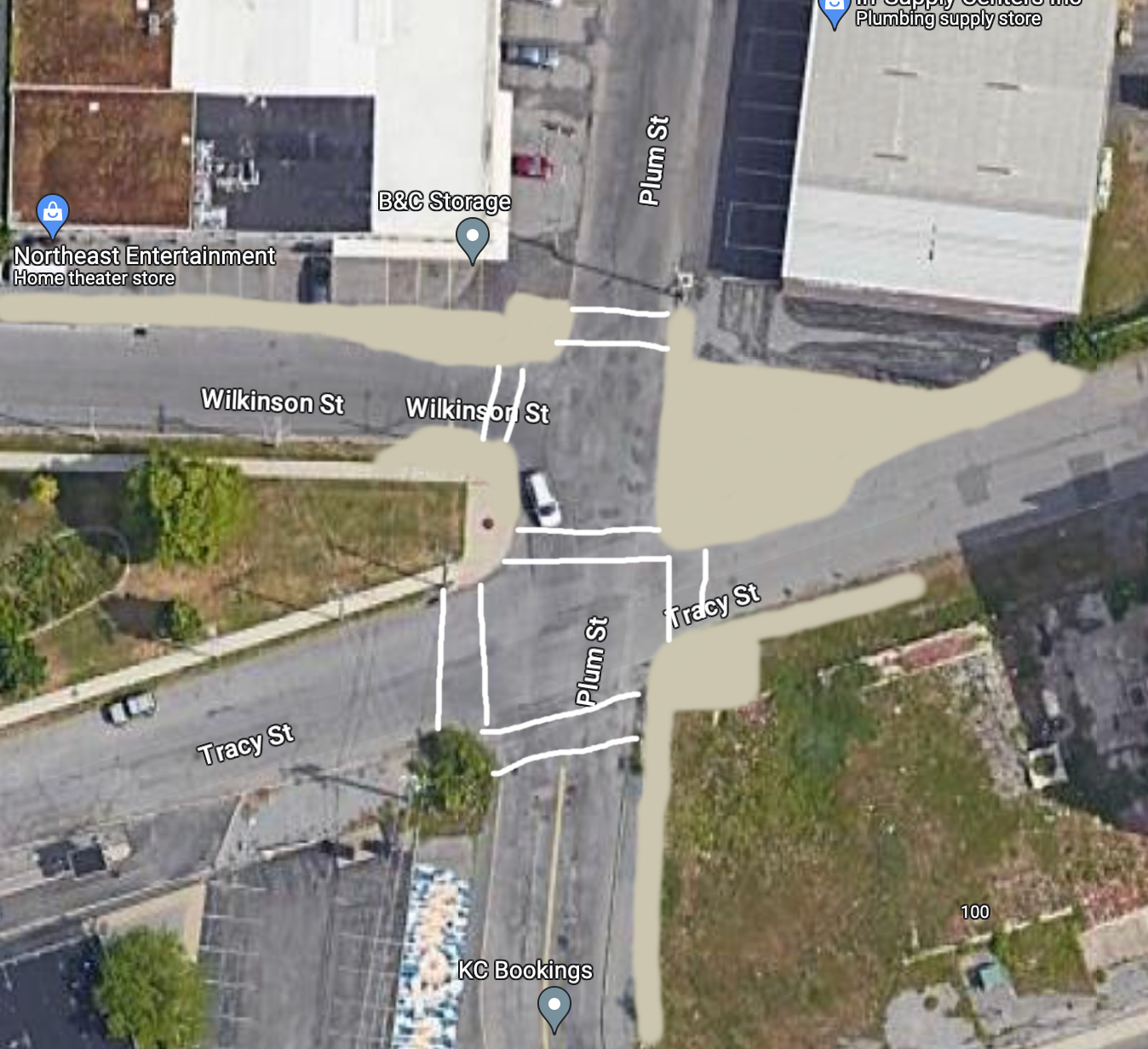
First the intersection. The Plum St / Tracy Street / Wilkinson St intersection lacks predictability with its wide open lanes and lack of pedestrian infrastructure. Squaring off the eastbound Tracy St approach and forcing drivers to turn right and then left to go down Wilkinson St would help make movements more predictable while also shortening crossing distances.

Screenshot 2023-10-30 at 6.16.24 PM.png
5 way intersection.png
Screenshot 2023-10-30 at 6.16.24 PM.png 5 way intersection.png

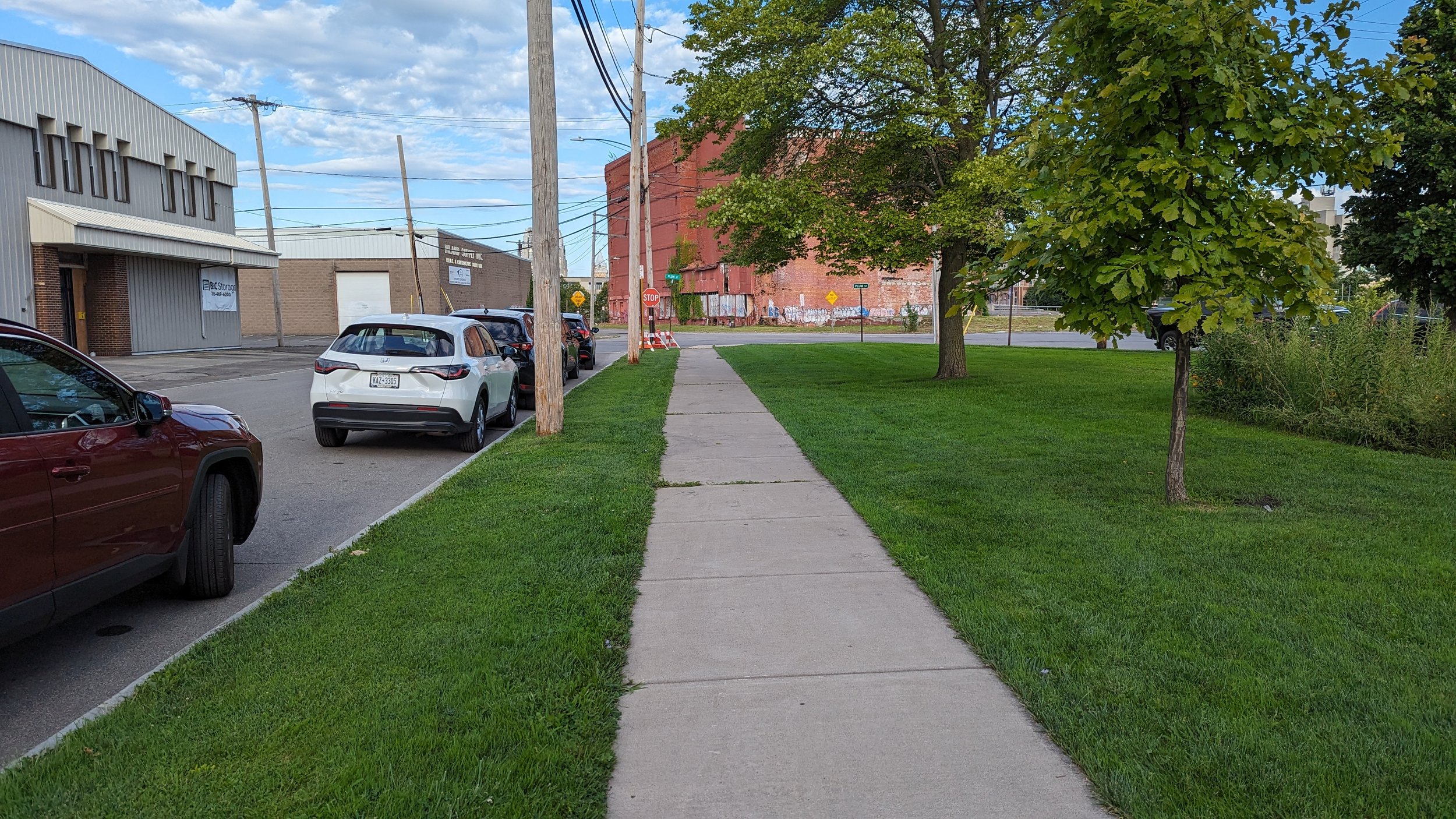
While the small park and Middle Ages both have sidewalks, all other surrounding properties do not, forcing people to either walk in the street or on uneven ground. If we truly want a walkable neighborhood, we need to provide spaces for people to walk. Building out the sidewalk network, through existing car storage areas, is key to improving these connections. We cannot let pedestrian infrastructure be afterthoughts, but instead prioritize investments in it.

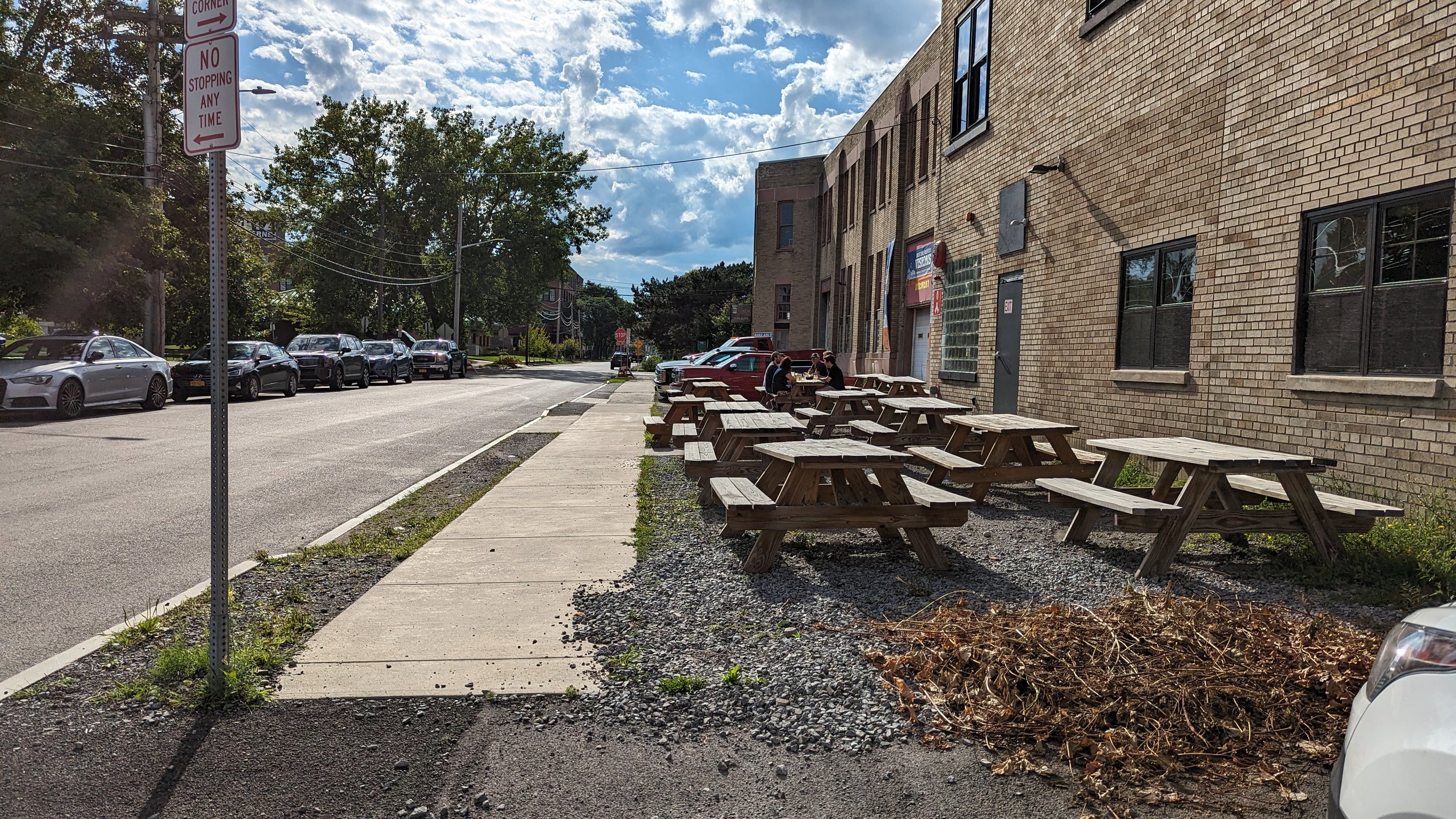
As you arrive at Middle Ages, you’re greeted by outdoor picnic tables where visitors can sit and enjoy the sun on a nice day, or watch the many outdoor concerts they hold throughout the warmer months of the year. This is exactly what breweries and restaurants should be doing to engage with their neighborhoods, and we’re lucky to have such a place just a short walk from Downtown.

In Walkability, Syracuse
Comment
← Newer Posts Older Posts →

Recent posts

Featured
PXL_20241010_211844719.jpg
Jan 30, 2026
Let's Do Good
Jan 30, 2026
Read More →
Jan 30, 2026
PXL_20250830_182821521.jpg
Sep 15, 2025
Urbanism Lessons from the Great White North
Sep 15, 2025
Read More →
Sep 15, 2025
Carousel.jpg
May 27, 2025
Destiny USA and the City
May 27, 2025
Read More →
May 27, 2025
PXL_20240805_141743149.jpg
Jan 1, 2025
All Cities Are Beautiful
Jan 1, 2025
Read More →
Jan 1, 2025
PXL_20241005_135224129.jpg
Nov 6, 2024
A Healthy Future for the Regional Market
Nov 6, 2024
Read More →
Nov 6, 2024
PXL_20240728_191254239.jpg
Jul 31, 2024
Renters Matter, Too
Jul 31, 2024
Read More →
Jul 31, 2024
Vista view.jpeg
Mar 21, 2024
The Valley of the Sun - A Land of (Sub)Urban Extremes
Mar 21, 2024
Read More →
Mar 21, 2024
Manlius Cinema.jpeg
Jan 31, 2024
The Movie Theater at the Urban Core
Jan 31, 2024
Read More →
Jan 31, 2024
Clinton Square Christmas Tree at night.jpeg
Nov 30, 2023
The Case for a Holiday Village
Nov 30, 2023
Read More →
Nov 30, 2023
PXL_20230817_220739294.jpg
Oct 31, 2023
The Walk: To Middle Ages
Oct 31, 2023
Read More →
Oct 31, 2023
Ballpark.jpeg
Sep 7, 2023
The Walk: To the Ballpark
Sep 7, 2023
Read More →
Sep 7, 2023
PXL_20230813_213112525.jpg
Aug 14, 2023
The Walk: To Tipperary Hill
Aug 14, 2023
Read More →
Aug 14, 2023

Powered by Squarespace