• Blog
  • Blog Index
  • Video Work
  • About
Menu

Thomas Bardenett

Urban Planning - Writer - Filmmaker
  • Blog
  • Blog Index
  • Video Work
  • About

Tom’s Restaurant which was featured as the ultimate third place for the cast of Seinfeld functions as a true third place for residents and visitors alike.

Third Places: Where Everyone Might Know Your Name

May 31, 2022

Think back to the beginning of the Covid-19 pandemic in early 2020, or even through that first year or so before most of us were able to get vaccinated. Many of us tried to minimize the amount of time we spent in public beyond what we were required to do. Our social functions were canceled or moved online. We saw only a small group of people who we were close to, looking to minimize our exposure to a new virus. Obviously many people were still going into work because their jobs were essential, but we were unable to go anywhere to decompress and enjoy a social gathering like we had become used to. We lost access to people.

This isn’t anything new. In many ways we’ve been slowly increasing our social isolation for decades. We use drive-thrus instead of walking into a burger joint or coffee shop. We order our packages online instead of going out to shop. Many live in the suburbs and drive to work every day, never interacting with another person unless they choose to. I’m guilty of this as well. Ordering a bagel online and spending less than five seconds in the actual shop has become a habit for me. These aren’t all bad things, and some even have some significant positive effects, but they do keep us from people outside our own circles and we lose out from many rich interactions as a result. In some cases, they have exasperated what many have been calling the epidemic of loneliness as we leave those without a social circle to fend for themselves.

View fullsize Hanover Square performance.jpeg
View fullsize Italian festival NYC.jpeg
View fullsize NYC Pride.jpeg
View fullsize Syracuse Crunch.jpg

A common thread through most of my blog has been the importance of creating spaces where people are encouraged to interact with friends and strangers. This might be through encouraging people to get out of their cars and walk or ride a bike through the city; closing streets to encourage outdoor dining or games; or creating shared experiences like a sporting event or festival. Each of these look for opportunities for people to mix with others they may not engage with otherwise. That, in essence, is what a “third place” provides.

Ray Oldenburh, professor emeritus of sociology at the University of West Florida in Pensacola, describes third places as separate from home (the “first” place) and work (the “second” place) where people go seeking leisure with friends and strangers. They are the places where there is little to no cost to enter and you’re invited to connect with others outside of your immediate circles; churches, parks, coffee shops, salons, diners, gyms, bars or even your local corner store.

Our TV shows are filled with third places. Tom’s Diner in Seinfeld, Central Perk in Friends, McLaren’s Pub in How I Met Your Mother, and Cheers. While these are fictional places, many of us have found similar places of our own where we can walk in and expect to see friends or at least familiar faces. 

In many ways, third places are what make cities the amazing and vibrant places that they are. They are vital components to the “sidewalk ballet” as Jane Jacobs writes, where people’s movements and interactions reflect one another. You can see it in some of our older neighborhoods where the business cores still exist. The businesses may have changed hands or redeveloped entirely, but their function as a gathering place still remains. 

It might be a gym where you run into neighbors and friends, or see specific members every morning and know their general routine. It might be a cafe where your barista knows your order right when they see you, or a bar that ensures the game you care about is playing on the TV. There’s a familiarity but also a chance to encounter others you may not have expected. It becomes a part of who you are, and you become part of a small community.

View fullsize Across the Hall.jpeg
View fullsize Burbank book shop.jpeg
View fullsize Inwood park.jpeg
View fullsize Metro Fitness.jpeg

Diners, more than almost anywhere else, have served as true third places for generations. Cheap comfort food. Small, intimate settings often with staff who have been there for years. Customers who come in weekly, or even daily, to get the same thing over and over, which is a goal of mine as I get older. Every city I travel to I try to find a small neighborhood diner to hit up, knowing that I’ll get to see a different side of the community. Its easy to walk into a conversation and learn something new.

Yet, many of our third places are being lost. Rents have become burdensome to many. Large chains have begun to dominate suburban areas, which may be even more true after the pandemic as many smaller businesses struggled to stay afloat. Our towns have emphasized the development of large shopping centers with big box stores that require a car to visit instead of encouraging smaller, more niche buildings in walkable areas. 

Diners and neighborhood bars have struggled in recent years, unless they have leaned into becoming Instagramable set pieces. This isn’t to say these newer spaces don’t offer up good food and atmospheres, but they do become difficult to get into or come with a price barrier some can’t meet. Some places are working to reinvent themselves, like bars that encourage game nights with or without drinks, or adding outdoor dining spaces wherever possible to increase customer comfort during the Covid era.

We need to protect and encourage the development of these third places. There’s no magic way to conger these spaces up, but instead it requires a holistic approach to cities.

We can lay out a solid foundation through public policies including: zoning that allows neighborhood businesses within every residential neighborhood; affordable small business loans; affordable housing and commercial space requirements; and streamlined permitting and approval processes.

We can also encourage more community activity through the design of our public areas through: wide, accessible sidewalks that allow people of all abilities to get around outside of a car; bike lanes and bike parking to encourage a more social form of transportation that also keeps streets quiet and pleasant for people to talk and engage; and the preservation of greenery through street trees and public parks.

These are all common themes through urban planning, but often these policies are thought of in silos. Business development is often removed from active transportation policies and the parks department, even though many of these businesses offer up a public service of their own. Third places are a utility to the communities they are in and we should expand how we incorporate them into our planning discussions.

Next time you’re in a third place, think about what that place may mean to you beyond just the food or service they specialize in. Think about the community you interact with and how that might shape the way you think and behave just because this space is part of your normal routine.

A small outdoor space behind a local bodega in the Bronx becomes an impromptu community space after NYCFC games at Yankee Stadium nearby.
In Civic Pride
Comment

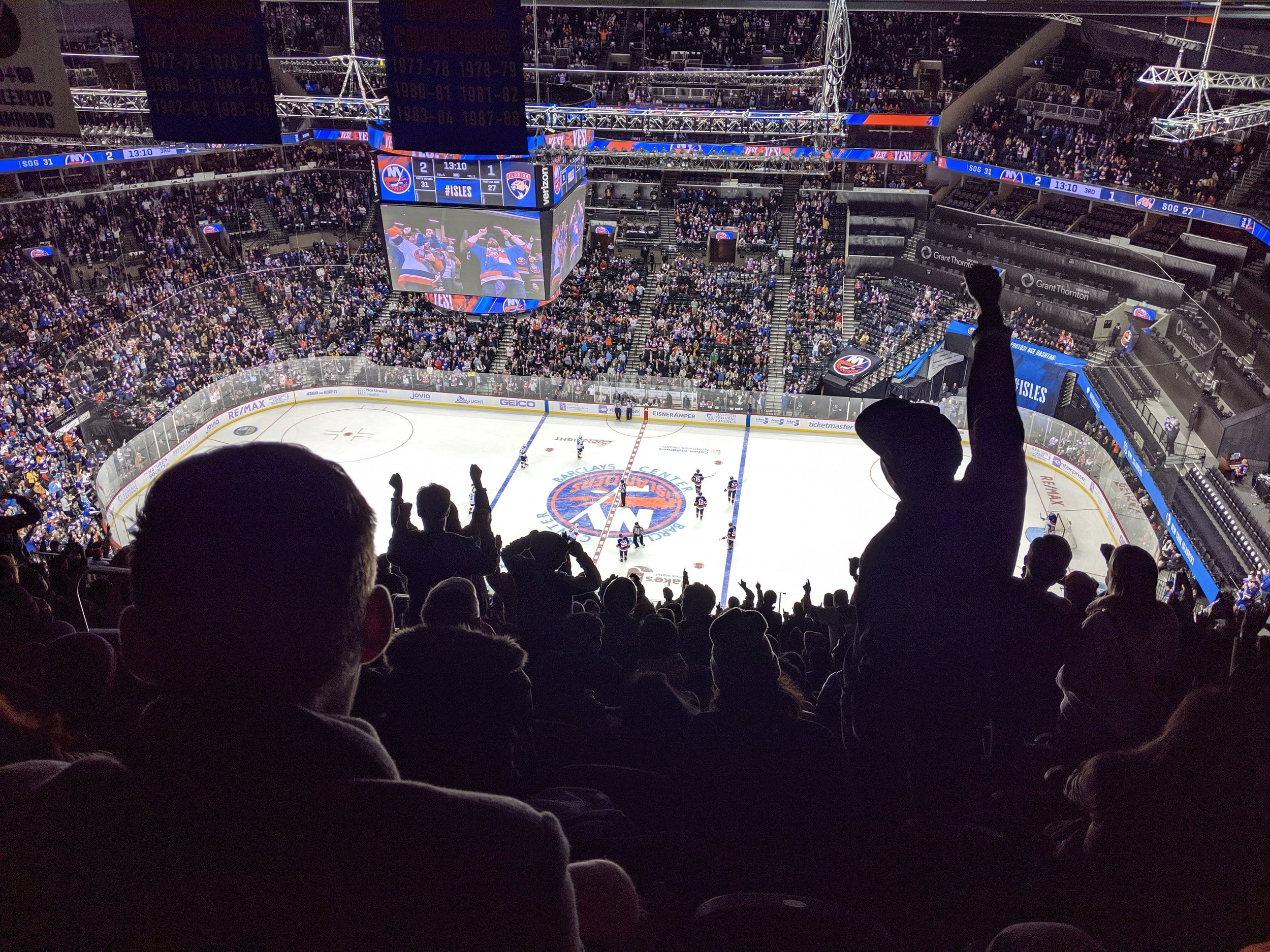
New York Islanders playing at the Barclays Center in Brooklyn.

Major League City: Balancing Civic Pride and Public Financing

April 30, 2022

At the beginning of April 2022, New York State approved a budget that included $600 million for a new football stadium in Orchard Park for the Buffalo Bills.This sparked criticisms and celebrations, with both sides arguing what value should be put on keeping a professional franchise in a particular city. Why should the public be spending hundreds of millions of dollars to subsidize a billionaire owner and one of the wealthiest leagues in the world? Why would we risk losing a franchise that is seen as a fundamental part of our community? Is there a better balance that we can strike?

I’ve written about how stadiums relate to the cities they’re in before on this blog, primarily focusing on baseball stadiums (surprisingly the sport with the most urban beginning). But I want to take a larger view of the discussion and how we might find a better way to keep our teams in the cities they have come to be synonymous with. 

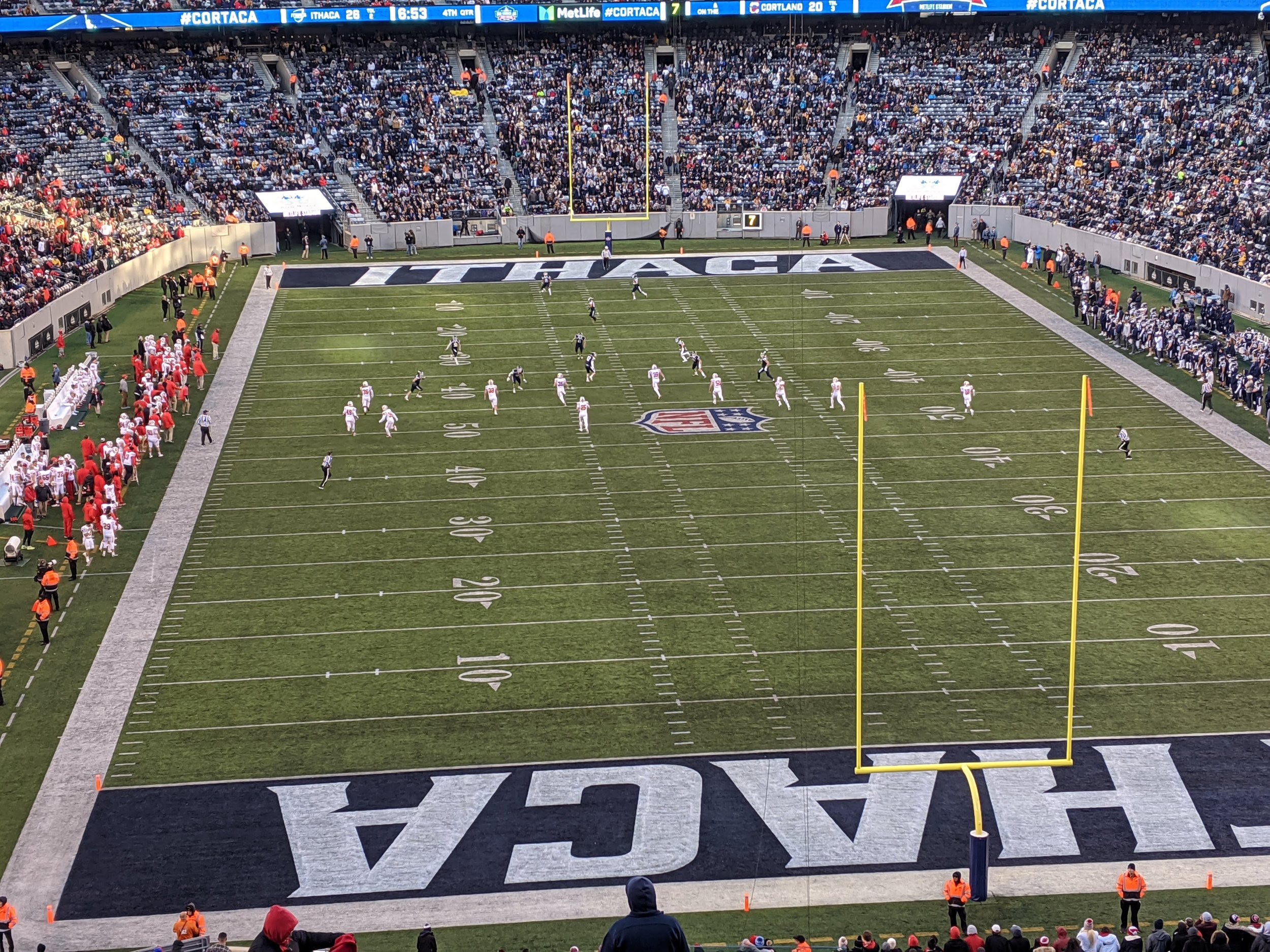
No one can question that being considered a “major league city” has a certain impact on the pride of a community. Having your skyline broadcast across the country and hearing your city’s name discussed alongside other cities who may be much larger or more prominent than your own helps boost a sense of pride among citizens, even those who are not fans. As Dan Moore put it in an article for the Ringer, “They remain perhaps the last public-private institution capable of transcending partisan divides at scale, and they inspire a kind of devotion that few enterprises can match.” And that is a powerful force. Providing a common theme to unite around and hold up as a symbol of your community is an intangible benefit that is hard to put a price on. While this discussion is primarily on professional sports, college sports can have the same (if not even a more robust) effect on the communities they reside in.

These teams come with many side benefits as well, including team sponsored foundations that support education, health, and athletic programs, often in disenfranchised communities. Just one of many examples is NYCFC building over 50 mini soccer pitches across New York City to help  provide open space and athletic opportunities to kids in each of these neighborhoods. Teams can also attract other quality of life amenities such as musical performances, museums, and art shows as the City now has a raised profile across the country. These artistic scenes can, and do, thrive without a major league franchise, but there is a long history of athletes connecting with and promoting artists in their cities, giving them a reach they may not have been able to achieve on their own.

View fullsize  MetLife Stadium, developed in suburban New Jersey, was financed privately, but has a less than ideal location for many.
View fullsize  NYCFC currently shared Yankee Stadium and is looking to build a soccer specific stadium nearby in the Bronx.
View fullsize  PNC Park was developed through a public-private partnership that helped ensure the Pirates and Steelers remained in Downtown Pittsburgh.

But these cultural benefits can also provide a team, and specifically their owner, with an incredible amount of power.

It is true that it’s tough to imagine Buffalo without the Bills, but at one point it was impossible to imagine Brooklyn without the Dodgers too. There are dozens of examples of teams leaving cities to seek out a higher profile or a better financial deal, and for the cities they leave behind it can be a true blow to civic pride and engagement. As Aaron Cowan wrote when discussing the major shifts in baseball during the urban renewal period of the ‘50s and ‘60s, the “…loss of a professional sports franchise amounted to a tacit admission that a city was dying.”

This mentality still rings true today. To lose one of your greatest promotional tools is a blow to a region, and the owners know it. Since the 1950s, teams have been using this power to their advantage in acquiring funding for new and improved stadiums, or extended tax breaks for renovations, all while gaining incredible wealth off of the talent of their players. They have continually threatened to leave cities if they weren’t given sweetheart deals on land to develop or, in what is increasingly the case, provided extreme amounts of public funding to support their for-profit businesses. And this is on top of evidence that these investments do not financially pay off in the long run, especially football stadiums.

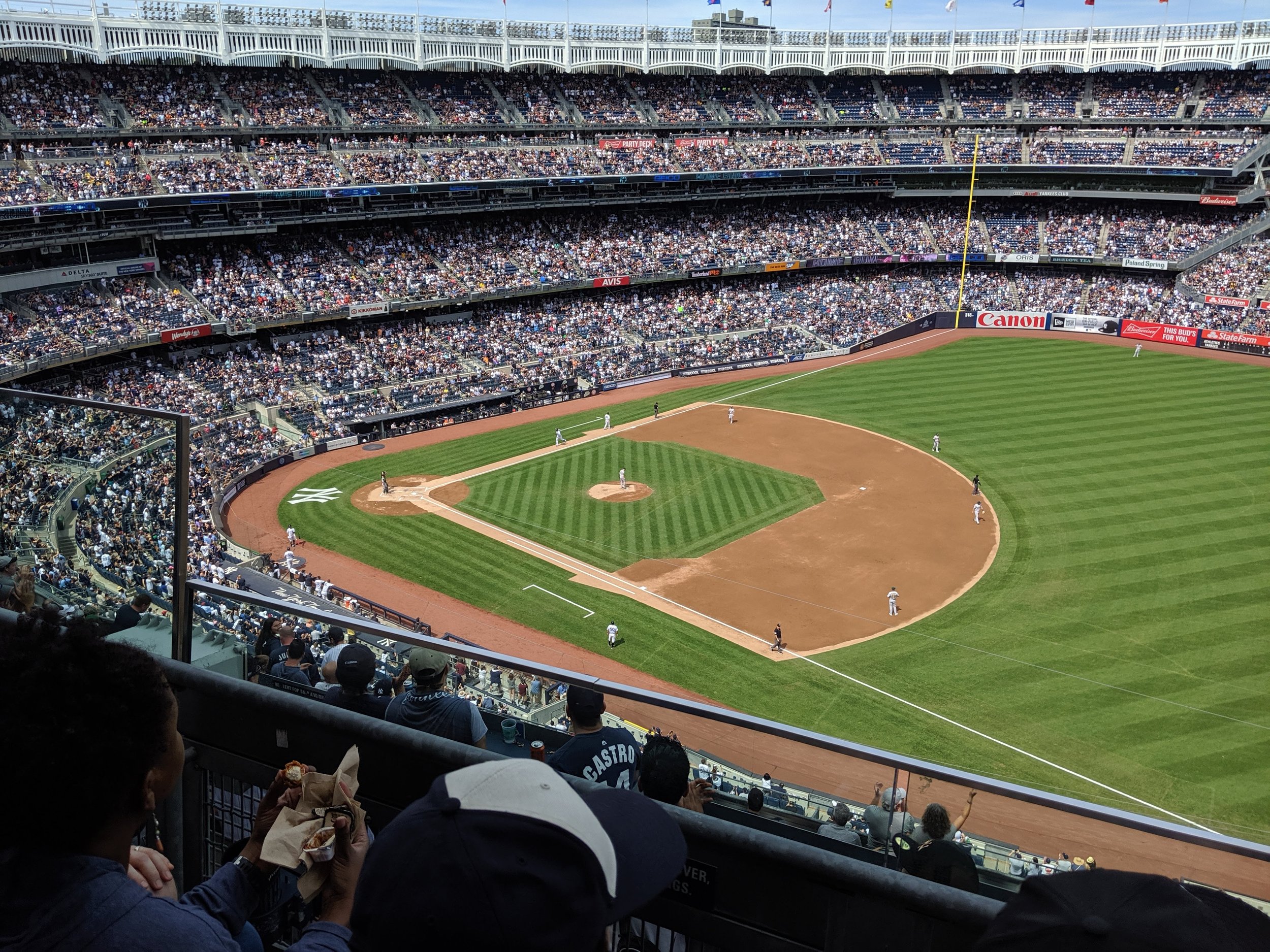
New Yankee Stadium was developed with public assistance through the transfer of park land.

The New York Yankees were given park land for free to develop their new stadium and large tax deductions in tow, with the only requirement that they convert the old field to a park when it was torn down.Las Vegas put up $750 million to construct a $2 billion stadium for the Raiders, which was a prerequisite for attracting them to the city, slashing the area’s education budget to chip in. The Buffalo Bills stadium will receive a total of $850 million in taxpayer funds to build a $1.4 billion stadium across the street from the old one. While a Downtown Buffalo stadium was explored, the extra cost was deemed too steep, even if that location would provide additional development/economic opportunities and be far more accessible to all residents as it would be located near several bus lines and the light rail line.

While I won’t say the public should not invest to some degree in these facilities, as there truly are benefits to having a major league team, what has now become expected of cities (funding huge portions of these projects with little benefit beyond keeping the team in town) is unacceptable. If a team receives public investments in their projects, they should be expected to do more with that money than simply line their pockets.

Using NYCFC again as an example, the team’s current search for a suitable location for a soccer specific stadium includes the goal of providing hundreds of units of affordable housing in an adjacent development, along with retail and office space, helping to create a dense, mixed-use neighborhood. Housing affordability is a long-term crisis for New York City, so to have an MLS team include hundreds of units within their development plans only makes sense. Other cities should consider this requirement as part of stadium developments as well, but this brings up the discussion of where these developments should take place.

PNC Park, home of the Pittsburgh Pirates, sits across the river from Downtown Pittsburgh and is surrounded by restaurants, bars, and park land.

While we want to make sure any sort of stadium development does not displace residents or businesses as much as possible, we should be asking that these developments occur close to the urban center. By locating near the urban center, and reducing the size of the typically massive parking lots, you increase the accessibility of the stadium by non-car transportation modes, which is beneficial from an environmental stand point but also increases the ability of households without personal vehicles to attend games and events. The central location also benefits any affordable housing or commercial development associated with the stadium. Residents would enjoy access to public transit and shorter trips to work/shopping while businesses would benefit from an accessible location and association with their city’s team. You also benefit the businesses already in the neighborhood by bringing in additional customers during game days. Suburban stadiums are often surrounded by seas of parking lots with nothing around them, while urban stadiums encourage visits to nearby bars, restaurants, and retail locations.

Even if we do work out deals where team owners develop their stadiums in easily accessible urban locations and provide affordable housing/commercial development spaces alongside them, we still should not have public entities picking up the majority of the bill. Owners are billionaires with plenty of money to play with. If they require the public to put up substantial sums to subsidize their own wealth, cities/counties/states should be able to take partial ownership of these teams as they have invested in the teams as much, if not more, than the owners have. The development of a true public ownership model (most likely through a public-private partnership that leaves the team out of the day-to-day concerns of our elected officials) is beyond what I will discuss here, but its something that should be explored more if the public is continually asked to foot the bill for these large construction projects.

Hosting a major league team, or a high profile college team, does come with some powerful benefits; raised profile, increased civic pride, economic development opportunities, etc. But we cannot allow their owners to strong arm our cities and regions into subsidizing their profits. We need to ensure these stadium deals provide real benefits to their communities and give the public more of a say in what they entail. Teams are a quasi-public entity and we should try to make them more of a public benefit.

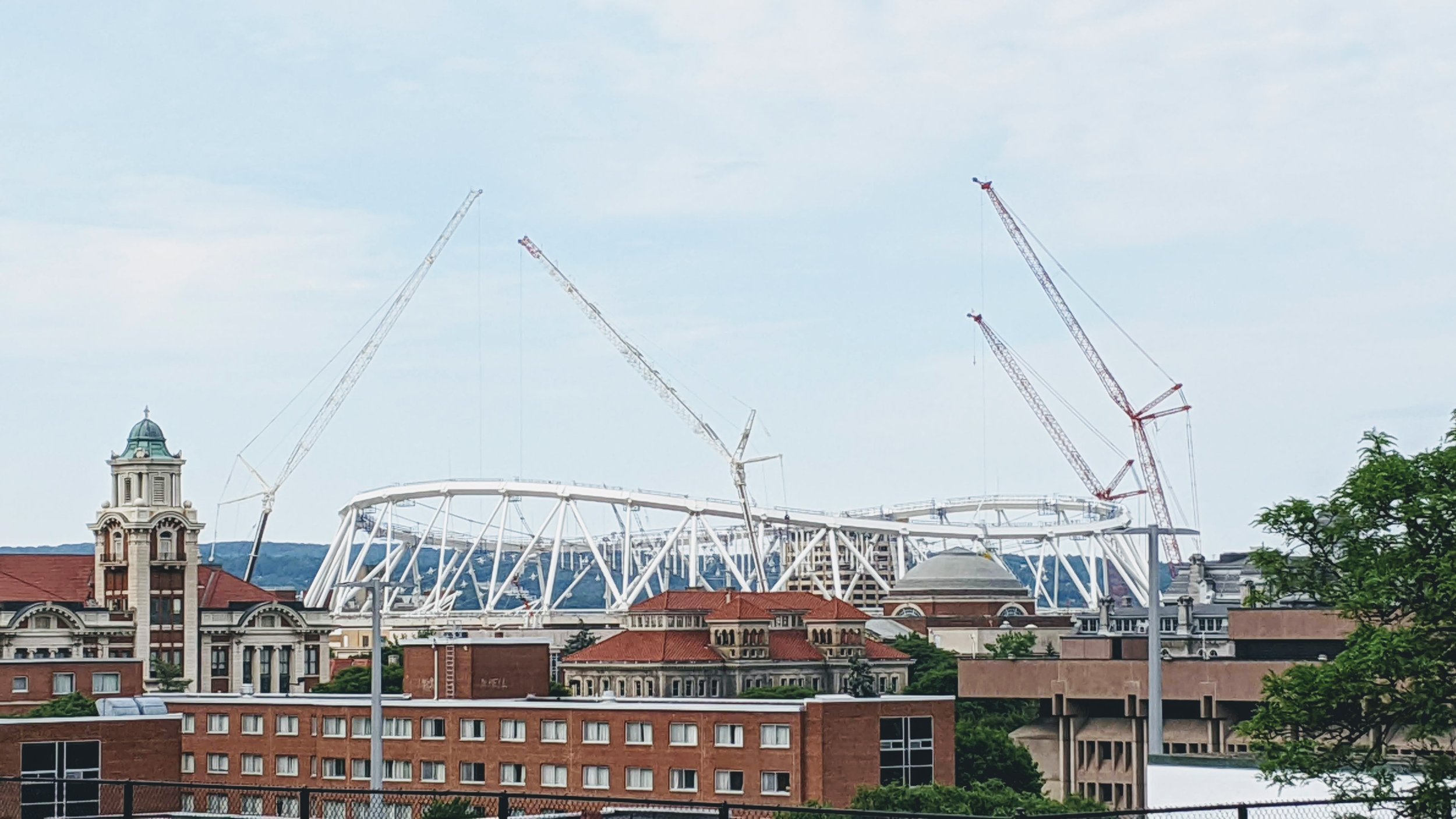
The new roof to the Carrier Dome, the most visible part of a $250 million renovation project that was primarily privately financed.

In Civic Pride, Sports
Comment

A Few Days in Cincinnati and a Few Lessons for Syracuse

March 31, 2022

Whenever I travel I find myself focusing on how the cities I’m in function. I always enjoy myself the most when I’m walking the streets, riding a bike, or riding transit somewhere, which lets me experience the city at a more human pace. When you’re driving or Ubering everywhere you go, you never get a sense of where things are or how they connect with one another.

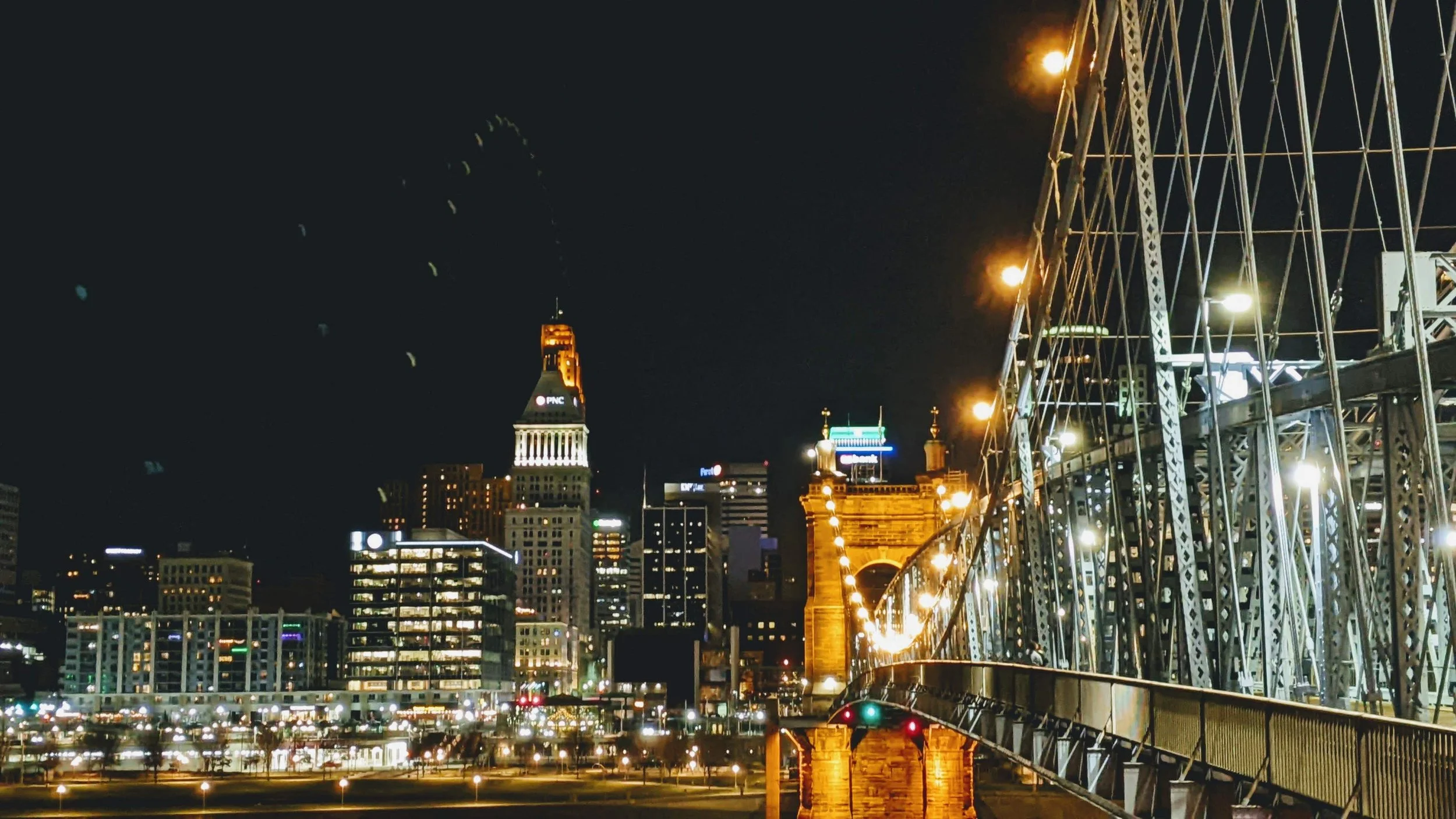
In the middle of March 2022, I traveled to Cincinnati, Ohio for the first time. A city that is rarely at the top of urban planner’s thoughts when it comes to progressive policies and projects, yet it has quietly built some truly pleasant human scale environments on the sturdy bones of its historic core. Downtown Cincy and the Over the Rhine (OTR) neighborhood offer walkable streets, plentiful dining and shopping experiences, as well as access to the city’s major league sporting venues. While these two neighborhoods only make up a very small part of the city as a whole, they offer up some ideas to other Rust Belt cities on how to embrace your history and make it a livable space moving forward.

DORAs and Plazas

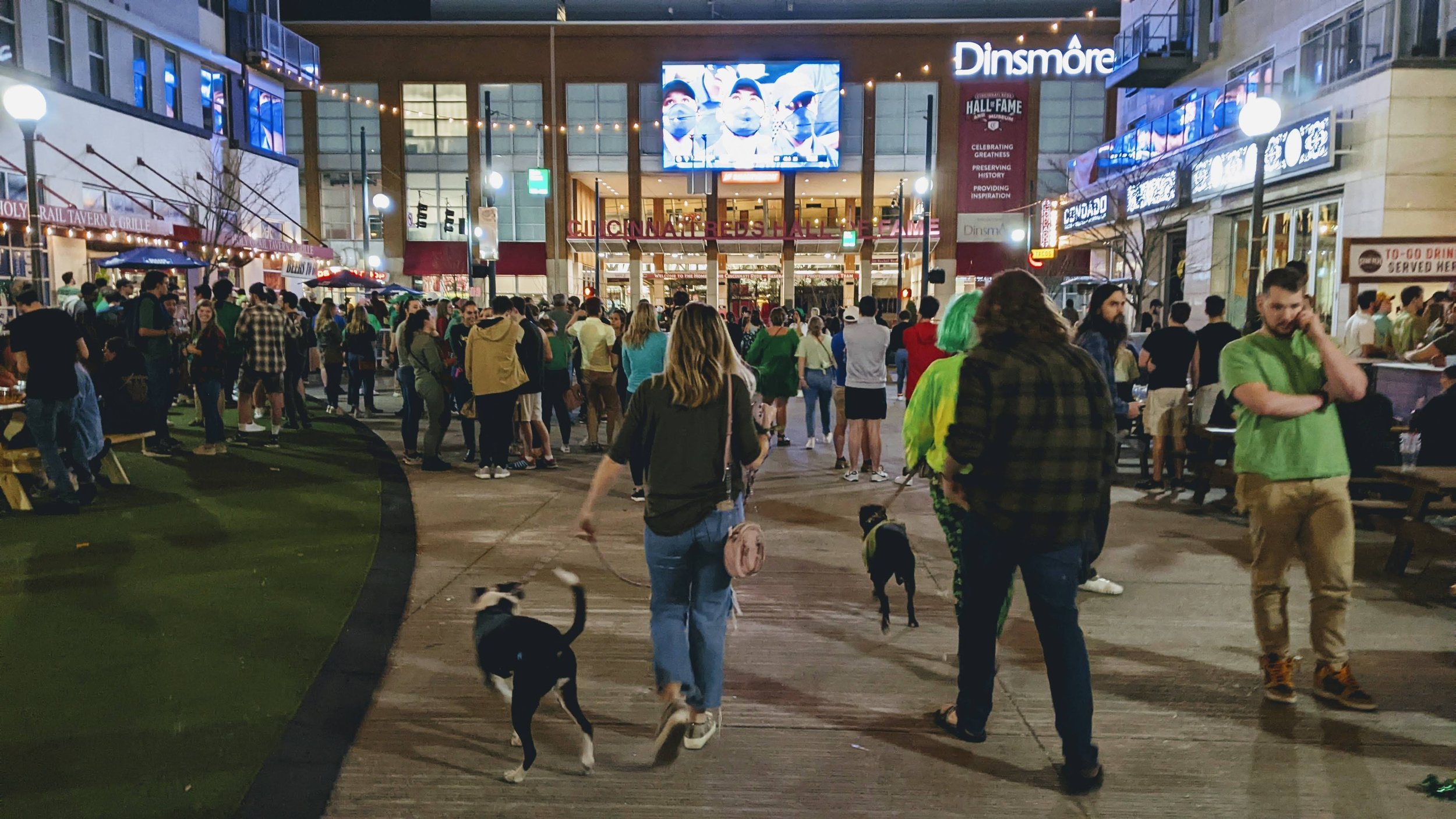
A recurring theme in many of my articles is the need to provide safe, open spaces for people to enjoy. This is especially true during the past few years during the COVID-19 pandemic, which has made eating and drinking outdoors a much more attractive and safer option for many. Cincinnati, including many of its suburbs, has taken this to heart, opening up at least 17 DORAs, which stands for Designated Outdoor Refreshment Areas. DORAs are pedestrianized streets lined with bars and restaurants that allow visitors to move freely between establishments with their drinks in hand, as long as the drink is in an official DORA cup. Each DORA is set up to meet the needs of the businesses and communities they sit within. During my trip to Cincinnati, I visited the most well known DORA in the region, the Banks, which sits between the stadiums for the Bengals and the Reds right on the Ohio River. The main street, Freedom Way, is blocked off to traffic year round, allowing for bars and restaurants to add seating and games. A few bars have walk-up windows allowing easy access for ordering. We happened to be there on St. Patrick’s Day when it was 75 degrees out, so the entire area was filled with people enjoying the sun. The one downside of the Banks is that you’re forced to cross two five-lane one-way streets and a bridge across I-71 in order to get there from the rest of Downtown Cincinnati. The whole area is also built on top of a massive parking garage that is clearly meant for game days and not much else.

Beyond the DORAs, many bars and restaurants in Cincinnati have benefited from small plazas created by closing off ends of streets. Not only does this provide additional seating space for businesses, but it also acts as a traffic calming device. Now cars are unable to speed through the neighborhood, while people walking or riding a bike can easily pass through. This sends a clear message that cars are guests within the neighborhood.

Syracuse can easily implement similar spaces throughout the City. Armory Square, which has enjoyed successful weekends of closed streets, is the perfect candidate for a DORA program. We don’t need to look too far for an example of how that might work. The City of Oswego is currently considering a plan to let people in their Downtown area walk freely between bars and restaurants as long as their drinks are in pre-approved, logo ladened containers. This “Social District” doesn’t go quite as far as closing down streets, but Syracuse already has that in place during the summer months. If anything, Syracuse needs to consider closing those central blocks of Armory Square on a more permanent basis to create a true destination.

Smaller blocked off plazas, similar to the image above, could be implemented across the City. Blocks around Westcott, or at the five-way intersection of Hawley/Catherine/Green in the Hawley Green neighborhood, or by the Byrne Building in Downtown. The City should put out a call to businesses and neighborhoods asking for input on where these traffic calming plazas would be desirable. All it takes is some paint, planters, and chairs to transform the end of a block into an enjoyable place to be.

Rooftop Access for All

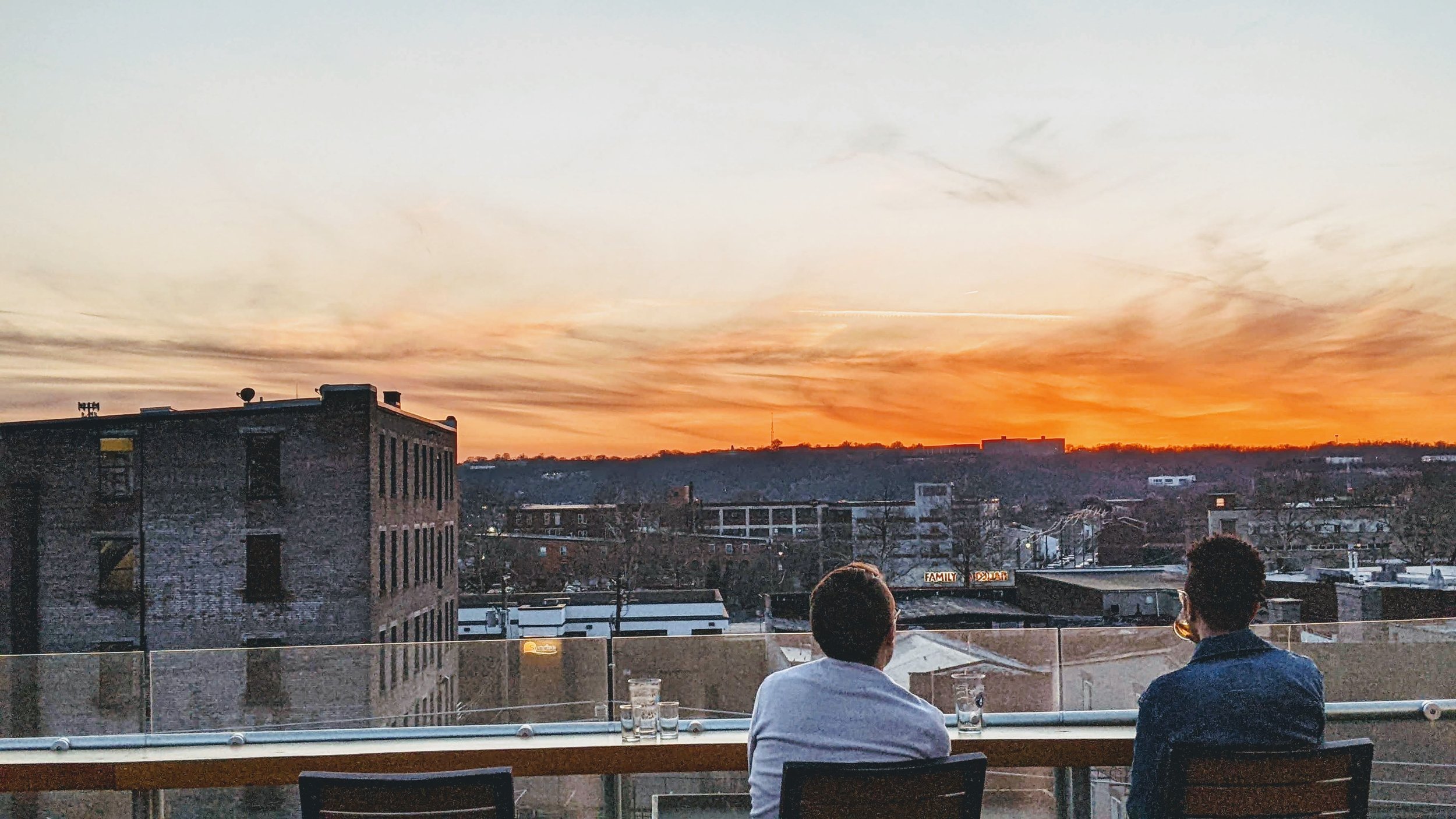
Having lived in Syracuse for the vast majority of my life, it’s surprising that I really haven’t had many opportunities to see Downtown from an elevated vantage point. You of course have the beautiful views from a number of parks around the City (Schiller, Burnett, and Upper Onondaga come to mind), but its surprising that we haven’t looked for other opportunities to embrace an urban rooftop view. In Cincinnati I lucked out in finding a few rooftop bars and restaurants to take in the sights. One, Rhinegeist Brewery, repurposed a massive space in an old warehouse along with its rooftop, offering up some spectacular views of the industrialized neighborhood against the hills.

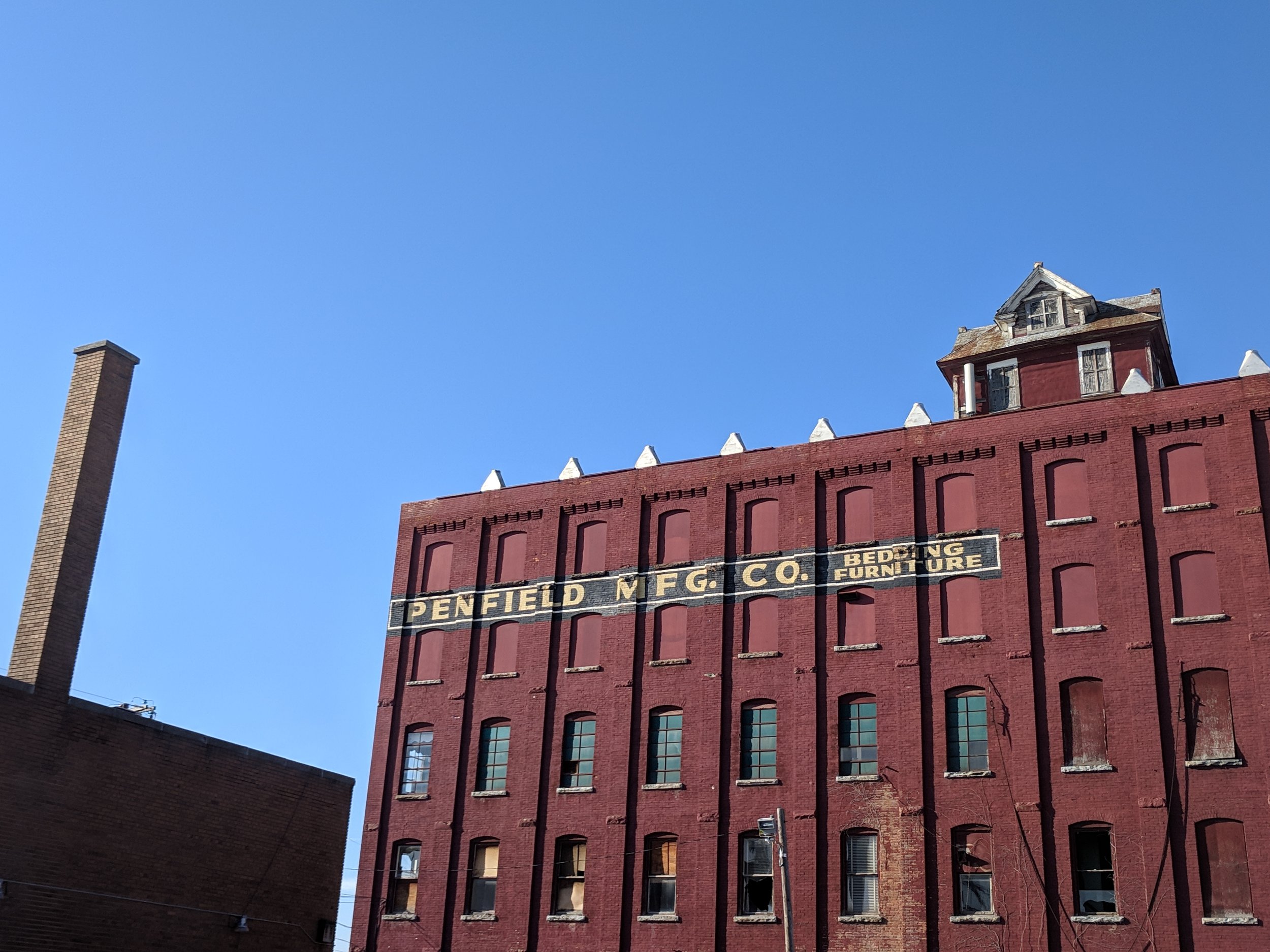
Syracuse, like Cincinnati, is filled with old warehouses and factories looking for new life. I’ve written about a new vision for the old warehouses around Washington Square Park, encouraging local breweries to move into the neighborhood. It would be a missed opportunity if we didn’t open up access to the rooftop of the old Moyer carriage factory and create a unique space around the house at its top. The views would offer a truly unique experience. 

Some will argue that rooftop access doesn’t make much sense in the snowiest city in the country, but the poor weather conditions aren’t nearly as bad as people make them out to be. Providing some cover and heated spaces would be enough to make most days enjoyable. Even if a bar or restaurant decides to only keep the rooftop open in the warmer months, they’ll still reap the benefits of the expanded space and become true destinations.

Rethinking Free Transit Loops

The Cincinnati streetcar, the Bell Connector, has been controversial over the years. Its ridership levels have never met the lofty goals its supporters set. Its route only connects Downtown Cincinnati with the nearby OTR neighborhood. Ridership fell when a fee was added for rides. But once the streetcar was made free again in 2020, ridership has picked up and has continued to grow. It’s not a perfect system by any means, but it does a lot more good for riders than the Syracuse Syrculator ever could. The Bell Connector links some densely populated residential areas to employment and entertainment centers. The stops are built out with shelters and countdown clocks, making it comfortable to wait. The Connector also runs from 7:30am to 11:30pm, making it possible for workers to actually use it for commuting purposes. 

Syracuse, with its much smaller physical footprint and denser development pattern, may not really need a transit loop. Instead, Syracuse should concentrate on implementing BRT. The proposed BRT routes would act in a similar manner as the Bell Connector, connecting densely populated residential neighborhoods to employment and entertainment centers. While BRT would not be free, the new $1 fare for Centro already makes the trip cheap and convenient for regular riders, visitors, and anyone who just decides to try out the system. 

Syracuse can learn a lot from other Rust Belt cities. Next time you take a trip to one, think of what we can borrow and improve upon to help make Syracuse a more livable city.

In Walkability, Urban Planning
Comment

In Defense of an Aquarium and the Future of the Inner Harbor

February 28, 2022

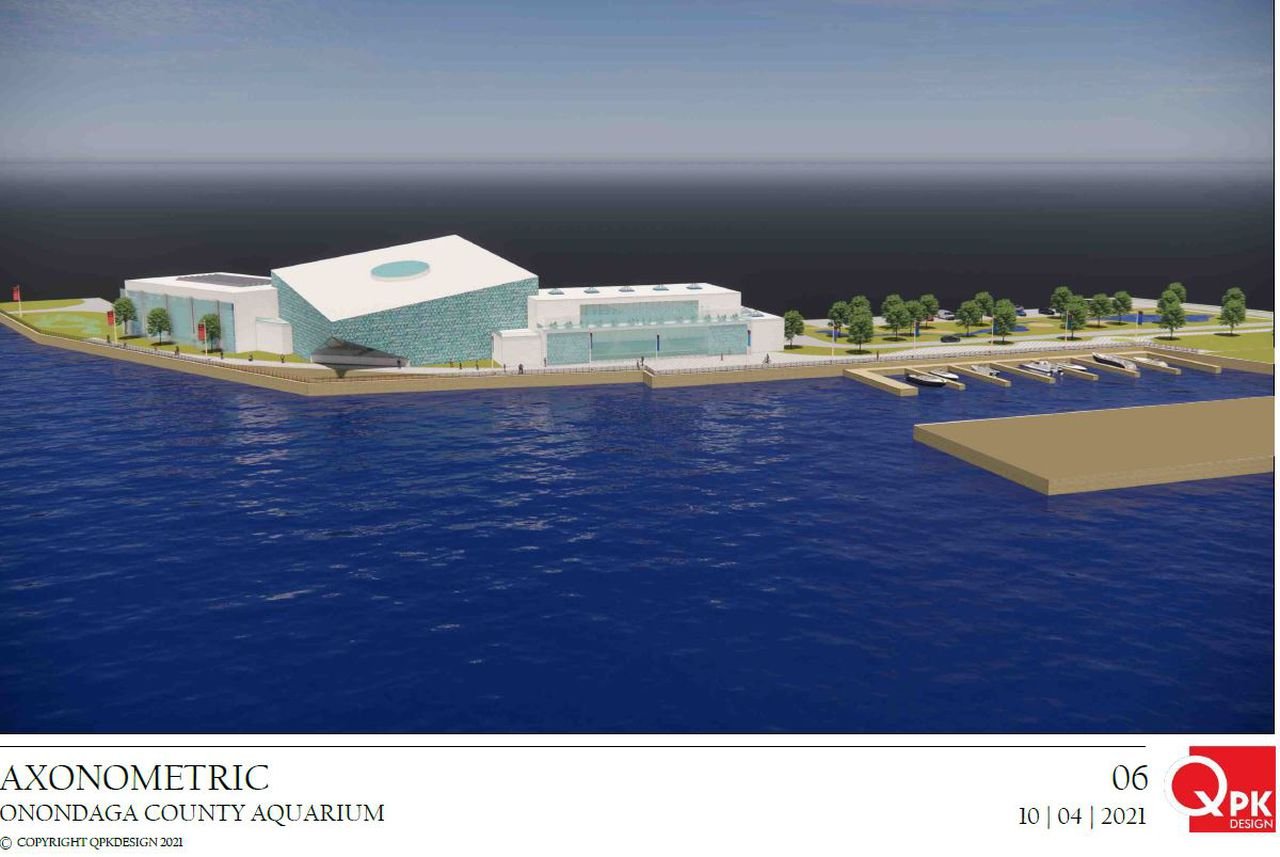
In the fall of 2021 a surprise proposal for an $85 million aquarium at the Syracuse Inner Harbor was announced. The project would be paid for using a large budget surplus Onondaga County experienced as a result of federal pandemic funding and stronger than expected tax collections. This proposal also sparked a heated debate over what those funds should be used for and whether an aquarium is truly a viable project for this community. Should these funds instead go towards improving roads, starting new assistance funds, creating community programs, or simply stowed away for future uses? Should we bond for the required funding instead of paying for it in cash? If we are to build an aquarium, does it need to be so large?

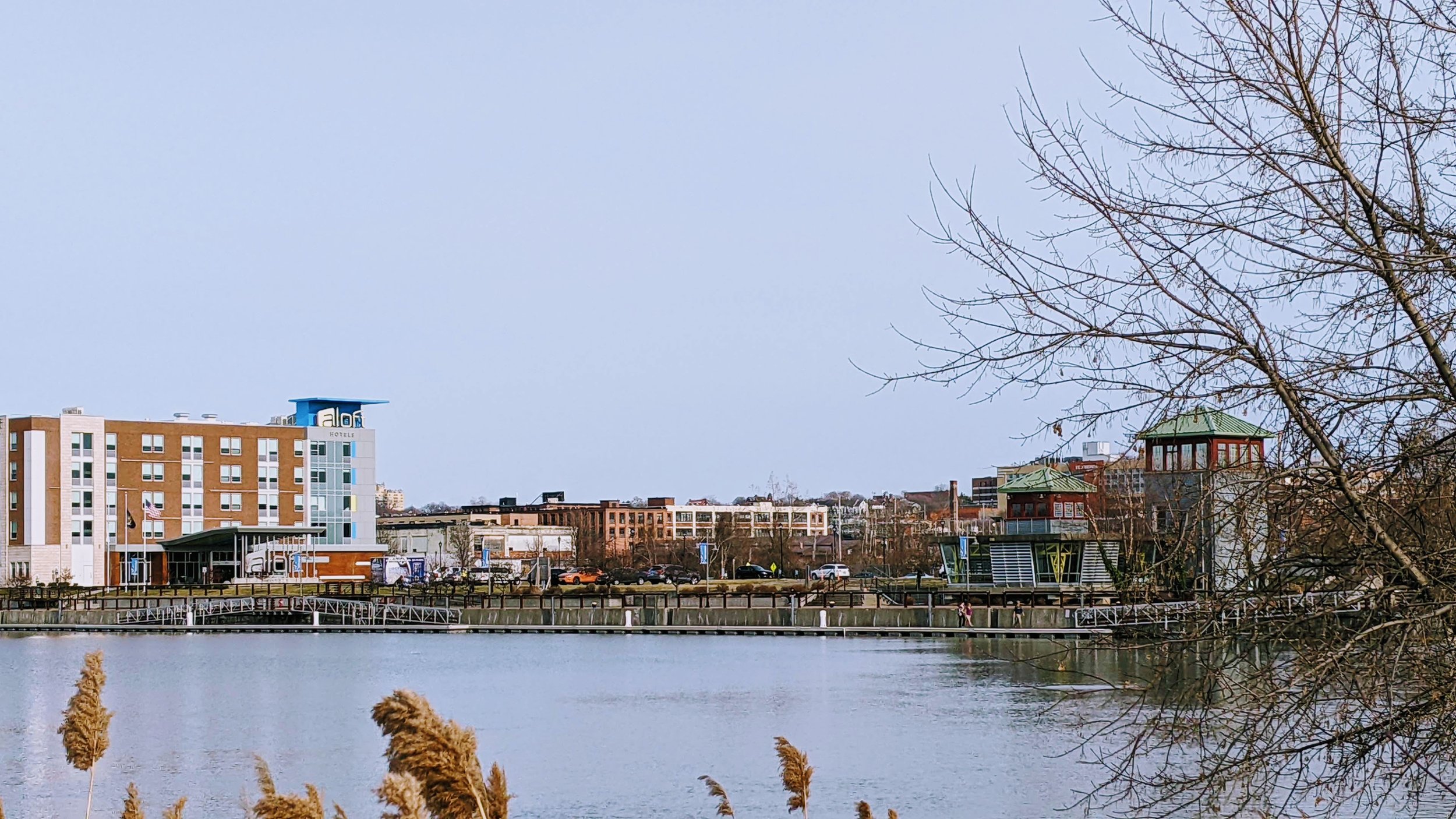
Each of these questions are valid and should be considered, but I also think we should be looking at this project as part of a grander plan for the Inner Harbor. The Inner Harbor has been stuck in development Hell for decades (including the current legal troubles of the developer who purchased most of the land), which has resulted in an area ripe with opportunity sitting mostly vacant and overgrown. Perhaps it’s time to really consider what that future could be, with an aquarium as the spark.

Addressing Some Key Questions

First, we need to look at some of the key questions opponents and skeptics of the aquarium project bring up, since they are valid concerns. We’ll begin with the other possible uses for the funds.

Road construction is always a favorite issue to point to by critics, noting the many potholes and other issues we experience on a yearly basis in the northeast. But overall, the roads that Onondaga County is in charge of are kept in fairly good condition, as noted in SMTC’s annual pavement rating report. While this report only documents the federal aid eligible roadways, those same roads have the most impact on people’s day-to-day movements. Some of the funding could be pushed to the City of Syracuse to improve their roadways, but even then, the City has made some significant progress over the past decade of maximizing their paving budget. We must also remember that the City will also receive $123 million in federal funds as part of the pandemic relief fund, with some of that focused on improving roadways.

Others often point to providing additional services that are needed within our community, including social and health services. While I think we need further investment in those areas, it is not wise to start programs of that nature with a one-time surplus. Once those funds are gone, the services that may have become vital to some will be stripped away. We should instead look at our recurring costs and see where we can shift funding to better represent the needs of our communities. Additionally, we should be looking for ways to build our economy and create opportunities, which will help increase funding for future programs that will be more reliable than recovery funds.

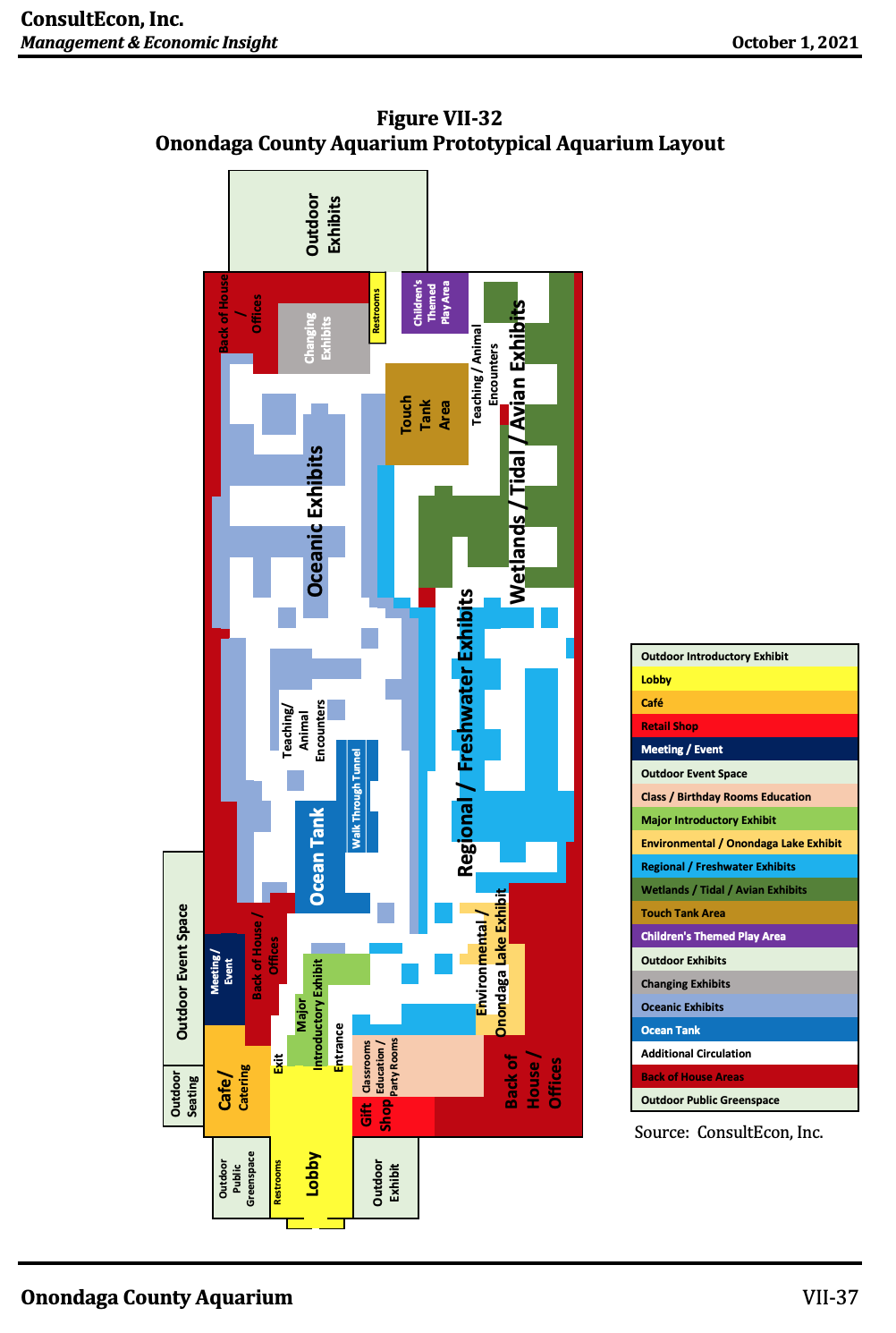
View fullsize Aquarium Rendering
View fullsize Aquarium Site Plan
View fullsize Aquarium Rendering
View fullsize Typical Aquarium Layout

But that still leaves questions on the specifics of the aquarium itself. Should we bond for it instead of paying for it with the surplus funds? And just how big should an aquarium be? The easier question to answer here is about the size. Did you know Niagara Falls has an aquarium? If you did, you’re probably one of the many visitors who was disappointed by how small the facility is. If you’re looking to build a regionally significant project, the size and scope of the project should fit that criteria. The proposed project would be the largest aquarium in the northeast, immediately bringing it attention throughout the larger region. While few people travel places just for an aquarium, the presence of a high quality aquarium might sway some to take a chance, or keep those already traveling to the area here longer. Think of fans of teams at SU or Canadian shoppers at the mall or visitors to the State Fair during the summer who might decide to extend their trip by a day to explore the aquarium. Those extra days can be a huge boon for businesses within Syracuse and leave people with a more positive view of the City as a whole, hopefully leading to return visits.

When it comes to bonding over using the surplus funds, the nice thing about using the surplus funds is that you already have them and you can act now with them. That can be subject to a larger debate on how best to fund a project of this scale, but sometimes its good to just rip off the bandaid. 

The Inner Harbor’s Future

Now let’s look at some ways that the aquarium can play into the future of the Inner Harbor, and some ways we can improve upon this plan to give it a real chance at success.

First, it is an investment in the quality of life for the community. Aquariums provide an educational experience that is unique, which students at all age and grade levels can benefit from. One way we can push the current proposal to a new level is by creating a larger learning/ laboratory annex that is supported through partnerships with colleges throughout Central New York. Syracuse University, LeMoyne College, as well as the nearby SUNY campuses (Cortland, Oswego, and ESF) all have biology and environmental studies programs, which could benefit through more in-depth research opportunities at the aquarium. Providing these unique connections could encourage the expansion of these types of programs in the region as well as attract students who value this type of hands-on education. These partnerships will also provide financial support for the aquarium, which could ultimately support reduced price or free admission for City residents or low-income families. One of the main sticking points has been the proposed fee for admission, $21 per adult with reduced prices for many different groups. The financial support of colleges and universities could be geared towards creating a more equitable fee structure that ensures everyone access to this unique attraction.

Let’s also look at the accessibility of the proposed aquarium site. The Inner Harbor sits in a unique location in terms of access by residents across the City and the greater region. Yes, it sits between I-690 and I-81, providing easy access to visitors driving to the site from outside the City, but increasing access by bus, bike, and on foot are possible and already somewhat in place.

View fullsize Community Grid Bike Connections
Community Grid Bike Connections
View fullsize SMART1 Preferred Option
SMART1 Preferred Option

The BRT network that is considered the locally preferred option in the SMART 1 study would run nearby on North Salina Street. A slightly different route that runs up Solar Street, where the aquarium would be built, was considered but was not selected due to higher ridership demands on the Salina Street corridor. Even though the BRT system would not run directly to the aquarium site, improved pedestrian and bicycle facilities in the area would help create the needed connections. The I-81 Community Grid would help produce these new connections as wider sidewalks and new bike lanes that connect the Inner Harbor to North Salina Street are proposed across multiple bridges. This would not only help connect the Northside to the Inner Harbor, but also connect it to the Onondaga Creek Walk and Empire State Trail, making the location one of the easier places in the City to reach without a car.

For those who do choose to reach the aquarium and Inner Harbor by car, minimal parking should be built directly surrounding the site, and instead a partnership with Destiny USA should be forged to use the large swaths of overbuilt parking lots across Bear Street. We should be focused on creating a walkable neighborhood surrounding the Inner Harbor, filled with apartments, townhouses, shops, restaurants, and parkland. This can only be accomplished by reducing the amount of parking available directly on site and utilizing the already existing lots across the street.

View fullsize Inner Harbor Site Plan
Inner Harbor Site Plan
View fullsize Inner Harbor Rendering
Inner Harbor Rendering

And on that note, we should be looking to use the development of the aquarium as leverage to force COR to continue their proposed build out at the Inner Harbor or sell the land to others who will develop it. The original proposal would have created a mixed-use neighborhood that finally provided the City a chance to fully connect with the waterways of its history. With the introduction of townhouses at the Harbor,  we should require that at least half of them are for sale to own, providing a new homeownership opportunity in a denser development style than most of the City offers. An additional thing to note is that even if the original plan was fully built out, the land needed for the aquarium would remain open according to the site plan above. This would allow the aquarium to become an anchor institution at the Inner Harbor and pull the development currently occurring in Franklin Square northward.

While the Inner Harbor development shouldn’t hinge on whether an aquarium is built or not, I still think there are some unique benefits that an aquarium brings to the City that should encourage us to make the investment. The last point I’ll make, and this one can sometimes be overlooked, is that we should invest in quality of life amenities that can be enjoyed by all. The Amphitheater, while an amazing amenity, is often geared towards adults over kids. Restaurants and bars in Downtown Syracuse emphasize alcohol consumption as part of the experience (with many local breweries producing top notch beers and drinks). Destiny USA is a closer example to an amenity that can be enjoyed by all, but only if you want to spend and consume. An aquarium, like the zoo and the museums Downtown, can provide an afternoon or even a full day of fun for all ages without the pressure to consume. You’re truly there for an experience, whether to learn or to be calmed by the presence of nature, and that is truly a benefit to the community.

Note: The Central New York Regional Planning Board was involved in the aquarium study. While I have worked on the CNY Broadband Study with the agency, I have had no involvement in this study and this blog post is entirely my personal feelings on the proposal.

In Syracuse, Civic Pride
Comment

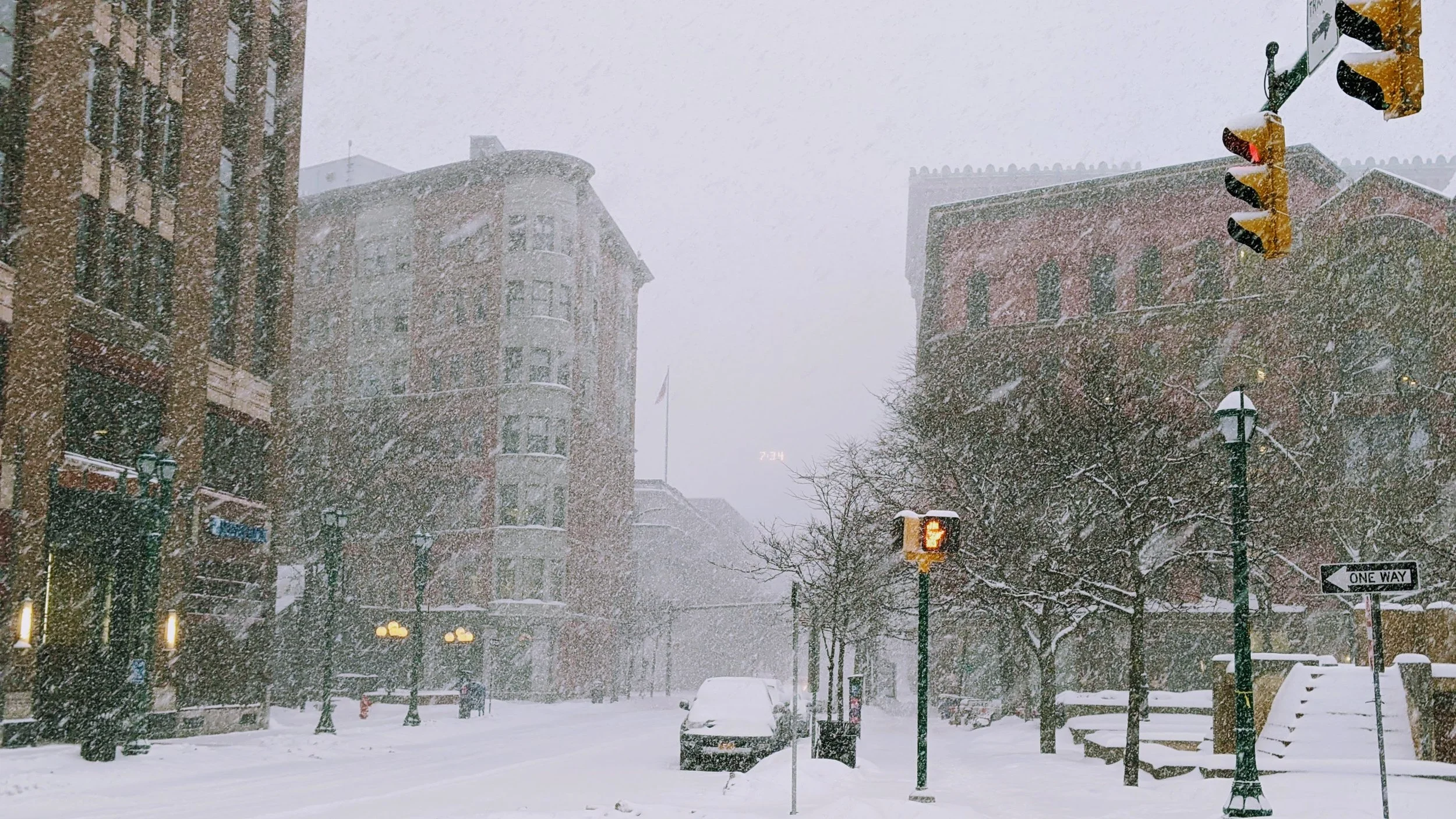
Downtown Syracuse after a heavy snowfall

Cities Don't Have to be Loud

January 31, 2022

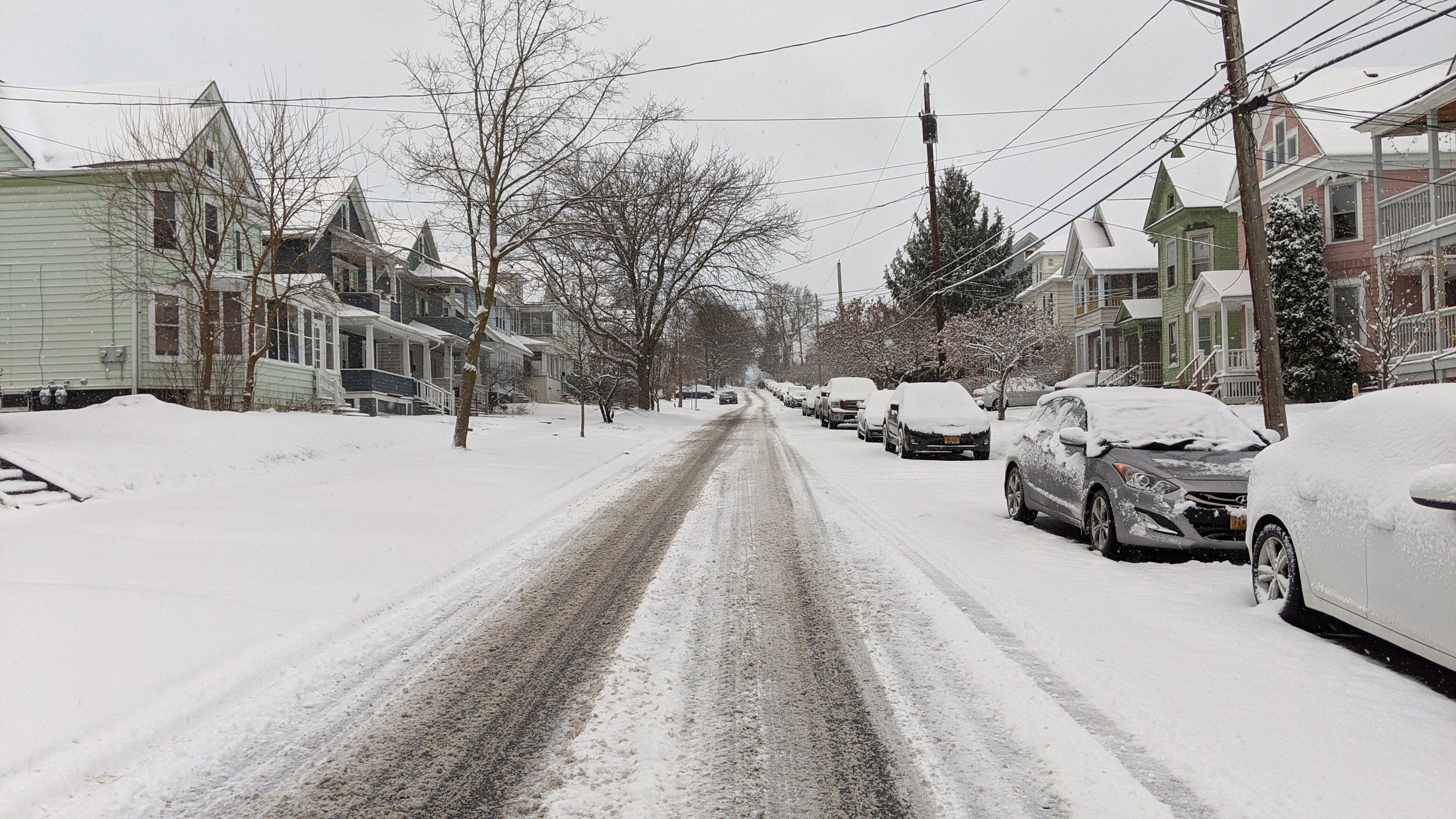
One of the things that stands out after a heavy snowfall is just how quiet the whole world becomes. You can hear the gentle crunches of the snow beneath your feet when you walk outside. The first run of the plows breaks the stillness, but they still feel muted. The rest of the world is still waking up and those that are up often choose to stay home until the roads are clear. It’s as if the world is covered in a blanket, resting.

Snow acts as a natural muffle as it absorbs noise, but it is not the only reason these snow days help to quiet a city. By choosing to stay home to avoid the snow covered streets, we help remove one of the biggest audio nuisances around; your car. 

View fullsize original_96cc2c14-b514-443b-9abc-1da2984159ff_PXL_20210202_123457176.jpeg
View fullsize original_d355aa14-3a93-4573-b437-4a8673505043_PXL_20210202_124251947.jpeg
View fullsize PXL_20201229_130158921.jpeg
View fullsize PXL_20220108_002420946.jpeg

We often think of cities as noisy places filled with traffic and construction, but we forget that there are plenty of cities that are snow storm quiet all year round. The one thing they have in common is that they de-prioritize cars in their transportation networks. To see why this policy matters, we first need a quick run down of how decibels are measured.

Decibels are measured logarithmically, which means that if something is 10 decibels louder, it is in fact 10 times louder. If something is 20 decibels louder, it is 100 times louder, and so on. Extended exposures to sounds over 70 decibels can lead to hearing damage.

 So let’s take a look at some decibel levels of common occurrences in an urban setting:

  • Normal conversation: 60 decibels

  • Busy street: 75-85 decibels

  • Lawn mower: 94 decibels

  • Motorcycle: 105 decibels

  • Car horn: 110 decibels

  • Ambulance siren: 112 decibels

  • Diesel truck accelerating: 114 decibels

If you’re driving through a city you may not notice your contribution to this urban noise pollution as cars have become a sort of isolation chamber on wheels, but when you’re walking or riding a bike you notice the increase in noise immediately. Adding more cars on the road also increases the likelihood of emergency vehicles finding themselves stuck in traffic, resulting in prolonged exposures to dangerous decibel levels for everyone outside of a car.

Cities don’t have to be this way. Cities in the Netherlands are dramatically quieter than their American counterparts, primarily due to their transportation policies. By emphasizing pedestrians, cyclists, and public transit while slowing down the private cars that are in use help reduce the amount of noise pollution on an average city street. You can see this in more detail in the video below by Not Just Bikes on YouTube.

While larger changes to our transportation network may take time, there are plenty of things we can do now to start the transition and bring down the noise.

Street trees and other urban vegetation help to absorb sound. They have also been shown to slow down vehicles by visually confining the space, forcing drivers to increase their attentiveness. On top of all of that, they make walking a much more pleasant experience by providing shade, cover from rain, and a visually interesting journey. Cities should ensure that all street and sidewalk improvements are coupled with an evaluation of their street tree canopy. 

Prioritize clearing sidewalks and bike paths during winter storms to encourage their usage. Walking through the snow can be a challenge for many people, especially if it’s deeper than a couple inches. Cities like Syracuse and Rochester, NY are making serious strides when it comes to clearing sidewalks during the winter, but they still play second fiddle to the roadway clearing programs these cities have had in place for the better part of a century. If we begin elevating sidewalks and bike lanes to the same level as vehicle lanes, we may get closer to the Finnish ideal of prioritizing the most efficient forms of transportation over personal vehicles. 

We might not want to be stuck in a snow globe all year round, but there’s no reason our cities can’t get closer to the peace and quiet we hear during those early winter mornings. Quiet cities let us enjoy the little things just a bit more.

About 27 percent of Syracuse is covered by tree canopy, which is below average for cities east of the Mississippi River.

In Syracuse, Urban Planning, Walkability
Comment
← Newer Posts Older Posts →

Recent posts

Featured
PXL_20241010_211844719.jpg
Jan 30, 2026
Let's Do Good
Jan 30, 2026
Read More →
Jan 30, 2026
PXL_20250830_182821521.jpg
Sep 15, 2025
Urbanism Lessons from the Great White North
Sep 15, 2025
Read More →
Sep 15, 2025
Carousel.jpg
May 27, 2025
Destiny USA and the City
May 27, 2025
Read More →
May 27, 2025
PXL_20240805_141743149.jpg
Jan 1, 2025
All Cities Are Beautiful
Jan 1, 2025
Read More →
Jan 1, 2025
PXL_20241005_135224129.jpg
Nov 6, 2024
A Healthy Future for the Regional Market
Nov 6, 2024
Read More →
Nov 6, 2024
PXL_20240728_191254239.jpg
Jul 31, 2024
Renters Matter, Too
Jul 31, 2024
Read More →
Jul 31, 2024
Vista view.jpeg
Mar 21, 2024
The Valley of the Sun - A Land of (Sub)Urban Extremes
Mar 21, 2024
Read More →
Mar 21, 2024
Manlius Cinema.jpeg
Jan 31, 2024
The Movie Theater at the Urban Core
Jan 31, 2024
Read More →
Jan 31, 2024
Clinton Square Christmas Tree at night.jpeg
Nov 30, 2023
The Case for a Holiday Village
Nov 30, 2023
Read More →
Nov 30, 2023
PXL_20230817_220739294.jpg
Oct 31, 2023
The Walk: To Middle Ages
Oct 31, 2023
Read More →
Oct 31, 2023
Ballpark.jpeg
Sep 7, 2023
The Walk: To the Ballpark
Sep 7, 2023
Read More →
Sep 7, 2023
PXL_20230813_213112525.jpg
Aug 14, 2023
The Walk: To Tipperary Hill
Aug 14, 2023
Read More →
Aug 14, 2023

Powered by Squarespace